Laser Eye Surgery Risks & Safety Protocols
While laser technology has revolutionized ophthalmology, understanding the potential ocular risks is essential for any patient. At MyLumineyes®, safety is not just a standard; it is a clinical discipline backed by 15 years of long-term safety data.
Is Laser Eye Color Change Risky?
The primary risk in ocular laser procedures is the potential for increased intraocular pressure (IOP). If laser energy is applied aggressively, or if the pigment clearance is not monitored, it can lead to secondary complications. However, the Lumineyes laser color treatment is specifically categorized as iris-selective, meaning it targets only the melanin granules without damaging the surrounding ocular tissues.

🛡️ Clinical Safety & Risk Management Guide
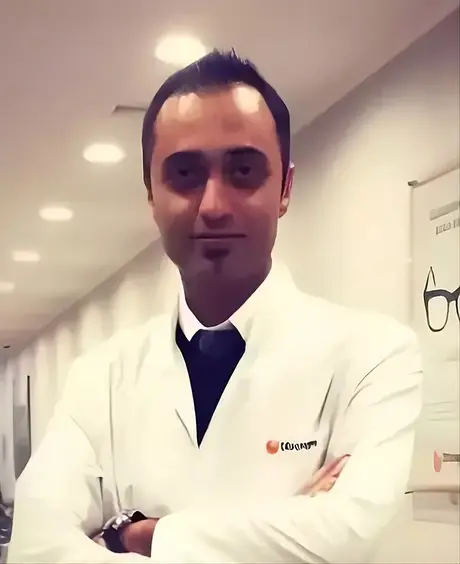
As the official inventor of Lumineyes®, Dr. Mustafa Mete provides a transparent overview of laser eye surgery risks, specifically focusing on Glaucoma prevention and long-term ocular health.
✓ Staged Protocol
How We Prevent Glaucoma
Sudden pigment release clogs the drainage pathways, risking high pressure.
Controlled, staged clearance keeps drainage channels open and safe.
Read more about our Glaucoma Management Strategy.
Laser Eye Surgery: Techniques, Safety, and Medical Standards
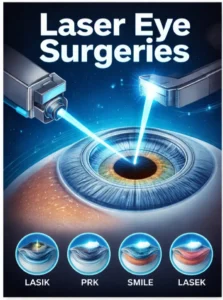
Laser technology has transformed modern ophthalmology, offering precise solutions for various vision conditions. Whether it is correcting refractive errors or managing internal eye health, understanding the specific type of laser used is crucial for patient safety.
Common Laser Procedures in Ophthalmology
In clinical practice, different wavelengths are used to target specific eye tissues. Here are the most widely recognized laser applications:
- iLASIK & Excimer Laser: Primarily used for vision correction, these lasers reshape the cornea to treat myopia, hyperopia, and astigmatism. For detailed information on these procedures, you can review our iLASIK and Cataract Surgery Guide.
- YAG Laser: Commonly used for “secondary cataract” treatment (posterior capsulotomy) and creating small openings in the iris for narrow-angle glaucoma prevention.
- SLT (Selective Laser Trabeculoplasty): A vital tool in Glaucoma management, SLT helps lower intraocular pressure by stimulating the eye’s natural drainage system without thermal damage.
- Argon Laser: Essential for retinal treatments, including sealing retinal tears and managing diabetic retinopathy.
The “Mylumineyes” Distinction in Laser Safety
While standard ophthalmic lasers serve medical necessities, the MyLumineyes® 8G laser protocol was developed for a specific cosmetic goal: permanent iris depigmentation. Unlike aggressive commercial lasers, our method uses low-energy, iris-selective frequencies to ensure the delicate structures of the eye remain unharmed during color transition.
Understanding Potential Ocular Risks
Every surgical intervention carries a degree of risk. In laser eye surgery, the primary concerns include intraocular pressure (IOP) fluctuations and potential inflammation. To minimize these, a staged treatment approach is mandatory. For a deep dive into the specifics of color change safety, please visit our dedicated Laser Eye Color Change Risks page.
Clinical Responsibility & Expert Evaluation
A successful laser procedure is not just about the technology; it is about the suitability of the patient. At MyLumineyes®, every candidate undergoes a comprehensive screening to ensure their eye anatomy can safely support the desired treatment. This professional integrity is what has allowed us to maintain 15 years of long-term safety data.
Understanding Glaucoma Risk in Laser Procedures
The most discussed risk in laser iris depigmentation is Glaucoma. This occurs if the eye’s drainage system (trabecular meshwork) becomes overwhelmed by released pigment. To prevent this, our protocol uses low-intensity sessions and staged pigment removal.
Read our specialized guide on Laser Eye Surgery and Glaucoma to understand how we protect your vision through continuous pressure monitoring.
Medical Comparison: Safety First
| Risk Factor | Standard Lasers | MyLumineyes® Protocol |
|---|---|---|
| Thermal Damage | High Risk | Minimal / Selective |
| Pressure Spikes | Unpredictable | Controlled & Staged |
| Recovery Time | Variable | Immediate Return to Activities |
⚠️ The Importance of Professional Screening
Not every patient is a candidate for laser eye surgery. A successful outcome starts with identifying who is not a candidate. Factors such as baseline iris structure, overall eye health, and drainage capacity are evaluated during our comprehensive suitability test. For more details, see our Cost and Risks overview.
Clinical Responsibility & Invention
As the inventor of this method, Dr. Mustafa Mete prioritizes long-term safety over rapid cosmetic results. Our data shows that gradual pigment reduction is the only anatomical way to ensure a permanent and safe color transition without sacrificing eye health.
For a complete medical disclaimer, please review our official Medical Disclaimer.