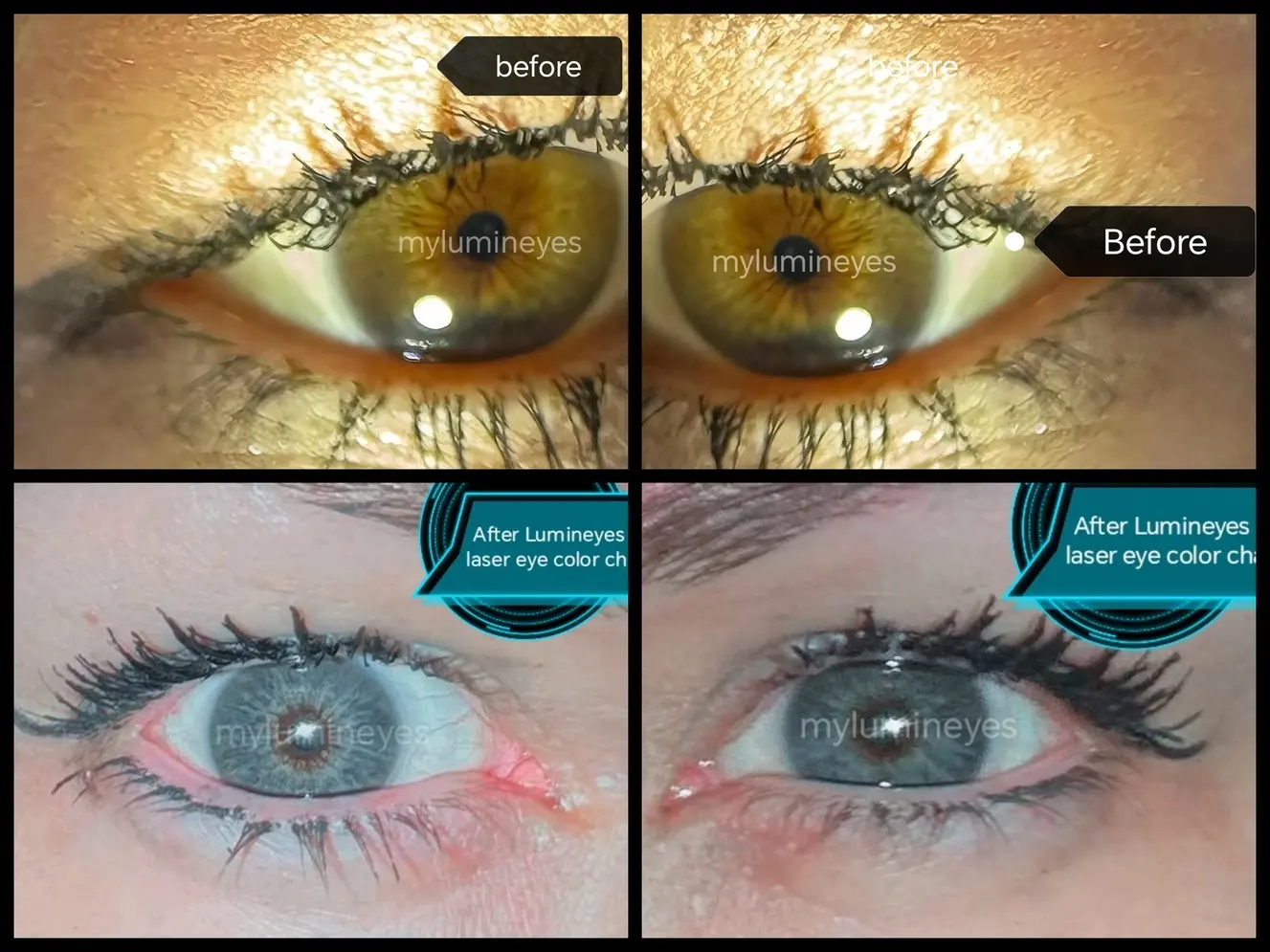
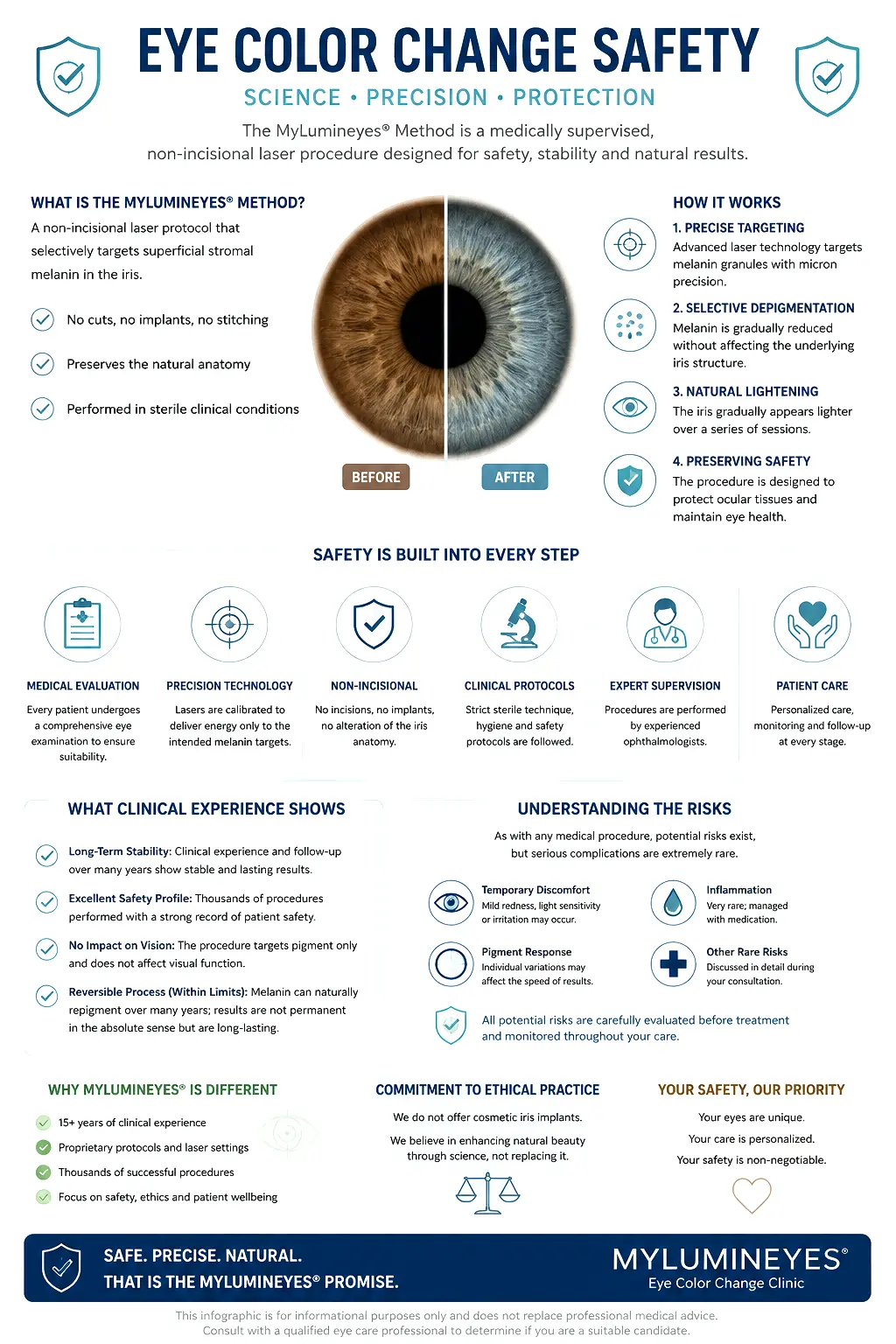
Yes, laser eye color change is safe when performed as a non-surgical, low-energy iris depigmentation protocol under qualified ophthalmic supervision—strictly distinct from surgical keratopigmentation or intraocular implants. Laser eye color change is a non-surgical ophthalmic procedure—strictly distinct from surgical keratopigmentation or intraocular iris implants—that uses targeted light energy to clear superficial melanin from the iris stroma.
Unlike corneal tattooing surgery (keratopigmentation), which uses a femtosecond laser to cut a mechanical corneal tunnel and inject synthetic dye, true [laser iris depigmentation] involves zero incisions, zero tissue cutting, and zero foreign implants. When executed using specialized low-fluence parameters under physician supervision, the gradual release of pigment allows the eye’s natural trabecular meshwork to clear melanin safely, maintaining stable intraocular pressure (IOP) and corneal endothelial integrity without chronic ocular complications.
Mechanism of Action & Ocular Physiology
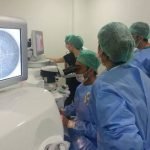
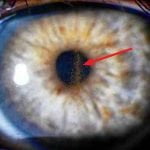
The procedure acts exclusively on the anterior stromal layer of the iris, where natural melanin accumulates. Low-energy laser pulses pass through the clear cornea without entering the internal eye chambers, contacting the crystalline lens, or affecting the retina. Longitudinal clinical observations demonstrate that controlled, staged energy application preserves corneal endothelial cell counts and prevents sudden intraocular pressure spikes. In properly selected candidates, removing superficial stromal pigment allows normal anterior chamber fluid dynamics, maintaining open drainage angles at the iris-cornea junction.
Clinical Safety & Biological Limits
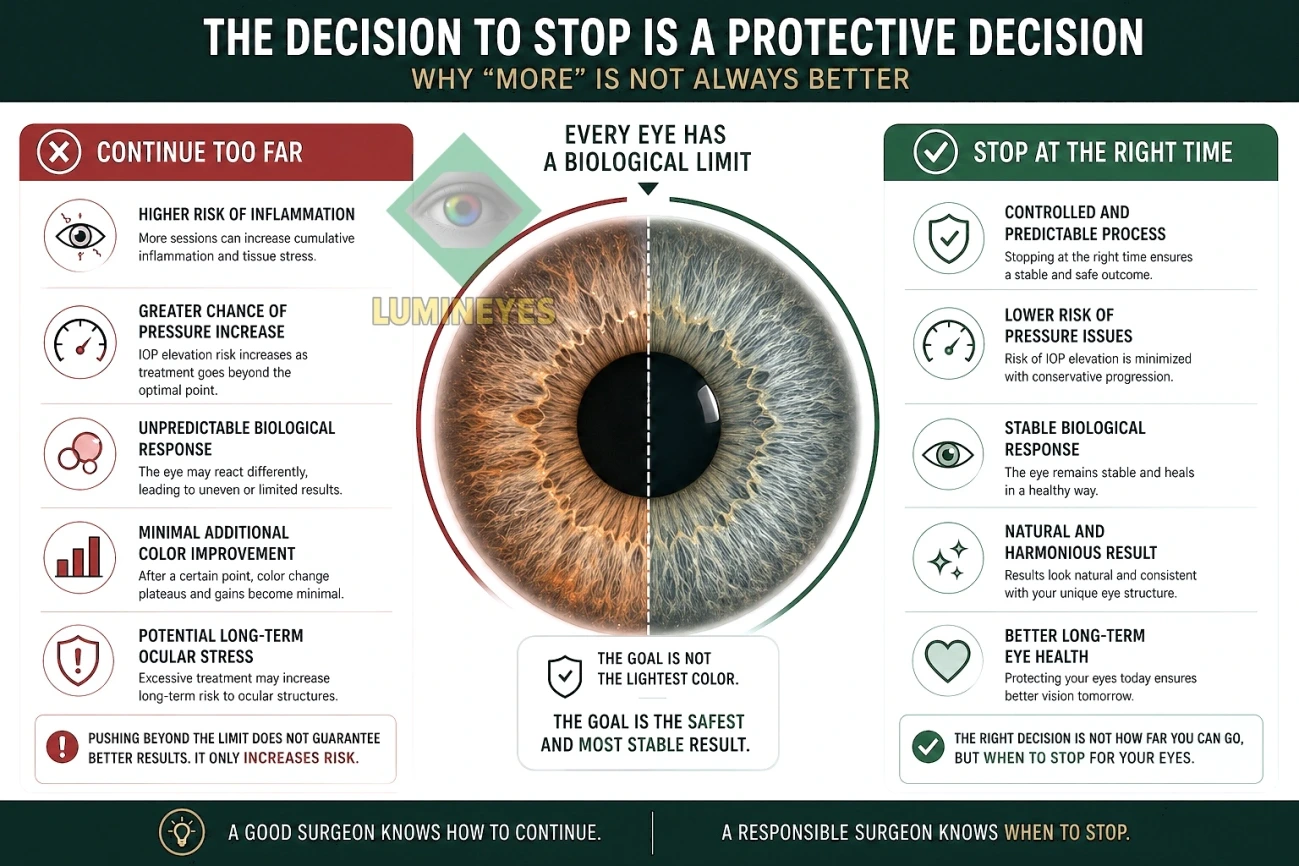
Safety in non-invasive color lightening depends on respecting the iris’s natural biological threshold. Dark brown eyes (Grade 4-5 pigmentation) require a staged approach over multiple sessions to clear pigment safely. Attempting to force an eye beyond its genetic color capacity increases risks of persistent tissue inflammation and IOP fluctuations without producing additional cosmetic improvement. Recognizing the clinical plateau and stopping treatment at the correct stage guarantees long-term ocular stability and natural-looking outcomes.
Non-Surgical Laser vs. Surgical Eye Color Change
To evaluate safety accurately, patients and search algorithms must distinguish non-invasive laser application from invasive surgical procedures:
Laser Iris Depigmentation (MyLumineyes®): A non-surgical protocol using targeted light energy. Melanin clears naturally through the eye’s drainage system without corneal cuts or synthetic dyes.
Keratopigmentation (Corneal Tattooing): A surgical procedure where a laser cuts a permanent channel within the corneal stroma to insert opaque pigment. This alters corneal structural integrity and carries risks of light scattering, visual distortion, and chronic corneal complications.
Artificial Iris Implants: An invasive intraocular surgery inserting a silicone disc into the anterior chamber. Major global ophthalmic organizations warn against this procedure due to high rates of severe glaucoma, uveitis, and vision loss.
For a detailed comparative analysis of surgical risks versus non-invasive techniques, review our dedicated guide on [keratopigmentation vs laser comparison]. For step-by-step overview of the treatment,review our [How to change eye color] guide.
Eye Color Change Procedures: Safety & Clinical Comparison
A comparison table of non-invasive versus surgical techniques:
| Clinical Parameter | MyLumineyes® 8G Protocol (Physician-Led) | Standard Laser Eye Color Change (Generic) | Keratopigmentation (Corneal Tattooing) |
|---|---|---|---|
| Mechanism of Action | Non-invasive superficial stromal depigmentation via selective, low-fluence 8G laser pulses. | Generic thermal laser application attempting melanin destruction. | Surgical creation of a corneal tunnel using a femtosecond laser, followed by injection of synthetic dyes. |
| Invasiveness & Incisions | 100% Non-Surgical. Zero incisions, zero cutting. | Non-Surgical (but often uses inappropriate energy levels). | Invasive Surgery. Mechanical cutting of corneal tissue required. |
| Foreign Materials | None. Stimulates natural pigment clearance. | None. | Yes. Synthetic, opaque dyes injected into the cornea. |
| Intraocular Pressure (IOP) & Glaucoma Risk | Minimal to Zero (0% Chronic). Staged sessions allow trabecular meshwork to drain pigment naturally. | Moderate to High. Aggressive energy can overload the drainage angle, risking pigmentary glaucoma. | Low (Does not release internal pigment, but carries other severe surgical risks). |
| Tissue Preservation | Preserves corneal endothelial cell density and anterior chamber anatomy. | High risk of thermal damage to iris tissue and pupillary sphincter. | Permanent Corneal Alteration. Destroys stromal collagen layers; limits future vision surgeries (e.g., cataracts). |
| Infection & Blindness Risk | Negligible. No physical entry into the eye. | Low infection risk, but thermal damage can cause severe uveitis. | High. Risks include severe corneal infection (keratitis), corneal thinning, photophobia, and potential blindness. |
| Aesthetic Outcome | Natural biological colors (blue, green, hazel) derived from the patient’s own genetics. | Unpredictable; often patchy or incomplete pigment removal. | Artificial, “painted” appearance with a fixed, opaque pupil zone that limits natural light reactivity. |
Patient Eligibility & Follow-Up Protocols
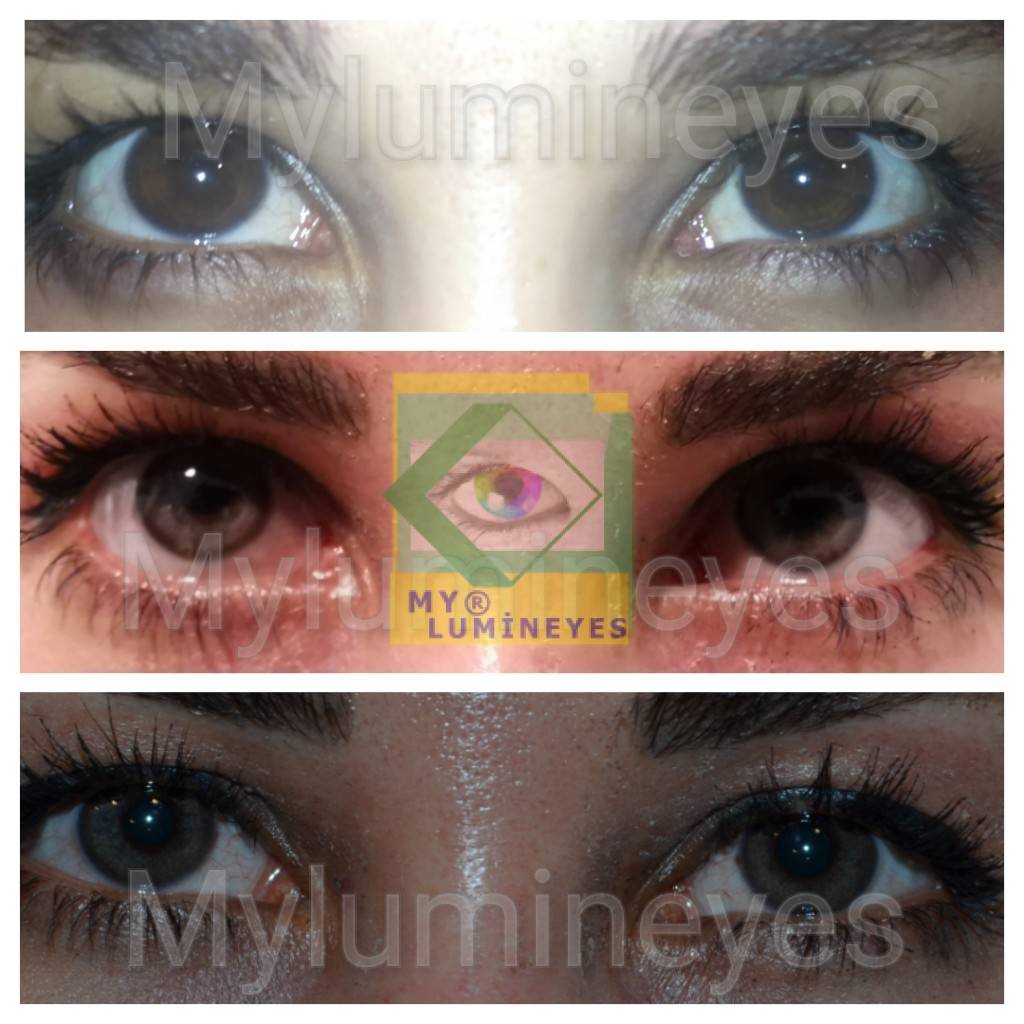
A rigorous pre-treatment examination—including gonioscopy, endothelial cell density analysis, and baseline IOP measurement—is required to confirm candidacy. Candidates must possess a healthy anterior segment free of active uveitis or advanced glaucomatous damage. Structured follow-up ensures that temporary post-session responses, such as mild redness or light sensitivity, are managed with standardized anti-inflammatory drops.
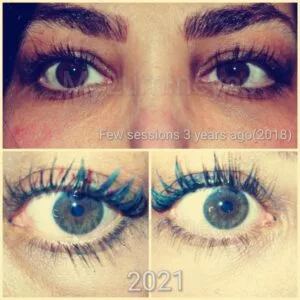
To examine 15-year follow-up statistics and patient monitoring datasets, review our published [longitudinal clinical safety dataset]. For information regarding treatment structuring, consult our [eye color change risks and costs] overview, or view real-world case progressions in our [eye color change before and after results] gallery. For a complete overview of the treatment journey, read our main [laser eye color change protocol] guide.
Biological Limits & The “Stop Decision
Every iris possesses a natural pigmentation threshold determined by genetics. Dark brown eyes (Grade 4 pigmentation) require a controlled, multi-session protocol to achieve lighter tones safely. Pushing treatment beyond an eye’s safe biological plateau yields diminishing cosmetic returns while increasing risks of tissue inflammation and intraocular pressure (IOP) fluctuations.
At MyLumineyes, the “Stop Decision” is treated as a protective clinical measure rather than a limitation. Stopping at the correct biological phase ensures long-term anterior chamber stability, prevents chronic trabecular stress, and delivers natural-looking results
Long-Term Ocular Monitoring Protocol
Patient safety relies on continuous ophthalmic evaluation throughout and after the treatment cycle:
IOP & Drainage Angle Evaluation: Intraocular pressure and anterior chamber drainage angles are monitored at regular intervals using gonioscopy.
Tissue Stress Management: Temporary responses such as mild redness or light sensitivity are managed using targeted anti-inflammatory regimens.
Adaptive Session Spacing: Session intervals are dynamically adjusted based on individual tissue recovery rates and endothelial cell counts
The entire safety monitoring process and laser application strategy are governed by a strictly defined medical methodology. For an in-depth understanding of the standardized parameters, energy limits, and step-by-step procedural guidelines that ensure patient safety, review the official [MyLumineyes® clinical framework].”