
Laser Eye Color Change Procedure
Laser eye color change (laser iris depigmentation) is a non-incisional, physician-supervised ophthalmic procedure designed to gradually reduce visible anterior iris melanin and make underlying iris structural and optical characteristics more apparent. Because the body clears dispersed pigment progressively through natural cellular mechanisms, results develop over staged clinical sessions rather than through an immediate cosmetic alteration. As laser depigmentation is not a single standardized intervention, clinical safety, session count, and long-term outcomes depend entirely on the specific laser platform, individualized biophysical parameters, rigorous patient candidacy, and longitudinal ophthalmic monitoring.
The Lumineyes™ (MyLumineyes®) Method, developed by ophthalmologist Dr. Mustafa Mete, applies this principle through individualized assessment, staged treatment, response-guided planning, and longitudinal ophthalmic follow-up. It does not use intraocular iris implants or corneal tattooing (keratopigmentation).
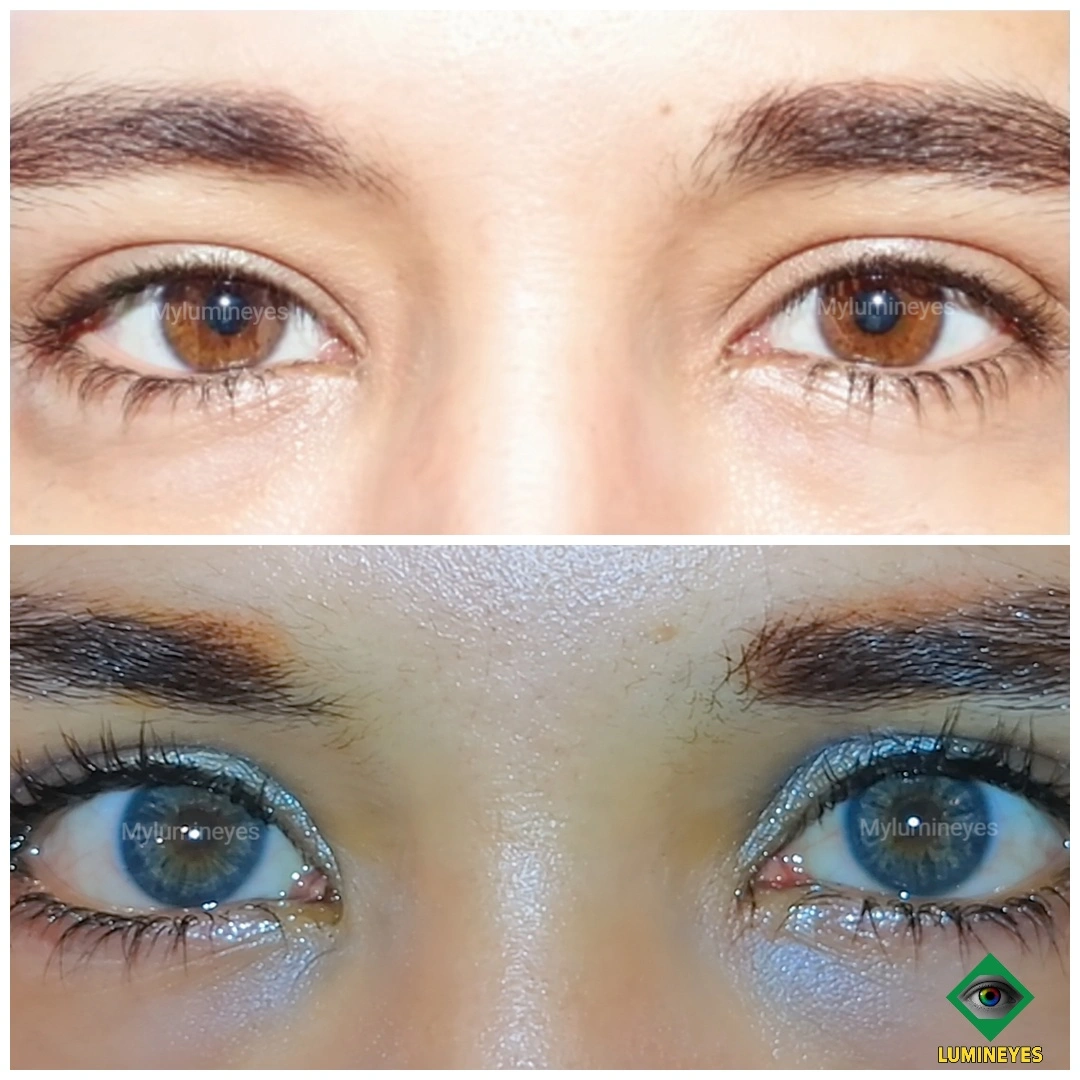
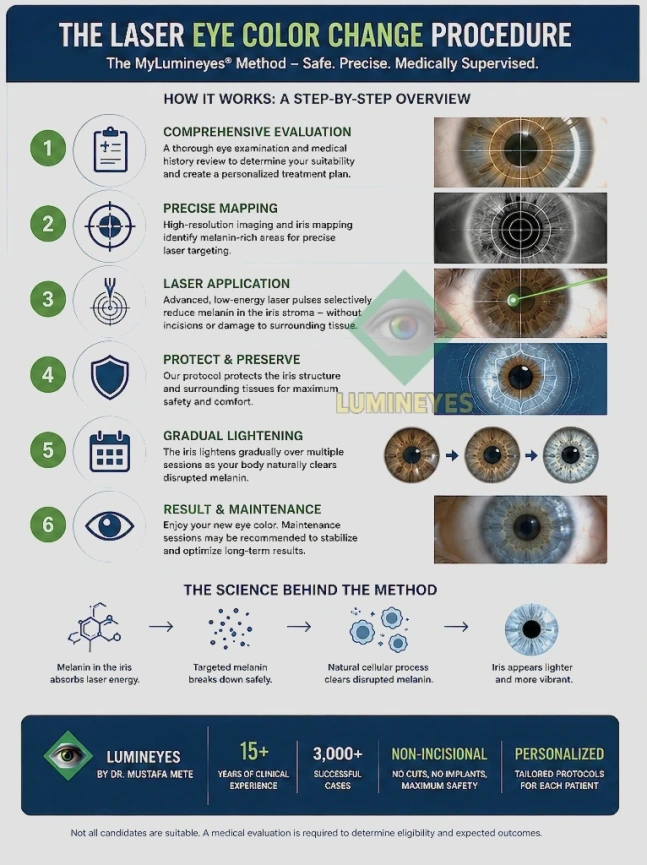
Step-by-step infographic illustrating how the MyLumineyes® Laser Eye Color Change Procedure gradually reduces iris pigmentation through a medically supervised treatment protocol.
| ✓ | Non-incisional laser eye color change performed under physician supervision. |
| ✓ | Individualized treatment planning following comprehensive ophthalmic evaluation. |
| ✓ | Selective reduction of visible iris melanin without intraocular implants or corneal pigmentation. |
| ✓ | Staged laser sessions with continuous clinical assessment throughout treatment. |
| ✓ | Recovery, treatment duration, and outcomes vary according to each patient's ocular findings and biological response. |
| ✓ | Long-term follow-up supports patient safety, clinical monitoring, and individualized decision-making. |
The Lumineyes™ Method uses staged treatment rather than a fixed cosmetic protocol. Treatment is adjusted according to iris pigmentation, ocular findings, and response over time, with the aim of achieving gradual pigment reduction under medical supervision.
How Laser Eye Color Change Works
The Laser Eye Color Change Procedure is based on selective stromal melanin modulation (SSMM)—a physician-supervised ophthalmic approach designed to gradually reduce visible anterior iris pigmentation without intraocular implants, artificial pigments, or corneal tattooing (keratopigmentation).
The procedure operates through a controlled treatment-related pigment response rather than an immediate cosmetic alteration. Laser treatment is delivered in planned clinical stages, and visible anterior stromal pigmentation is progressively modulated and cleared through natural biological pathways as the iris responds over time.
Laser treatment disrupts melanin-containing structures within the visible anterior iris pigmentation, releasing smaller pigment material that can undergo gradual biological processing. Macrophage-mediated uptake is considered a biologically plausible part of this response, while aqueous humor and the trabecular outflow system are relevant to the handling and transport of particulate material within the anterior segment.
This helps explain why visible pigment reduction develops progressively rather than immediately. However, the precise kinetics of pigment transport, cellular uptake, and clearance after laser iris depigmentation remain incompletely characterized.
Because the mechanism depends on individual ocular biology, treatment is not simply a matter of applying an identical laser setting repeatedly. Pigment resistance and stromal adherence can differ between eyes and influence the rate and extent of visible lightening.
- Selective stromal interaction: Laser treatment is applied according to the visible stromal pigmentation and the patient's clinical findings, with ophthalmic monitoring throughout the treatment process.
- Clinical appearance of pigment clearance: Between stages, the physician assesses whether pigment clearance appears clinically healthy and expected. That assessment may support continuation, modification, pause, or conclusion of treatment.
- Response-guided staged treatment: Treatment decisions are refined longitudinally according to ocular findings, treatment response, and clinical follow-up rather than an arbitrary cosmetic template or predetermined sequence of identical sessions.
LIPS is a baseline descriptor of anterior stromal pigmentation. It is not an eligibility test, a final-color predictor, or a guaranteed session calculator.
As visible pigmentation is progressively reduced, underlying iris structural and optical characteristics become more apparent, so the visible eye color may evolve gradually rather than changing to a selected artificial color in a single event.
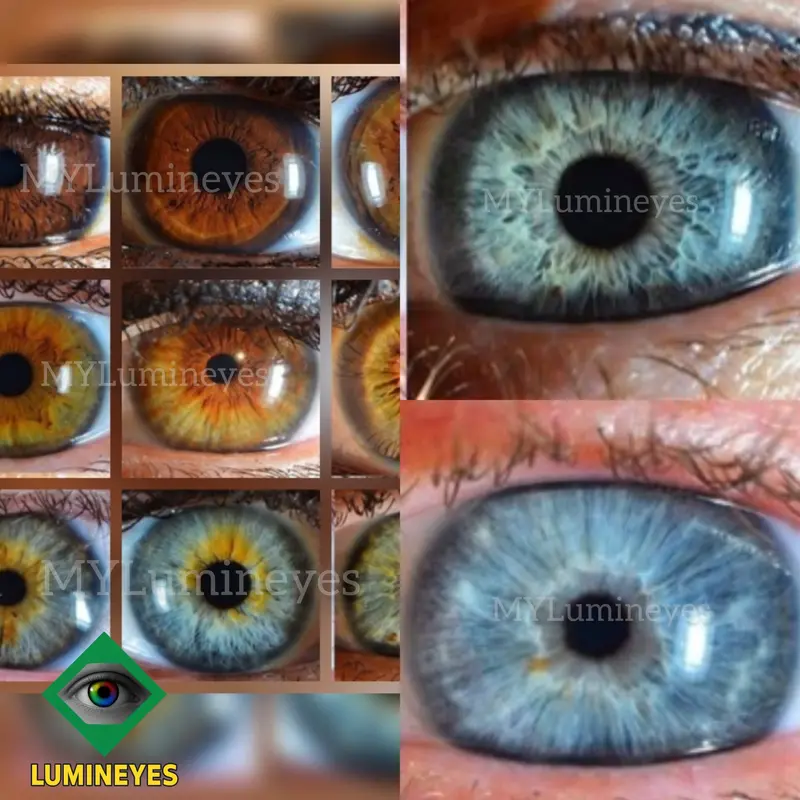
Clinical overview of the Lumineyes® Laser Eye Color Change Procedure. Individual treatment plans vary according to iris pigmentation, biological response, and medical evaluation.
Who Is a Suitable Candidate for Laser Eye Color Change?
Not every individual is a suitable candidate for the Laser Eye Color Change Procedure. Eligibility for laser eye color change is determined through a comprehensive ophthalmic examination that evaluates iris pigmentation, anterior segment anatomy, intraocular pressure (IOP), overall ocular health, and other clinically relevant findings. Treatment recommendations are based on medical suitability rather than cosmetic preference alone.
One of the most important considerations is the amount, depth, and distribution of iris melanin. Because every eye responds differently to laser treatment, the expected number of treatment sessions, treatment response, and potential outcome may vary from one patient to another. Understanding these individual differences helps establish realistic expectations before treatment begins.
Previous eye surgery, existing ocular disease, anatomical variations, or other clinical findings may influence treatment recommendations or indicate that treatment should be postponed or may not be appropriate. For this reason, every patient undergoes a structured medical assessment before any individualized treatment plan is created.
Previous ocular conditions, procedures, medications, general health, and treatment expectations are reviewed.
Anterior segment, iris anatomy, corneal health, intraocular structures, and other clinically relevant findings establish the baseline.
Distribution, density, and appearance of stromal pigmentation are considered when planning treatment.
These findings are integrated to determine whether treatment is appropriate and how it should be individualized.
Natural iris pigmentation also plays an important role in treatment planning. To better understand why eye color varies naturally and how pigmentation may influence treatment expectations, explore our Eye Color Chart, Genetics & Genes guide.
If you are considering the Lumineyes™ Method, the first step is a comprehensive consultation to evaluate ocular health, treatment suitability, and expected biological response. Learn more or request an assessment through our Contact a Nearby Eye Color Change Clinic page.
What Happens During the Laser Eye Color Change Procedure?
The Laser Eye Color Change Procedure begins with a comprehensive ophthalmic examination and individualized treatment planning. Before each session, the physician evaluates the eye to determine whether it is appropriate to proceed and whether adjustments may be needed based on healing and clinical response.
During treatment, laser parameters selected for the individual patient are applied to visible iris pigment. The clinical process is managed as a staged medical workflow: clinical evaluation, individualized laser application, biological response, and follow-up with a next-stage decision. Rather than creating an artificial eye color, the procedure aims to support gradual pigment reduction over time, with treatment sessions individualized to the eye's anatomy and response.
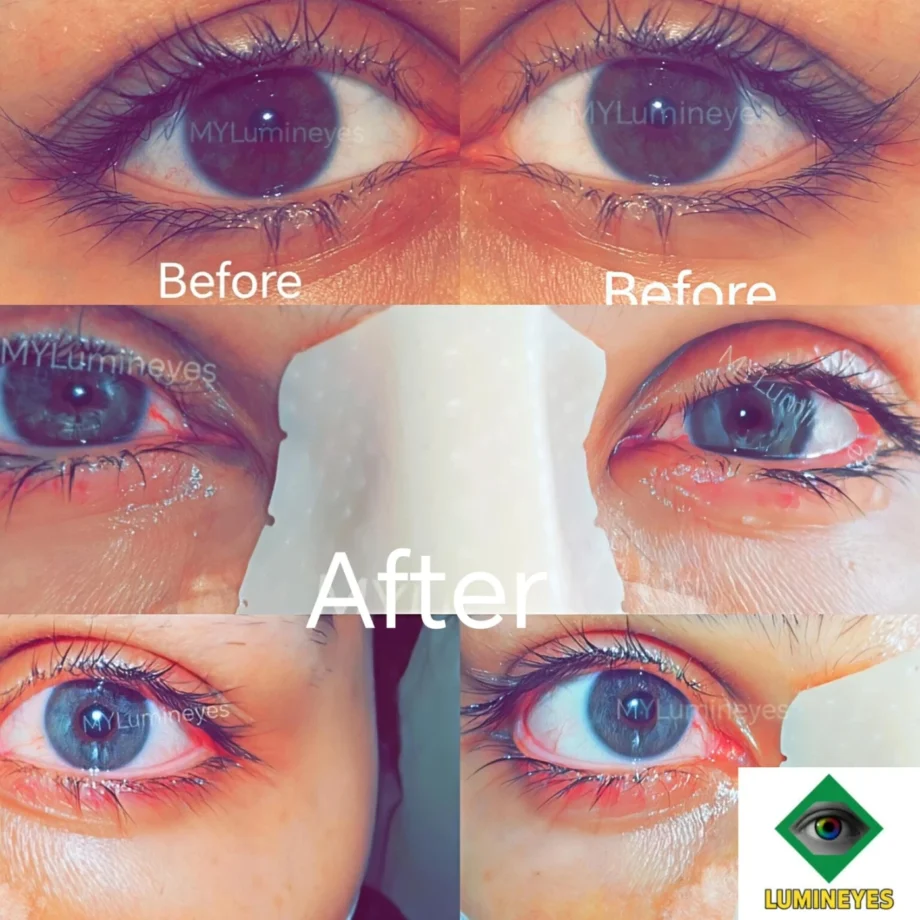
Visible change does not occur immediately after laser application. Iris appearance may evolve gradually over the following weeks and months as the eye responds to treatment. Our Before & After Eye Color Change gallery illustrates how results may develop progressively during the treatment journey.
Following each session, patients attend scheduled follow-up examinations so ocular health and pigment response can be evaluated before additional treatment is considered. Clinical findings—not the number of completed sessions alone—help determine whether treatment should continue or be concluded. See our Laser Eye Color Change Recovery guide for healing, follow-up care, and long-term monitoring.
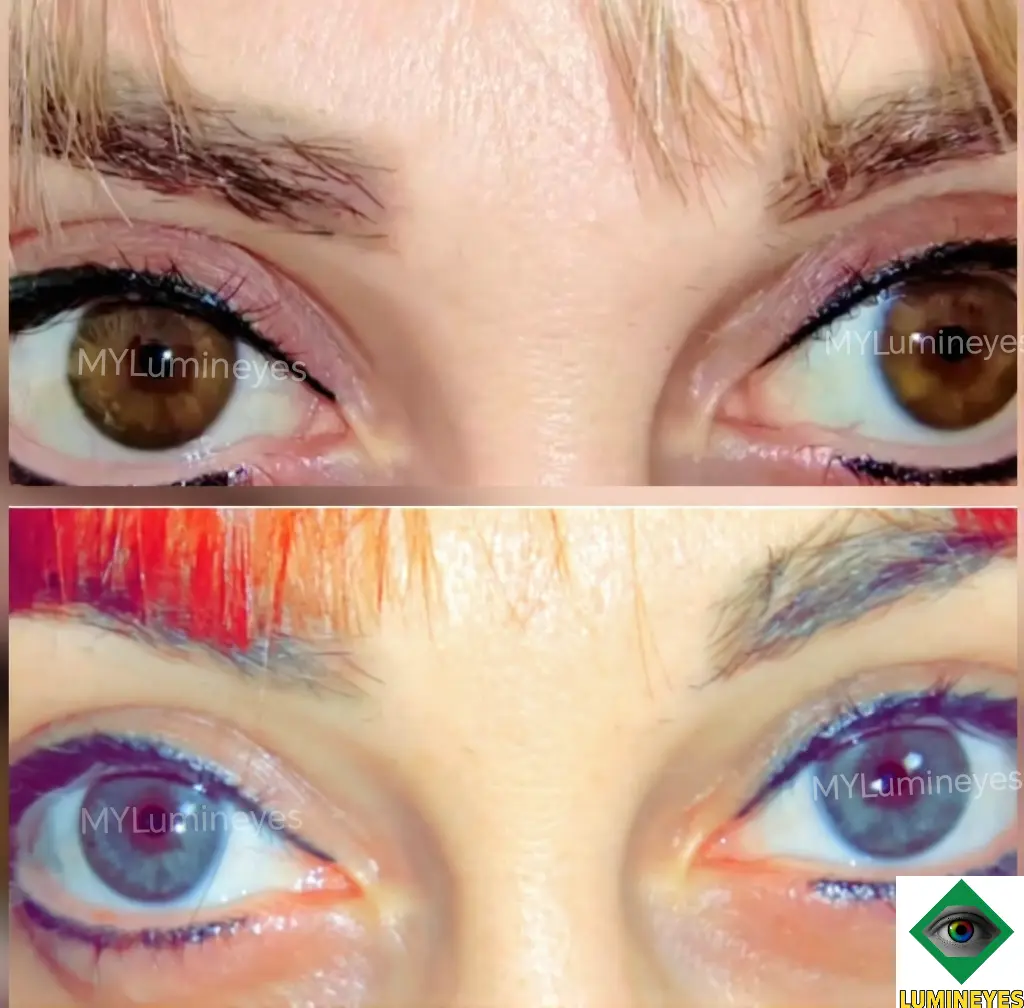
Before a session, ocular health, iris characteristics, healing status, and the current treatment plan are reviewed.
Laser treatment is performed according to the patient's clinical findings rather than a single standardized setting.
Visible change develops progressively as the treated iris responds over time; the process is not an instant cosmetic transformation.
Ocular health and pigment response are reassessed before another session is considered, continued, paused, or concluded.
Expected Results and Treatment Timeline
One of the most common questions patients ask is how quickly eye color changes may become visible—and how many sessions may be needed. The answer varies because the Laser Eye Color Change Procedure relies on each patient's individual biological response rather than an immediate cosmetic transformation. Visible iris lightening may develop gradually throughout the treatment journey.
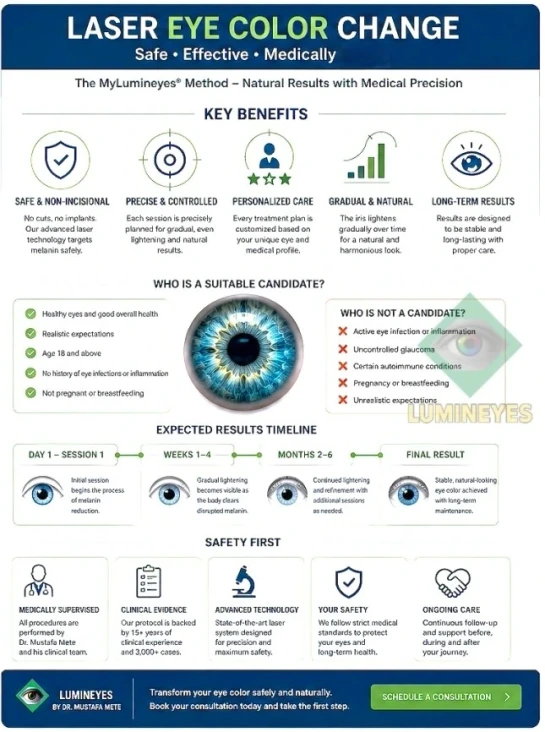
There is no fixed number of sessions for every patient. As a general clinical observation, patients with LIPS Grade 1–3 may require approximately 5–30 sessions, while LIPS Grade 4 may require approximately 30–60 sessions over the total treatment course. These ranges are clinical observations rather than fixed rules or guarantees. Treatment requirements depend on baseline pigmentation, the degree of visible lightening sought, clinical findings, and individual biological response.
The initial treatment stage is not necessarily the complete treatment course. Laser iris depigmentation prices range from €850 to €5,950, depending on treatment scope and included care.
- PRICE RANGE — €850–€5,950: laser iris depigmentation prices vary with the scope of treatment and included care. Confirm whether the quoted amount covers one or both eyes, an initial treatment stage or a defined course, together with examinations and follow-up.
- INDIVIDUALIZED TREATMENT PLANNING: the Lumineyes approach uses assessment-led planning and staged evaluation. The proposed schedule reflects iris characteristics, ocular findings and response between stages; a price range does not determine the number of sessions required.
- FOLLOW-UP & ADDITIONAL STAGES: later examinations or further treatment may require a separate quotation, depending on the original scope. The timing and need for another stage are determined by clinical findings rather than a fixed payment or treatment schedule.
- ASSESSMENT & COST DETAILS: confirm which examinations, medicines and monitoring are included before comparing quotes. See our laser eye color change cost and risks guide for pricing factors, follow-up expenses and practical considerations.
For LIPS Grade 1–3, initial visible change may be noticeable from approximately 48 hours, becoming more apparent over approximately 2–4 weeks. Pigment clearance and visible evolution may continue progressively for up to approximately 6 months.
For LIPS Grade 4, early visible change is generally not expected. Initial lightening toward a lighter brown appearance may become evident around approximately 4 months. Favorable cases may progress toward hazel; rarer reflective or lighter tones can occur, but these outcomes are not predictable or guaranteed.
Possible lighter appearances include blue, gray, green, hazel, and intermediate tones. These are possibilities rather than selectable or guaranteed outcomes. Blue, gray, and green themselves contain many visual variations, and lighting and visual perception can affect how an iris appears.
The final visible appearance is influenced by several interacting factors: baseline iris pigmentation (amount, depth, and distribution); iris structure and optical characteristics, including variables formalized within the L-OAT quantitative iris phenotyping framework; genetically influenced iris characteristics; pigment resistance and stromal adherence; individual biological response; response between treatment stages and stabilization over time; and lighting and optical perception.
No mathematical formula can reliably determine an exact final shade in advance. The Eye Color Simulator, where available, is a visualization tool and should not be interpreted as a clinical prediction or guarantee.
Treatment progression is assessed between visits. Physicians review ocular health, pigment response, healing status, and overall progress before determining whether an additional stage is appropriate. Color evolution is not the same as immediate recovery; short-term comfort and post-session symptoms are addressed separately in the recovery section below.
Two-Year Follow-Up
This longitudinal follow-up illustrates how iris appearance may continue to evolve over time after laser eye color change. Individual outcomes vary according to baseline pigmentation, biological response, and personalized treatment planning.
The final visible appearance should therefore be evaluated longitudinally rather than judged only from the immediate post-treatment period.
Many patients also ask whether the results are permanent. Long-term appearance may vary according to individual ocular characteristics, pigment response, and clinical findings. See our Permanent Eye Color Change guide for current expectations and long-term considerations.
Safety Considerations
Safety considerations apply throughout every stage of the Laser Eye Color Change Procedure. Before treatment is recommended, each patient undergoes a comprehensive ophthalmic examination to assess corneal health, iris anatomy, intraocular pressure, iridocorneal angle, pigmentation characteristics, and other factors that may influence treatment planning.
Safety is procedure-specific. “Laser eye color change” refers to a range of techniques whose risks cannot be assessed independently of the laser platform, treatment parameters, anatomical target, monitoring, and follow-up. Published reports have described complications including transient inflammation, pigment dispersion, secondary pigmentary glaucoma, iris injury, maculopathy, and marked intraocular-pressure elevation after some laser iris depigmentation procedures. These reports are clinically relevant but do not establish the incidence or causal risk of every protocol; meaningful safety interpretation depends on the specific laser, treatment parameters, patient-selection criteria, staging strategy, anatomical target, monitoring approach, and follow-up available for the procedure being evaluated.
Laser treatment is not appropriate for everyone. Ocular findings, previous eye conditions, or anatomical characteristics may affect eligibility or make another approach more appropriate. Medical suitability is determined through clinical evaluation rather than cosmetic preference alone. The absence of symptoms alone does not necessarily indicate treatment suitability. Learn more in our Patient Eligibility guide.
Scheduled follow-up examinations monitor ocular health and treatment response before further treatment is considered. This staged safety logic is formalized in the L-SAFE anterior-segment safety staging framework, which evaluates the ocular response before any further exposure is considered. For the broader discussion of risks, monitoring, and follow-up, see our Eye Color Change Safety guide.
Lumineyes Longitudinal Clinical Observations
FIRST-PARTY CLINICAL OBSERVATIONS
Our retrospective longitudinal clinical records include more than 3,000 treated eyes, with selected follow-up extending to 96 months. These observations describe the clinical experience of the MyLumineyes 8G protocol in a private-practice setting and are presented separately from independent peer-reviewed literature.
In the available clinical records, no chronic or progressive intraocular-pressure elevation and no permanent vision loss were documented. The reported transient findings were described as resolving. Because this is a retrospective, non-randomized, single-practice dataset without independent external validation, these observations do not establish zero risk or universal safety and should not be interpreted as equivalent to randomized controlled evidence.
Recovery and Follow-Up After Laser Eye Color Change
Recovery and follow-up requirements vary between patients. Our Laser Eye Color Change Recovery guide provides a more detailed discussion of healing, follow-up care, and long-term monitoring.
Scheduled follow-up examinations allow the physician to assess ocular health, healing, iris appearance, and clinical response. These findings guide the next clinical decision and help determine whether further treatment or observation is appropriate.
Recovery following the Laser Eye Color Change Procedure is gradual. Iris appearance and treatment response may continue to evolve during the weeks after a session, so visible change should not be judged immediately.
Clinical Perspective and Informed Decision-Making
The Laser Eye Color Change Procedure involves laser–tissue interaction and substantial variation in iris pigmentation and response. Treatment decisions should therefore be based on the individual clinical findings rather than generalized expectations.
Published literature includes a large prospective series of 1,176 eyes as well as individual reports of serious complications and several reviews noting that the overall evidence base remains heterogeneous and that long-term safety requires further independent study. Lumineyes-specific longitudinal observations should be interpreted separately from independent published evidence and according to study design, patient population, follow-up duration, monitoring strategy, and methodological limitations.
Clinical observations, associations, causal inference, and independent validation represent different levels of evidence. Findings from one laser iris depigmentation protocol should therefore not automatically be generalized to a materially different procedure. For a detailed framework on evidence interpretation and procedure-specific safety attribution, see How Clinical Evidence Is Evaluated and How to Interpret Safety Claims in Laser Eye Color Change.
Clinical planning may consider ophthalmic examination, physician experience, available scientific literature, and ongoing patient follow-up. Because iris anatomy, pigmentation density, and healing response vary considerably between individuals, no single model can predict outcomes for every patient. For a broader surgeon-led clinical perspective, see our Clinical Perspective on Laser Iris Depigmentation and the MyLumineyes longitudinal clinical data report.
Within the Lumineyes™ Method, recommendations are reviewed at each stage of treatment and refined according to current clinical findings.
Patients are encouraged to review available information, discuss treatment options with a qualified ophthalmologist, and develop realistic expectations before considering any elective eye color change procedure. Understanding potential benefits, limitations, and follow-up requirements is an important part of informed decision-making.
Patients who are evaluating different treatment approaches may also wish to compare how available eye color change techniques differ in their clinical principles, level of invasiveness, use of artificial materials, treatment planning, recovery, and long-term considerations. Explore our Eye Color Change Method Comparison guide for a comprehensive clinical comparison.
Comparison with Other Eye Color Change Methods
| Technique | Anatomical target | Basic approach | Invasiveness | Key clinical considerations |
|---|---|---|---|---|
| Lumineyes™ laser treatment | Visible anterior iris pigmentation | Selective laser reduction of visible iris melanin | Non-incisional | Individualized parameters, staged treatment, ophthalmic monitoring, and follow-up |
| Keratopigmentation | Cornea | Pigment introduced into the corneal tissue | Corneal surgical procedure | Corneal health, surgical technique, healing, and long-term follow-up |
| Artificial iris implants | Inside the eye / iris plane | Artificial iris material placed intraocularly | Intraocular surgery | Implant-related complications may include glaucoma, corneal damage, or vision loss |
Several techniques have been developed for individuals seeking to change eye color. Although these procedures may pursue a similar aesthetic goal, they differ in clinical principle, level of invasiveness, treatment objective, and follow-up requirements. Understanding these differences is an important part of informed decision-making.
The Lumineyes™ laser eye color change procedure uses selective laser treatment intended to gradually reduce visible iris pigmentation. Other approaches may involve cosmetic iris implants or corneal pigmentation, also known as keratopigmentation. Because these procedures use different approaches and materials, they should not be considered interchangeable.
Published evidence is also not equally mature across techniques. Comparisons should consider not only invasiveness and materials, but also the quality, duration, and independence of the available clinical evidence.
Selecting an appropriate option requires a comprehensive ophthalmic examination and an individualized discussion of ocular health, anatomical findings, treatment goals, and expectations. The physician should determine whether any procedure may be appropriate for the individual patient. Regardless of the technique considered, every elective eye color change procedure should begin with a thorough ophthalmic assessment, realistic expectations, and a clear understanding of potential benefits, limitations, and follow-up requirements.
- Some eye color change procedures involve surgical techniques, including artificial iris implants or corneal pigmentation surgery (keratopigmentation). While this page focuses on non-incisional laser treatment, our Eye Color Change Surgery guide examines eye color change exclusively from a surgical perspective, including the clinical principles and procedures associated with operative techniques.
- Patients interested in comparing these techniques in greater clinical detail can explore our Eye Color Change Method Comparison guide, together with our dedicated resources on Artificial Color Iris Implants and Keratopigmentation.
Common Misconceptions About Laser Eye Color Change
As interest in Laser Eye Color Change grows, distinguishing verified ophthalmic evidence from commercial claims is essential for patient safety and realistic expectations:
- Myth: Eye color can be changed safely in a single instant laser session.
Clinical Fact: Laser iris depigmentation is described in the clinical literature as a procedure-specific intervention. Treatment staging and monitoring depend on the laser protocol, treatment parameters, and patient response. - Myth: Anyone who wants lighter eyes is medically eligible.
Clinical Fact: Candidacy requires a comprehensive ophthalmic assessment. Iris characteristics, ocular anatomy, intraocular pressure, corneal status, previous ocular history, and other findings may affect suitability. - Myth: Patients with similar eye colors will have identical results.
Clinical Fact: Visible change and treatment duration can vary with baseline pigmentation, iris characteristics, healing, and biological response. - Myth: Laser treatment, keratopigmentation, and iris implants are interchangeable approaches.
Clinical Fact: These techniques have different anatomical targets and mechanisms. Laser treatment targets visible iris pigmentation, keratopigmentation introduces pigment into the cornea, and iris implants place artificial material inside the eye.
Key Clinical Messages About the Lumineyes™ Method
- ✓Treatment is individualized according to iris characteristics and clinical findings.
- ✓Session number is not fixed and may be reassessed during follow-up.
- ✓Ophthalmic monitoring remains part of the treatment process.
- ✓Realistic expectations are essential when evaluating visible change and long-term appearance.
Explore Related Clinical Resources
Patient Evaluation & Treatment Planning
Learn how candidacy is assessed before treatment begins and understand the clinical factors that influence individualized treatment recommendations.
Treatment Process & Clinical Follow-Up
Explore how treatment progresses over time, what recovery involves, and how physicians monitor clinical response throughout the treatment journey.
- How Laser Eye Color Change Works
- Recovery Guide
- Eye Color Change Safety
- When to Stop Treatment
- Before & After Gallery
Biophysical Research & Clinical Studies
Explore evidence methodology, procedure-specific safety interpretation, longitudinal clinical data, and technical research supporting the broader clinical framework.
Peer-Reviewed Clinical Literature
Selected peer-reviewed publications covering clinical series, laser-related complications, and reviews of cosmetic eye color change.
- Photoablative Cosmetic Iridoplasty — 1,176 Eyes
- Case Report: Iris Perforation After YAG Depigmentation
- Secondary Pigment Dispersion After Cosmetic Laser
- Iatrogenic Pigmentary Glaucoma After Cosmetic Laser
- Severe Pigmentary Glaucoma and PAMM After Iris Laser
- Laser-Induced Maculopathy After Iris Depigmentation
- 2026 Case Report: Elevated IOP and Corneal Scarring
- Review: Cosmetic Eye Color Change — Outcomes & Complications
- 2025 Narrative Review: Cosmetic Eye Color Change
Procedure Comparisons & Evidence
Review published resources, compare available techniques, and explore long-term clinical considerations before making an informed decision.
Frequently Asked Questions About Laser Eye Color Change
How does the Lumineyes™ Method work?
The method uses selective stromal melanin modulation and a controlled treatment-related pigment response. Visible anterior stromal pigmentation is treated in planned stages, then the clinical response and pigment clearance are reassessed before another stage is considered.
What happens during the laser eye color change procedure?
The process follows four clinical stages: clinical evaluation, individualized laser application, biological response, and follow-up with a next-stage decision. Treatment is response-guided rather than a fixed sequence of identical sessions.
How many treatment sessions are required?
There is no fixed number for every patient. As a general clinical observation, LIPS Grade 1–3 may require approximately 5–30 sessions, while LIPS Grade 4 may require approximately 30–60 sessions over the total treatment course. These are not fixed rules or guarantees. The initial Standard or XTRA program is not necessarily the complete treatment course.
What color can my eyes become?
Possible lighter appearances include blue, gray, green, hazel, and intermediate tones. Laser treatment does not add an artificial pigment. Exact shade selection cannot be guaranteed because the visible outcome depends on the individual's iris characteristics and biological response.
What determines my final eye color?
Final appearance is influenced by baseline iris pigmentation, iris structure and optical characteristics, genetically influenced iris characteristics, pigment resistance and stromal adherence, individual biological response, response between treatment stages and stabilization over time, and lighting and optical perception.
When will I see visible results?
For LIPS Grade 1–3, initial visible change may be noticeable from approximately 48 hours and become more apparent over approximately 2–4 weeks. Pigment clearance and visible evolution may continue progressively for up to approximately 6 months. LIPS Grade 4 generally develops more slowly, with initial lightening often becoming evident around approximately 4 months.
Is the result permanent?
The intended clinical result is a long-lasting and permanent reduction in visible iris pigmentation, not absolute biological immutability. In MyLumineyes clinical experience, any observed repigmentation has generally been limited relative to the pretreatment level of iris pigmentation; however, the degree of pigment reaccumulation varies between individuals and over time. See Permanent Eye Color Change for the detailed discussion.
Is laser eye color change safe and what are the risks?
Safety is procedure-specific and depends on the laser platform, parameters, anatomical target, patient selection, staging, monitoring, and follow-up. MyLumineyes first-party records include more than 3,000 treated eyes with selected follow-up to 96 months; reported observations include approximately 3% transient corneal edema, approximately 1% transient IOP elevation, and approximately 2% mild iridocyclitis, with no chronic/progressive IOP elevation or permanent vision loss documented in the available records. These observations do not establish zero risk or universal safety. See Eye Color Change Safety for detail.
Who may be eligible for treatment?
Eligibility is determined through a comprehensive in-person ophthalmic examination assessing ocular health, iris characteristics, IOP, corneal status, relevant anatomy, previous ocular history, and treatment expectations. Eligibility is never determined from photographs alone, and LIPS is not an eligibility test. See Patient Eligibility.
How much does laser eye color change cost?
Laser iris depigmentation prices range from €850 to €5,950, depending on treatment scope and included care. Confirm whether the quotation covers one or both eyes, the initial treatment stage, examinations and follow-up. The initial fee is not necessarily the complete treatment cost. See our cost and risks guide for details.
How is Lumineyes™ different from other eye color change methods?
Lumineyes is a non-incisional, physician-led clinical strategy involving individualized assessment, staged treatment, and ophthalmic monitoring. Keratopigmentation introduces pigment into the cornea, while iris implants place artificial material inside the eye. These approaches have different anatomical targets, techniques, follow-up requirements, and risk profiles. See the Eye Color Change Method Comparison guide.
How do I arrange an appointment?
The first step is a comprehensive clinical evaluation. You can request an appointment through Contact a Nearby Eye Color Change Clinic. The consultation is used to assess ocular health, suitability, treatment goals, and the appropriate treatment pathway.
The American Academy of Ophthalmology has issued warnings about two cosmetic eye color–changing procedures: artificial iris implants and keratopigmentation. These techniques may cause glaucoma, corneal damage or vision loss and should not be performed on healthy eyes.
Medical Review & Fact-Checking
This page is written and clinically reviewed within the MyLumineyes ophthalmic framework. The clinical content is attributed to Dr. Mustafa Mete, ophthalmologist and developer of the Lumineyes™ Method, with the discussion structured to distinguish Lumineyes-specific clinical observations from independent published literature.
Claims on this page should be interpreted according to their evidence level. Clinical observations are not presented as randomized comparative evidence, and complications reported after materially different procedures are not automatically attributed to the Lumineyes™ Method.
Important disclaimer: This page summarizes current clinical experience and research but does not guarantee outcomes or replace a personalized medical recommendation. All decisions about laser eye color change must be made together with a qualified ophthalmologist after a full examination.