Mylumineyes
Official Clinic
for Eye Color
Change Procedure
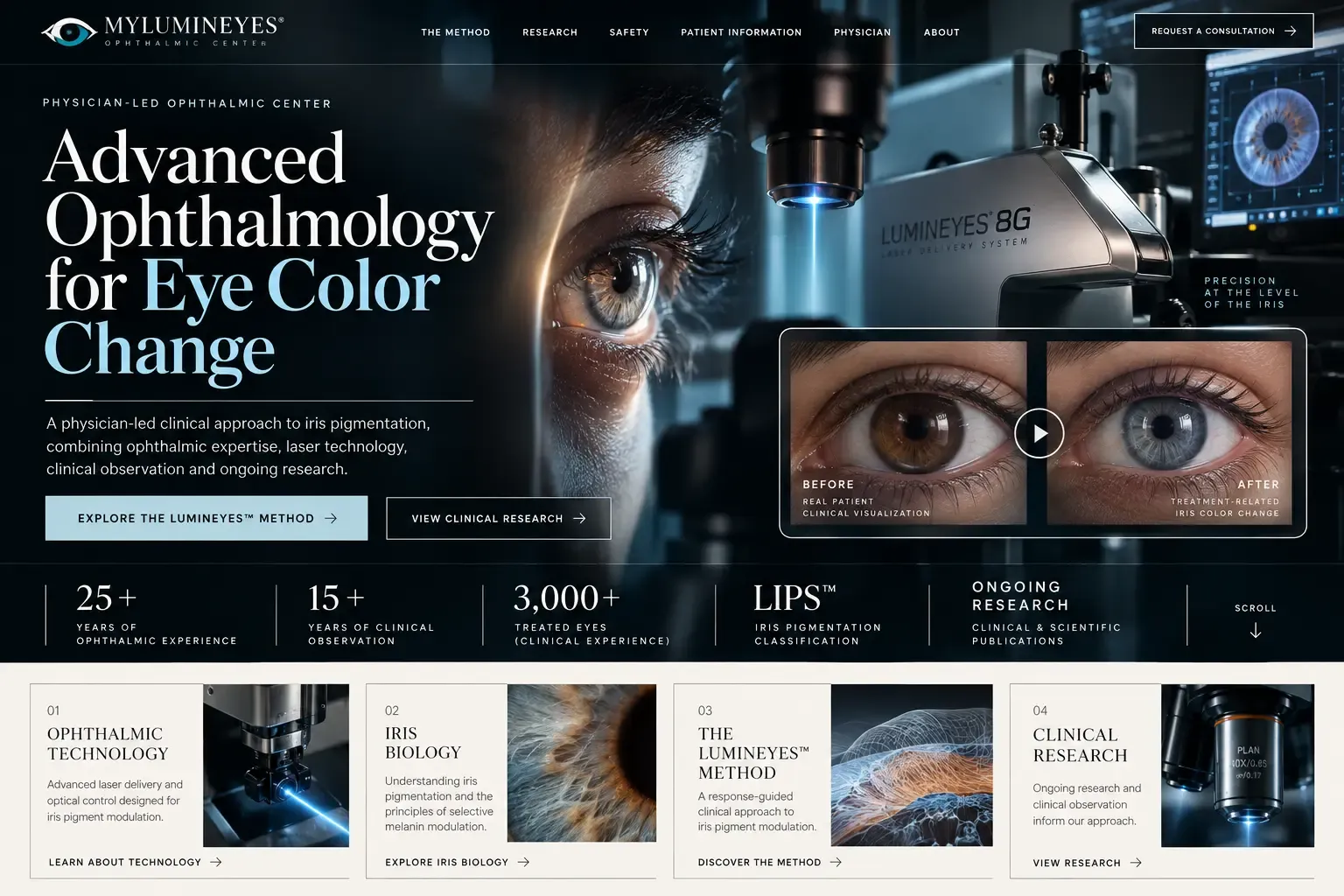
A physician-led clinical approach to iris pigmentation, combining ophthalmic expertise, laser technology, clinical observation and ongoing research.
OPHTHALMIC EXPERIENCE
FOLLOW-UP & OBSERVATION
FIRST-PARTY CLINICAL DATA
CLASSIFICATION FRAMEWORK
MYLUMINEYES ARCHIVE
Lumineyes™
MyLumineyes is a physician-led ophthalmic approach to laser eye color change, combining individualized assessment, iris pigmentation analysis, staged treatment, ophthalmic monitoring and clinical research.
Precision at the
level of the iris.
The clinical approach combines ophthalmic examination, laser-based treatment, iris assessment and clinical documentation. Technology is considered within the broader clinical framework rather than as an isolated device feature.

Technology serves the clinical framework.
Laser treatment, ophthalmic examination and staged clinical decision-making are considered together. The clinical process includes baseline assessment, treatment planning, response evaluation and subsequent follow-up.
EXPLORE THE CLINICAL APPROACH →Understanding
the biology of the iris.
Visible eye color reflects the interaction of iris structure, pigmentation and light. The MyLumineyes research framework examines these factors alongside treatment response and biological limits.
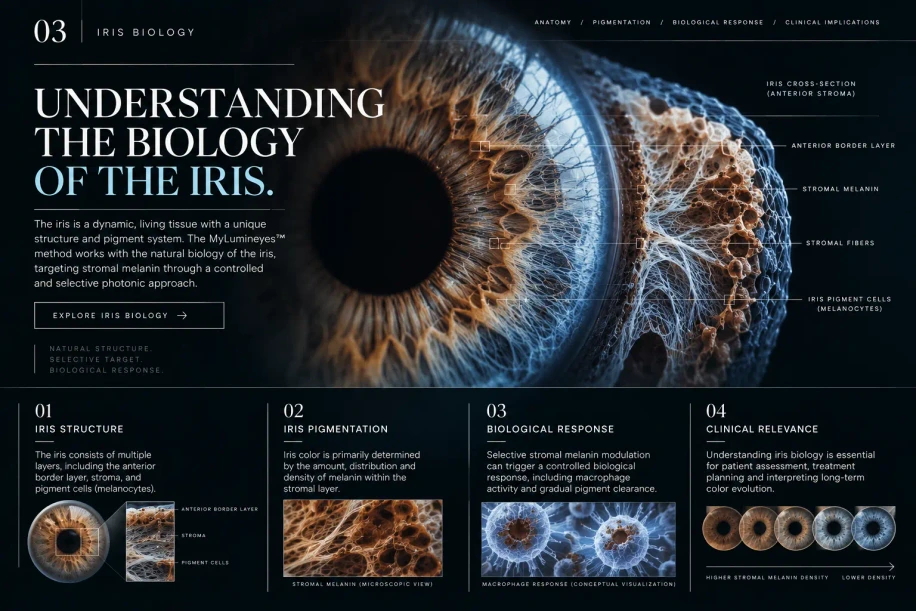
Eye color is a biological phenomenon.
Iris appearance is influenced by pigmentation, stromal structure, optical interaction and individual biology. These factors help explain why clinical response is individual and why a particular final shade cannot be guaranteed.
For a deeper understanding of how laser treatment interacts with iris pigment, explore our clinical guide to laser iris depigmentation, including its biological mechanisms, documented results, published evidence and potential risks.
A structured clinical
approach to every stage.
The clinical framework moves from assessment and planning through response evaluation, monitoring and follow-up rather than treating every eye as a fixed template.
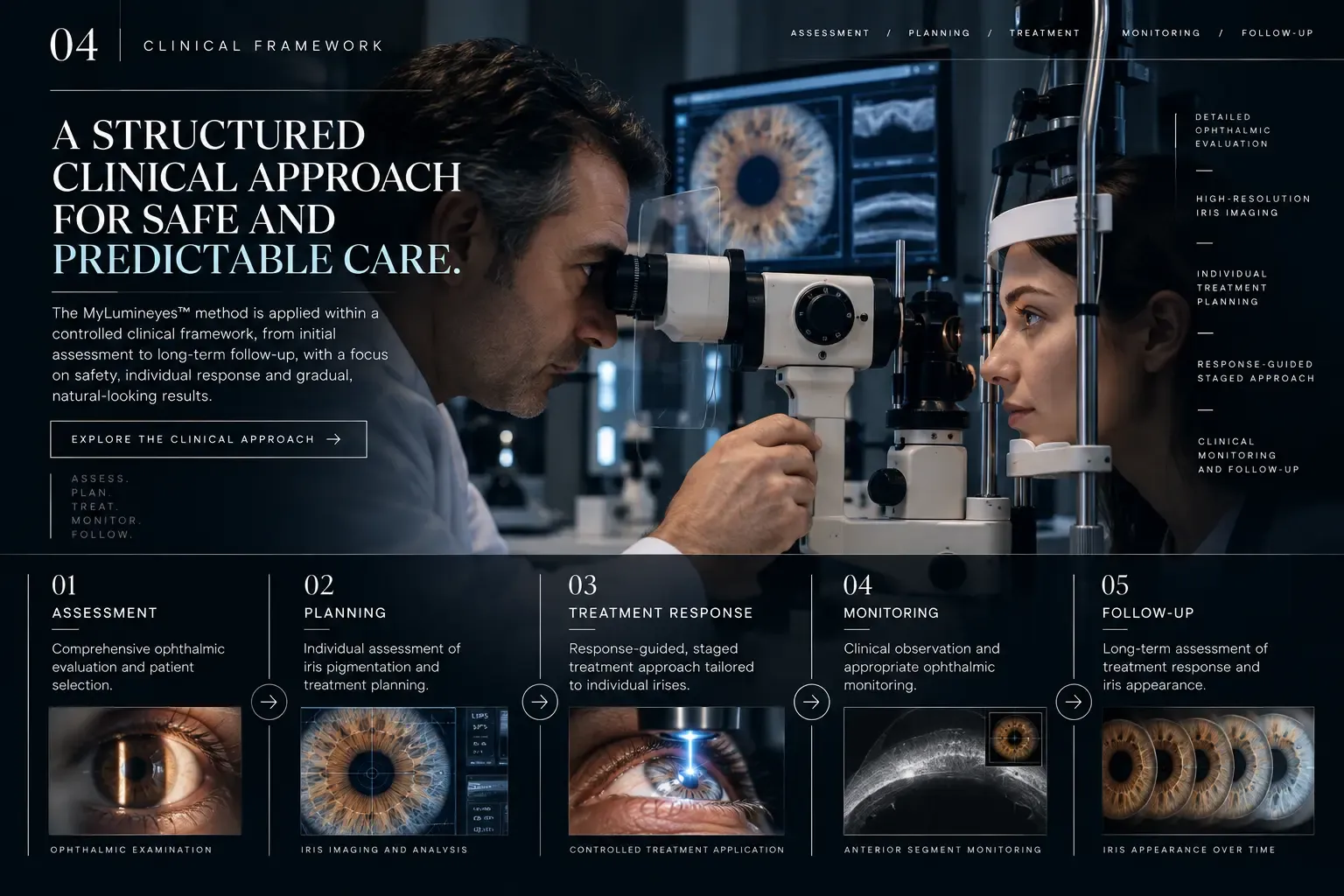
Clinical decisions evolve with the eye.
Baseline findings establish the clinical context. Subsequent decisions consider observed response and the patient's ophthalmic status. The framework is designed around individualized assessment rather than a universal treatment endpoint.
REVIEW PATIENT ELIGIBILITY →Built on clinical experience
& scientific documentation.
The MyLumineyes Research Library distinguishes clinical documentation, scientific analysis, conceptual frameworks and independently published evidence. First-party clinical observations are presented with their scope and limitations.

Evidence should be traceable.
Research records address clinical outcomes, iris biology, optical science, clinical frameworks, procedural context and safety observations. Each record retains its own scope, terminology and evidentiary status.
OPEN THE RESEARCH LIBRARY →Research Publications
Scientific and clinical documentation.
LIPS™
Clinical iris pigmentation classification framework.
Clinical Observations
Longitudinal real-world clinical experience.
Ongoing Research
Continuing investigation and documentation.
Research Library
Primary-source clinical and scientific archive.
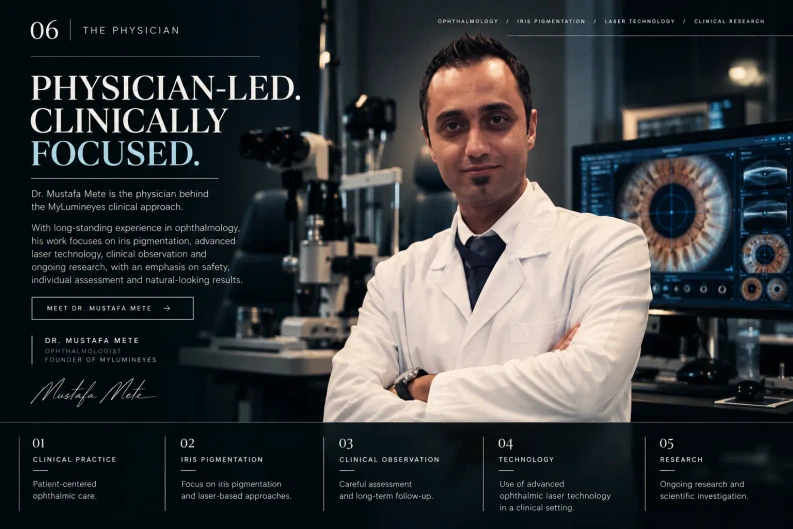
Dr. Mustafa
Mete
Ophthalmologist and developer of the MyLumineyes Method. His work combines ophthalmic clinical practice, iris pigmentation, laser technology, longitudinal patient observation and ongoing research.
Clinical observation,
not promises.
Selected clinical cases illustrate treatment-related changes in iris appearance. Images are presented for educational context; individual responses vary and photographs do not guarantee a specific final shade.
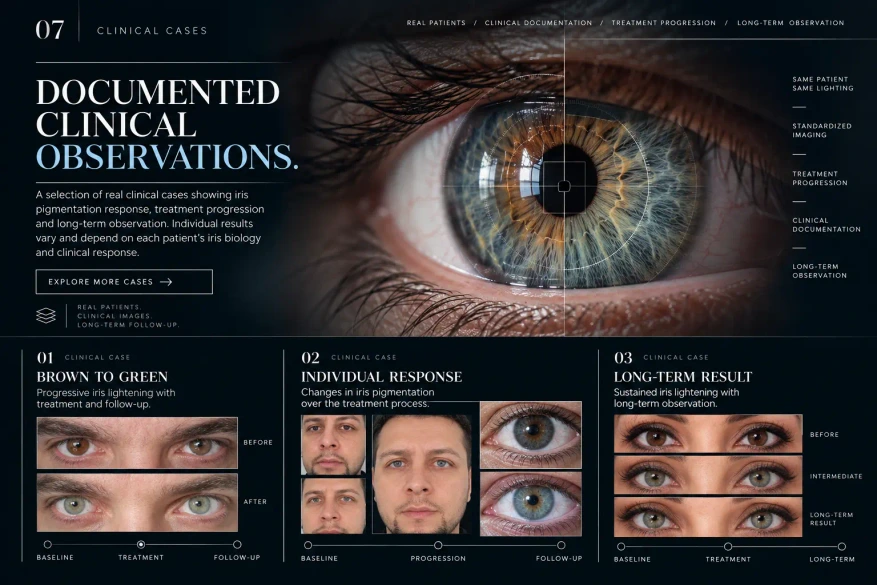
Observed change
across real cases.
Clinical photography can help document changes in iris appearance over the course of treatment. The images are observations, not guarantees of a particular final color or treatment duration.
VIEW BEFORE & AFTER RESULTS →Hear the experience
from the patients.
Real patient accounts provide personal perspective on the treatment journey. One featured patient is also a U.S. plastic surgeon and physician; his perspective is presented here as a patient experience, not as independent clinical validation.
A physician's personal treatment experience.
A first-person account from a U.S. plastic surgeon who underwent the MyLumineyes treatment and describes his experience.
The treatment journey.
A patient perspective on the process and visible evolution of iris appearance over time.
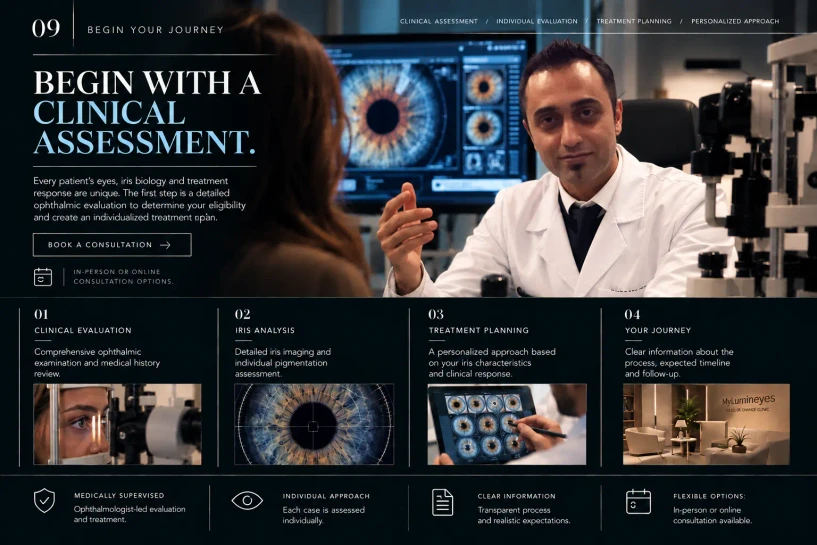
Begin with a
clinical assessment.
The first step is a clinical evaluation. Ocular history, iris characteristics, treatment expectations and medical suitability are considered before an individualized treatment plan is created.
Clinical Evaluation
Review ocular history and baseline findings.
Iris Analysis
Consider iris anatomy and pigmentation.
Treatment Planning
Discuss individualized options and limitations.
Your Journey
Proceed only when clinical suitability is established.