Ophthalmology
Medical history, ocular examination, iris anatomy, pigmentation, corneal health and other relevant findings are considered before an individualized treatment plan is created.

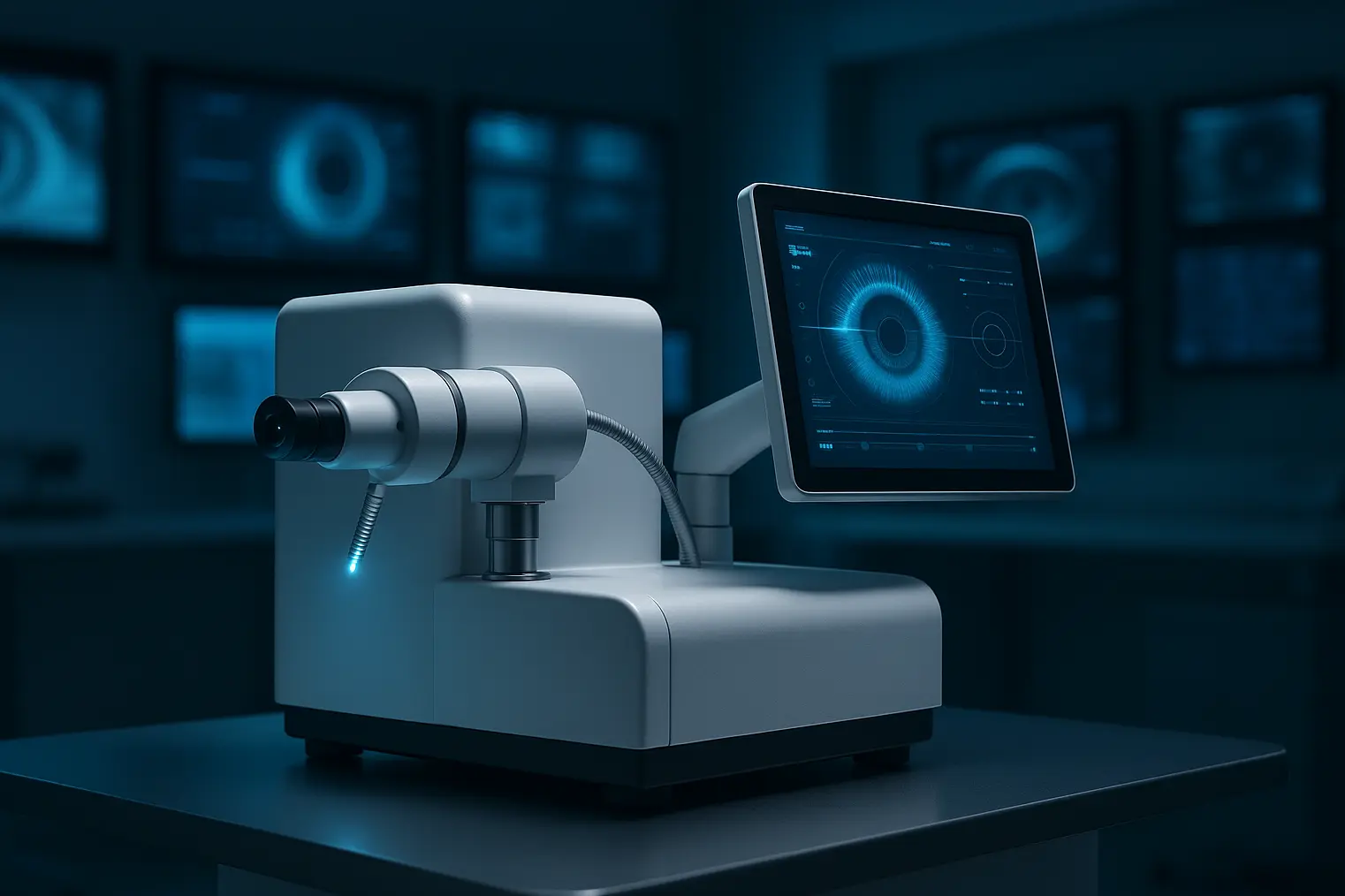
MyLumineyes® is a physician-led ophthalmic center focused on iris pigmentation, laser eye color change, individualized clinical assessment, ophthalmic monitoring and continuing research.
Clinical assessment remains central to treatment decisions.
A highly focused field rather than a broad cosmetic service menu.
Technology is used within an ophthalmic clinical framework.
Clinical experience is documented together with its limitations.

The idea behind Lumineyes developed from a clinical interest in iris pigmentation, melanin and the interaction between ophthalmic laser energy and pigmented tissue.
The central question was not simply whether an eye could appear lighter. It was whether visible iris pigmentation could be approached progressively within an ophthalmic framework that respected anatomy, biological variability, clinical monitoring and long-term observation.
The history of Lumineyes spans different stages of exploration, technical development and clinical application. These stages should not be treated as interchangeable: an early concept is not the same as a defined clinical protocol, and clinical experience is not the same as independently validated evidence.
The earliest personal exploration of the relationship between iris pigmentation, visible eye color and the possibility of controlled pigment modification began during this period.
The conceptual and technical development that would later form the Lumineyes approach began to take a more defined form, integrating ophthalmic experience with laser–pigment interaction.
The period represented in the current structured clinical dataset begins, with systematic clinical application, documentation and longitudinal observation.
MyLumineyes continues to develop its clinical framework through individualized ophthalmic assessment, treatment monitoring, longitudinal observation and ongoing scientific documentation.
This historical video documents an earlier period in the development of the Lumineyes approach. It is presented as part of the historical record rather than as a substitute for current clinical documentation or scientific evidence.
Explore the documented history →The present MyLumineyes framework sits at the intersection of clinical ophthalmology, laser technology and structured clinical research.
Medical history, ocular examination, iris anatomy, pigmentation, corneal health and other relevant findings are considered before an individualized treatment plan is created.
Laser technology is applied within a staged clinical framework. Device capability does not replace physician judgment, patient selection or ophthalmic monitoring.
Longitudinal observations are documented and interpreted according to the type and limitations of the available evidence rather than presented as universal proof.
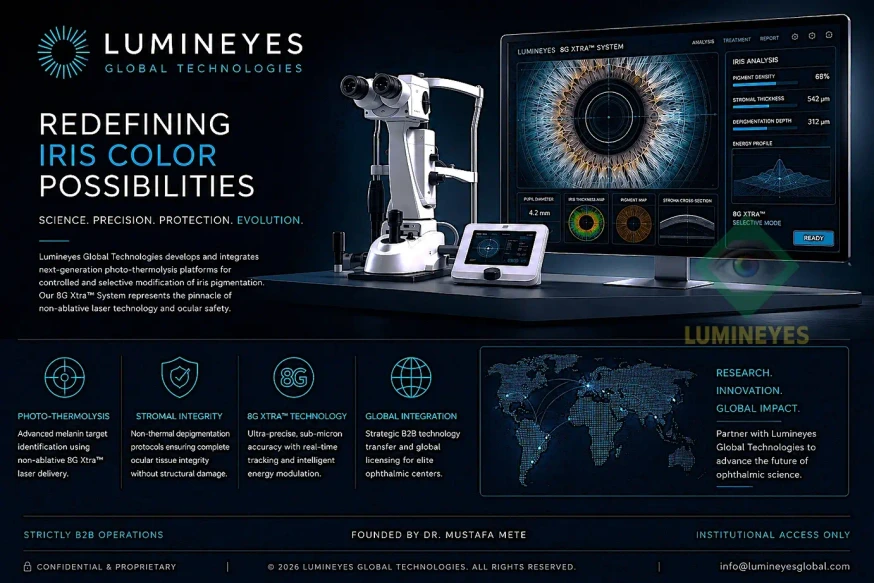
The Lumineyes technology framework has evolved alongside clinical experience in iris imaging, pigmentation assessment, laser–tissue interaction and response-guided treatment planning.
Technology is not presented as a substitute for medical judgment. Its role is to support controlled application, documentation and individualized clinical decision-making.
Establish the ophthalmic baseline and determine individual suitability before treatment.
Treatment planning reflects iris characteristics and the complete clinical picture rather than eye color alone.
The eye's clinical and visible response is evaluated progressively rather than assumed in advance.
Subsequent clinical decisions are adjusted when findings or biological response indicate that they should be.

Dr. Mustafa Mete is an ophthalmologist and clinical researcher whose work includes iris pigmentation, laser iris depigmentation, ophthalmic assessment, treatment monitoring and long-term clinical observation.
His broader clinical background extends across more than 25 years in ophthalmology. The development of the Lumineyes approach represents a focused part of that wider clinical experience.
A specialized medical identity is defined as much by its boundaries as by the procedures it performs.
MyLumineyes maintains a clinical and scientific archive covering iris pigmentation, laser–tissue interaction, clinical outcomes, safety monitoring, biological response and longitudinal observation.
Research records are identified according to their evidentiary context. Clinical observation, scientific analysis and independent validation should not be presented as if they carry the same evidentiary weight.
Explore Research →Explore the clinical method, meet the physician behind its development, or examine the research and documentation that support the current MyLumineyes framework.
 Lumineyes Assistant
×
Lumineyes Assistant
×