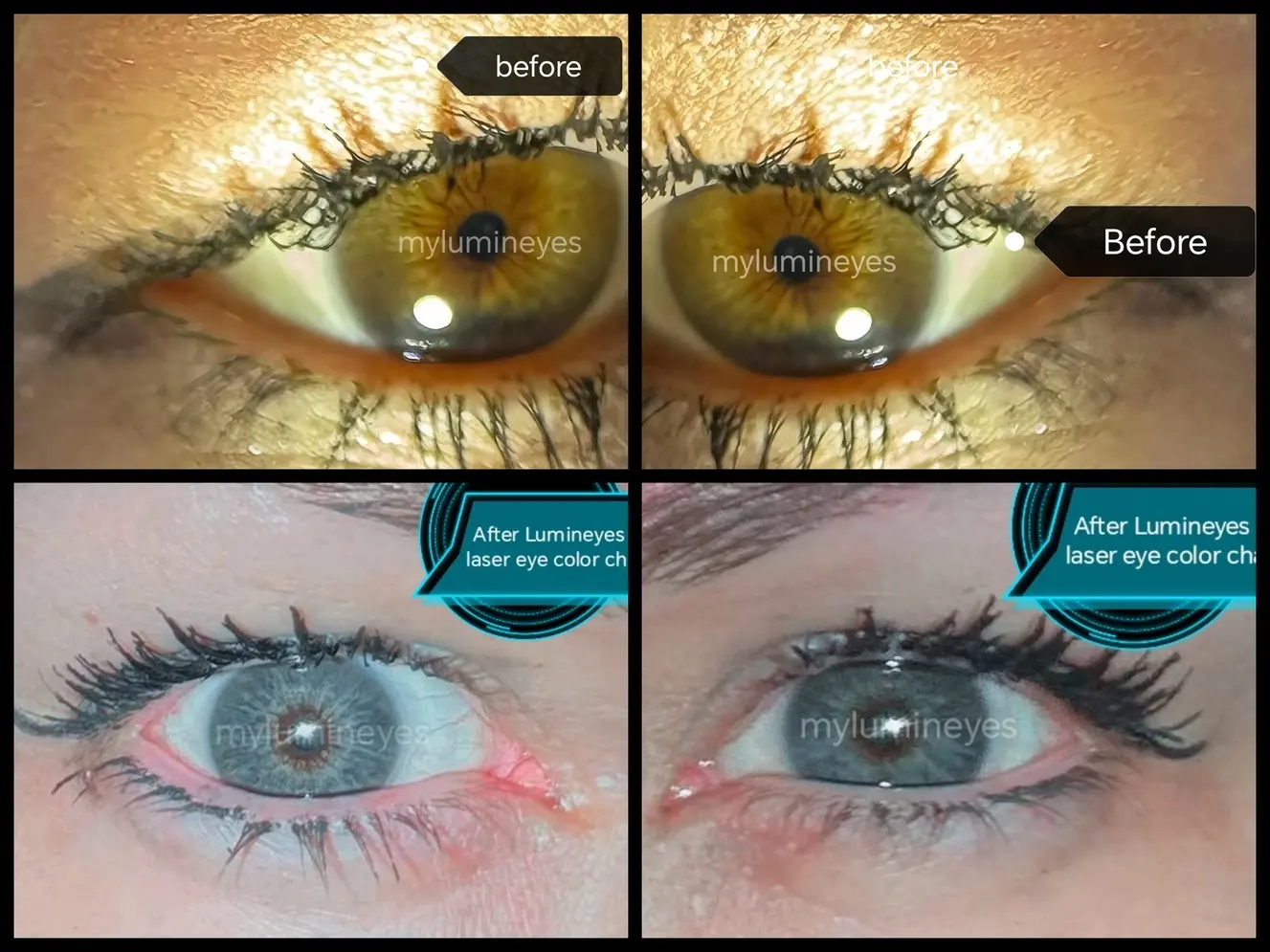
Laser eye color lightening with the My Lumineyes® method is a non-surgical technique that gradually lightens the natural iris by targeting superficial pigment in the anterior stroma. Safety is the first priority for anyone considering this procedure. This page explains how the laser interacts with the eye, which medical factors influence safety, who qualifies, and what long-term follow-up data show. The goal is to provide clear and realistic information instead of exaggerated promises.
For a complete clinical overview, refer to the Laser Eye Color Change Procedure.
How the Lumineyes Laser Interacts With the Iris
The iris has two main layers: a posterior pigment epithelium and an anterior stromal layer. In dark brown eyes, melanin accumulates mainly in the stroma. The Lumineyes protocol is designed to act primarily on this superficial stromal pigment using low-energy pulses that do not penetrate deeper into the globe.
The laser does not enter the inside of the eye, does not touch the crystalline lens or retina, and does not introduce any foreign material. The aim is to influence pigment distribution over time, not to cut, burn or thin the iris tissue.
How safe is changing your eye color and Intraocular Pressure
In long-term clinical follow-up, Dr. Mustafa Mete has observed that intraocular pressure tended to decrease in most treated patients, rather than increase. In many cases, opening of the drainage angles at the iris–cornea junction was documented. These findings support the idea that, when performed correctly with proper indications, the Lumineyes laser depigmentation protocol can be compatible with ocular physiology.
Of course, no medical procedure is “zero risk”. This is why a detailed ophthalmologic examination, gonioscopy and pressure measurements are performed before the first session and repeated during the course of treatment.
Who Is a Good Candidate From a Safety Perspective?
Not every patient is suitable for laser eye color lightening. Safety is closely linked to proper candidate selection. In general, the procedure is considered only when:
- There is a healthy anterior segment without uncontrolled inflammation or active uveitis.
- The drainage angles are open and there is no advanced glaucomatous damage.
- Corneal endothelium count and ocular surface are within acceptable limits.
- The patient understands that the process is gradual and respects the planned intervals between sessions.
Eyes with advanced glaucoma, severe endothelial compromise, uncontrolled systemic disease or unstable ocular anatomy may be excluded or require alternative approaches. In such cases, safety takes priority over cosmetic expectations.
Understanding the Limits of Color Change
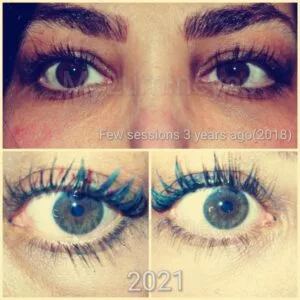
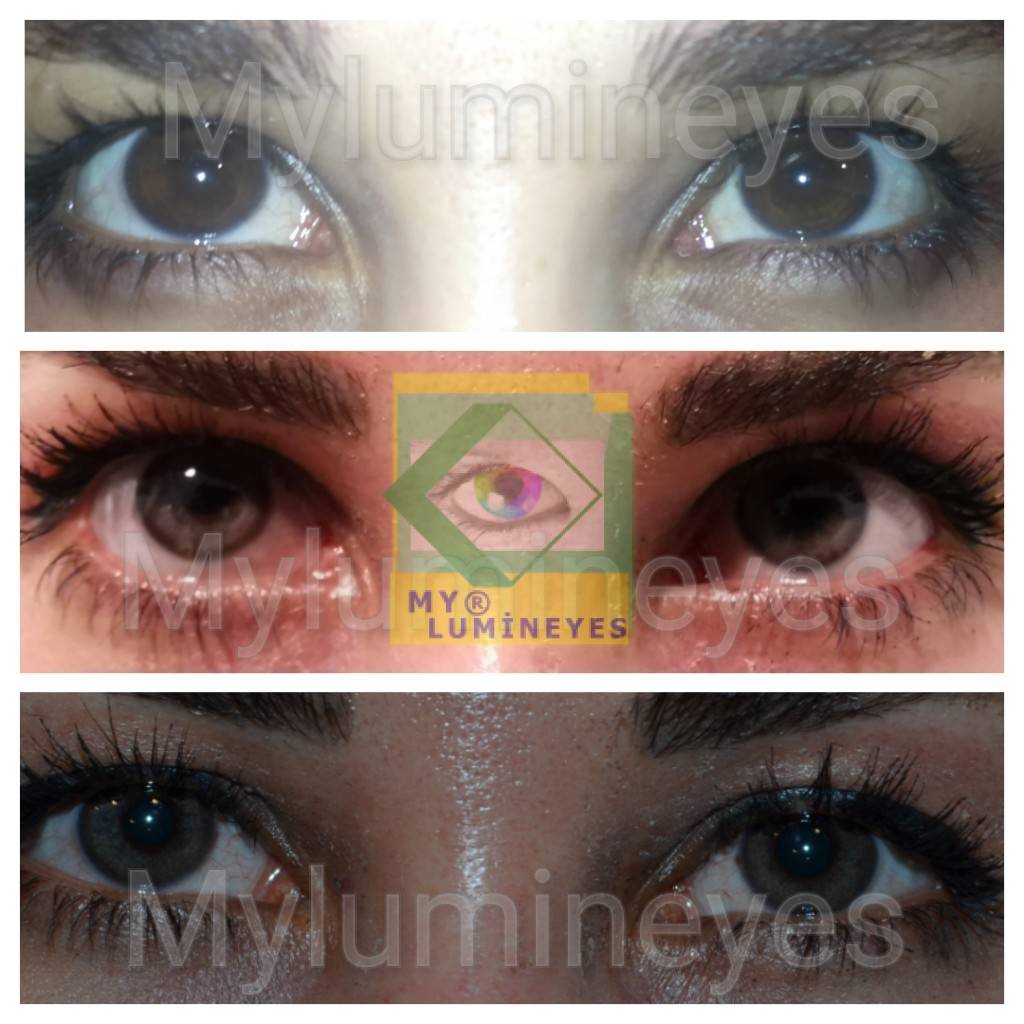
Every iris has a natural limit determined by its genetics. Very dark brown eyes (Grade 4 pigmentation) may need many more sessions—sometimes forty or more—to reach a stable and natural lighter tone. Some irises cannot safely reach very pale blue, but can achieve attractive colors such as smoke grey, hazel or soft green. Respecting these biological limits is one of the key safety principles of the protocol.
The healthiest results come from selecting a color range that harmonizes with the patient’s facial features, skin tone and ocular anatomy, instead of forcing the eye beyond its safe capacity. To see what can realistically be achieved in different grades, you can review our
eye color change before–after photos in Turkey.
Comparison With Surgical Eye Color Change Methods
Laser brightening with Lumineyes is non-surgical: no incision, no intraocular implant, no corneal tattooing and no injected pigment. In contrast, surgical alternatives such as artificial iris implants or keratopigmentation require entering the eye or placing dye material in the cornea. These procedures carry higher risks of infection, chronic inflammation, corneal edema and long-term pigment instability.
International ophthalmology organizations have published warnings about cosmetic iris implants and similar procedures because of these complications. For example, the
American Academy of Ophthalmology highlights serious safety concerns with intraocular cosmetic implants that are not comparable to non-incisional laser brightening.
For a detailed comparison of laser versus implants and corneal tattooing, including indications and ethics, you can also read our dedicated pages on artificial iris implants and keratopigmentation eye color change.
Long-Term Monitoring and Follow-Up
Safety is not limited to what happens during a single session. A structured follow-up plan is essential. During the course of treatment:
- Intraocular pressure is monitored at regular intervals.
- The anterior segment and drainage angles are checked for inflammation or pigment overload.
- Symptoms such as temporary light sensitivity, mild redness or dryness are evaluated and treated with appropriate drops.
- Session timing may be adjusted if the eye needs more recovery time.
Most temporary effects resolve with standard treatment and spacing. Severe complications are rare when protocol, indications and follow-up are respected. Patients who want to understand how safety interacts with pricing and number of sessions can read our
eye color change cost and risks overview. “See the [Clinical Research] behind our success.”
This page is intended to explain the safety logic behind the Lumineyes® method and does not replace an individual examination by an ophthalmologist.