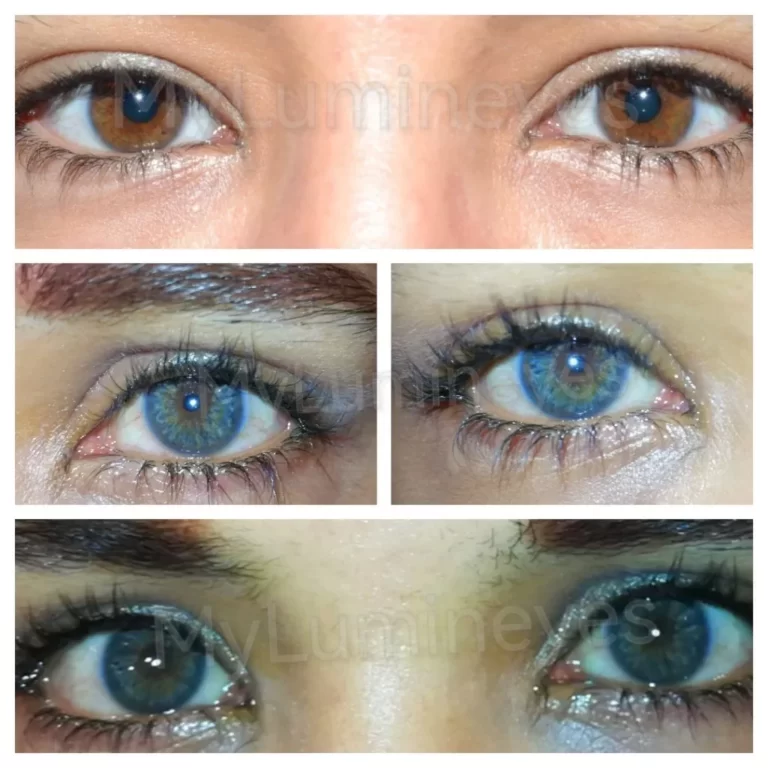
Iris Lightening Reviews & Patient Experiences
A collection of iris lightening reviews, patient-shared experiences, treatment-progress videos and follow-up perspectives related to laser iris depigmentation at MyLumineyes®.
What this page shows
Patient reviews can provide useful context about treatment experience, progression and individual expectations. They do not represent a standardized clinical outcome, and individual results can vary according to iris pigmentation, anatomy, treatment response and follow-up.
The videos below are presented as patient or professional experiences. They should be considered alongside clinical information and an individual ophthalmic assessment rather than as a substitute for medical advice. For the underlying procedure, start with the Laser Eye Color Change clinical guide.
Read the experience in context
Before-and-after images and videos show individual cases.
The purpose of this archive is to make real-world experiences easier to review without presenting testimonials as proof that every patient will have the same result.

Medical review & clinical context
Medical content on this page is reviewed in the context of ophthalmic practice and the clinical follow-up framework used by MyLumineyes®. Patient testimonials remain individual accounts and are not presented as independent clinical evidence. For additional background, see About MyLumineyes and the clinic's Why Trust MyLumineyes? page.
Patient & Professional Experiences
Three existing videos from the original page, retained with their original YouTube sources.
Plastic Surgeon M.D. Review — U.S.
Professional experience · 1:56
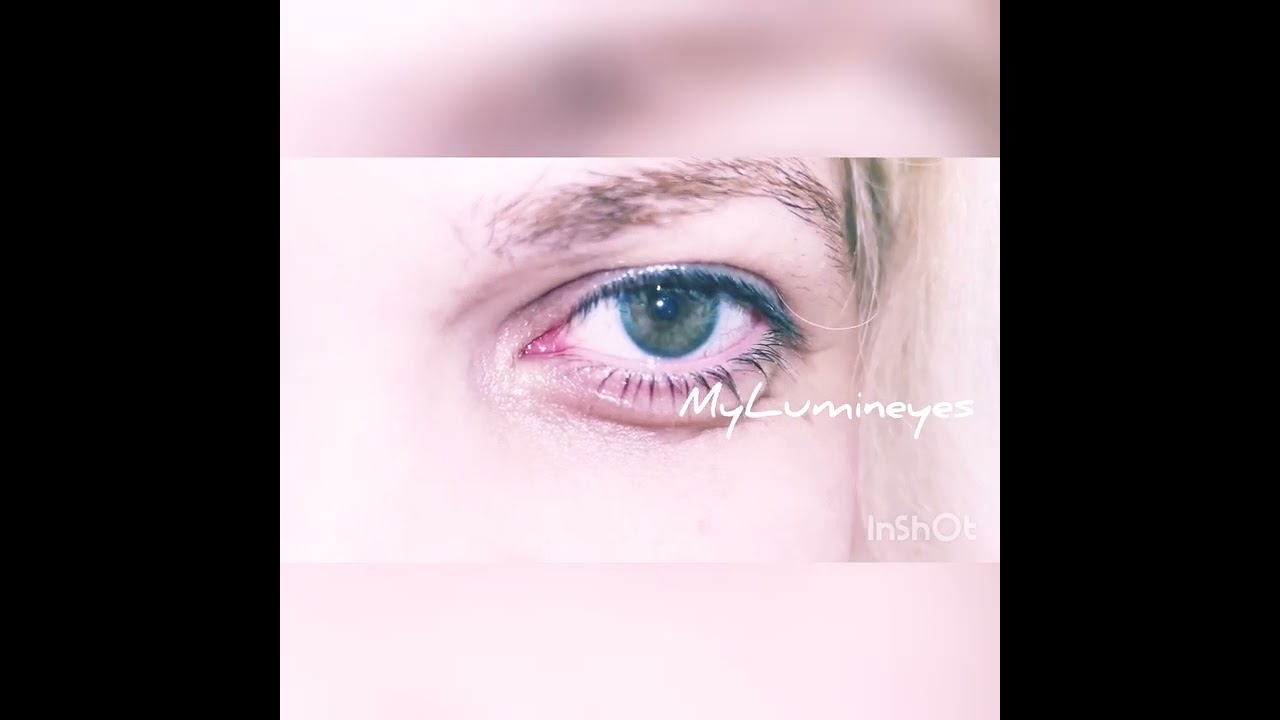
Iris Lightening Treatment Progression
Patient journey · 1:03
Is Laser Eye Color Change Safe?
Safety discussion · 1:45
Patient Experience in Context
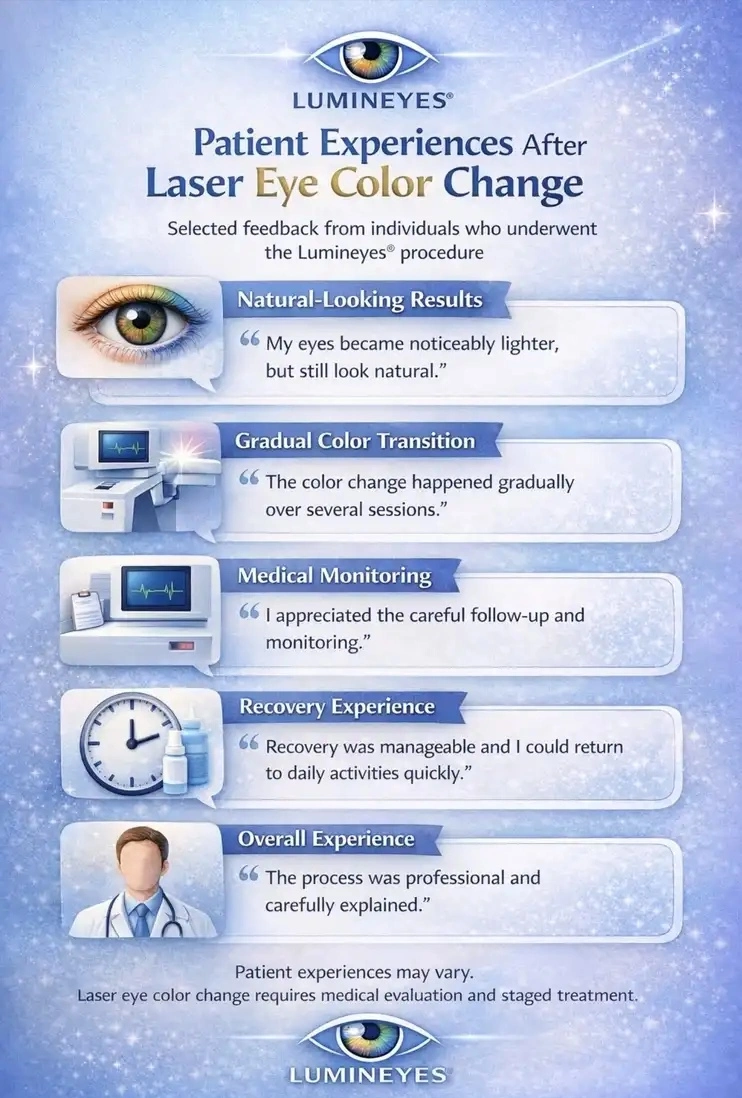
Individual progression is not uniform
Reviews and follow-up material can illustrate how the visible appearance of the iris evolves over time. The timing and degree of visible change are individual and should not be interpreted as a guaranteed schedule or final color outcome. For additional visual context, compare these experiences with the MyLumineyes before-and-after patient gallery, where treatment-stage photographs can be reviewed alongside their clinical context.
- Different baseline iris pigmentation can produce different visual responses.
- Additional treatment sessions may be considered in selected cases.
- Follow-up is important when assessing progression rather than relying on a single photograph.
- Patient-reported comfort and experience can differ from one individual to another.
What Patients Talk About
These themes describe the subjects appearing in patient experiences; they are not clinical ratings.
Appearance & color evolution
Patients often discuss gradual changes in iris tone, clarity and overall appearance.
Treatment planning
Experiences can include discussion of staged sessions and individualized planning.
Comfort & recovery
Patient accounts may describe the immediate treatment and recovery experience.
Long-term follow-up
Later photographs and videos can provide context beyond the immediate treatment period.
How to Read Before-and-After Material
Look at the time point
A photograph immediately after treatment and a later follow-up image answer different questions. Time since treatment should be considered when comparing cases.
Compare like with like
Lighting, camera settings, pupil size, viewing angle and image processing can alter the apparent color of an iris. Visual comparisons are therefore best interpreted cautiously.
What Patients Actually Describe
Patient accounts on this page cover more than the final appearance of the iris. They also describe the treatment journey, the pace of visible change, recovery, follow-up and personal expectations.
Visible color evolution
Some experiences focus on a gradual change in iris tone and contrast rather than an immediate change after a single session. Photographs taken at different time points can therefore tell different parts of the story.
Treatment experience
Reviews may discuss what the sessions felt like, how the patient experienced the clinical process and how expectations changed during the treatment course.
Follow-up matters
A review becomes more informative when it identifies when the photograph or video was recorded. Earlier and later observations should not be treated as interchangeable endpoints.
Individual response
Baseline iris pigmentation, anatomy, treatment response and the interval between assessments can all affect what a patient sees and reports.
What a Patient Experience Can Include
Initial assessment
The starting point is an ophthalmic assessment and discussion of whether the treatment is appropriate for the individual eye.
Staged treatment
Where treatment is undertaken, the course may involve planned sessions rather than a single event. The exact course is individualized.
Early follow-up
Early follow-up helps document the response and the patient's clinical status rather than judging the final appearance from an immediate photograph.
Later observation
Later photographs or videos can add useful context about how the visible appearance develops over time.
Positive and Less-Positive Experiences
A useful review archive should not present testimonials as a uniform success story. Individual experiences can differ in speed, visible change, comfort and expectations.
What some patients appreciate
- Having a documented treatment journey rather than only a final photograph.
- Seeing changes across multiple follow-up points.
- Understanding the clinical process before deciding whether to seek an assessment.
- Being able to compare the experience described by different individuals.
What may be less straightforward
- Visible change may be gradual and may not match an individual's initial expectation.
- Photographs can exaggerate or reduce apparent color differences because of lighting and camera conditions.
- Some cases may require additional assessment or treatment planning.
- A testimonial cannot establish an individual's safety, suitability or expected outcome.
What Makes an Eye Color Change Review More Useful?
Look for the interval between treatment and the photograph or video.
A sequence can provide more context than a single before-and-after image.
Check lighting, camera exposure, pupil size, angle and image processing.
Details about sessions, follow-up and experience add context beyond a statement about color.
A personal result should not automatically be treated as a prediction for another patient.
Testimonials can illustrate experience, but safety and effectiveness require clinical evidence and medical assessment.
Build the Full Picture Before You Decide
A patient review answers one question: what did this person experience? A responsible evaluation also requires information about the procedure, clinical evidence, before-and-after documentation, the physician and the clinic's approach to safety and follow-up.
Laser Eye Color Change
Procedure mechanism, candidacy, monitoring, treatment planning and limitations.
Read the clinical guide → Visual evidenceBefore & After Results
Clinical photographs and treatment-stage material that help put review comments into visual context.
Review the patient gallery → ResearchResearch Hub
Clinical observations, iris biology, safety documentation and research methodology.
Explore the research → Clinic backgroundAbout MyLumineyes
Learn how the clinic combines ophthalmic assessment, imaging, treatment planning and longitudinal follow-up.
About the clinic → TransparencyWhy Trust MyLumineyes?
Review the clinic's stated approach to evidence, patient selection, communication and long-term follow-up.
Read the trust framework → Physician profileDr. Mustafa Mete
Professional background, ophthalmic training, surgical experience and development of the Lumineyes™ approach.
View physician profile →What Should You Check About the Physician and Clinic?
Reviews are more useful when the person reading them can also verify the clinical context behind the experience. These are practical questions to ask rather than a ranking of providers.
| What to check | Why it matters when reading a review | What you can verify or ask |
|---|---|---|
| Ophthalmic qualification | An eye-color procedure concerns ocular anatomy, so the review should be read in the context of appropriate ophthalmic evaluation. | Is the treating physician an ophthalmologist? What is the physician's documented training and clinical background? |
| Procedure-specific experience | General surgical experience and experience with the specific procedure are different things. | How long has the physician performed or studied the specific procedure? Is there documented longitudinal experience? |
| Broader eye-surgery experience | Experience with other ophthalmic laser or surgical procedures can provide context for the physician's broader understanding of ocular anatomy, although it does not by itself prove the safety or effectiveness of iris depigmentation. | Review the physician's professional profile and documented work in areas such as refractive laser surgery or other ophthalmic procedures. |
| Patient selection | A review from one patient cannot tell another person whether treatment is appropriate for their own eye. | Does the clinic describe contraindications, screening, medical history review and situations in which treatment may not be recommended? |
| Objective documentation | A sequence of clinical photographs, examinations and follow-up observations gives more context than a single testimonial. | Are baseline images, treatment-stage images and follow-up assessments documented? Are image conditions explained? |
| Safety monitoring | Patient experience and ocular safety are not the same outcome. A comfortable review cannot establish medical safety on its own. | What ophthalmic parameters are assessed before and during treatment, and how is follow-up handled? |
| Evidence transparency | Clinical observations, testimonials and peer-reviewed evidence answer different questions and should not be treated as interchangeable. | Does the clinic distinguish its own observations from independent published literature and acknowledge limitations? |
| Alternatives and risks | A trustworthy review process should leave room for the possibility that treatment may not be appropriate or that alternatives may have different risk profiles. | Are risks, limitations, alternatives and the possibility of declining treatment discussed before a decision? |
Important distinction: a physician's experience in LASIK, retinal procedures, eyelid surgery or other ophthalmic work can demonstrate broader surgical exposure, but it should not be presented as direct proof of outcomes for laser iris depigmentation. Procedure-specific evidence and follow-up remain separate questions.