
A 10–14 day, hands-on clinical training program for qualified physicians, conducted directly with Dr. Mustafa Mete and built around real patient cases, clinical reasoning and response-guided treatment.
The development of Lumineyes has been shaped by years of clinical experience, patient observation and continued refinement of the approach to laser iris depigmentation.
A look back at the development of the Lumineyes approach to laser eye color change.
Watch the storyClinical training is built around understanding the patient, interpreting the iris, planning treatment, observing response and making the next clinical decision. The objective is not to memorize a single protocol, but to develop a structured way of thinking that can be applied to individual cases.
Understand baseline findings, ocular history and individual clinical characteristics before treatment decisions are made.
Learn how patient characteristics influence planning, expectations and the subsequent clinical pathway.
Treatment is considered as a staged clinical process, with reassessment informing subsequent decisions.
Clinical follow-up, patient communication and recognition of variation are integral to responsible case management.
From patient assessment to response-guided treatment, the clinical process is built around observation, individualized planning and reassessment.
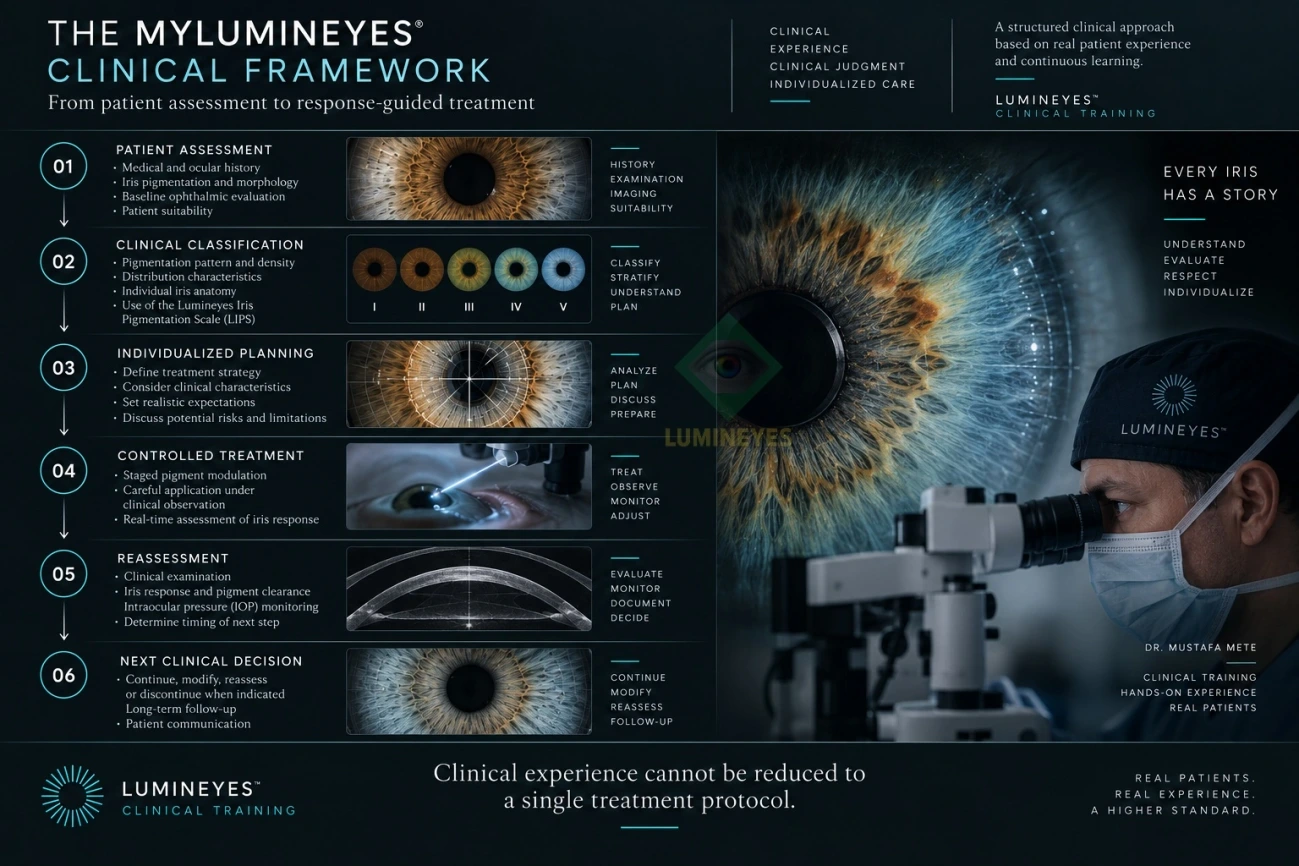
Clinical experience cannot be reduced to a single treatment protocol. The framework illustrates the clinical reasoning process taught during MyLumineyes physician training.
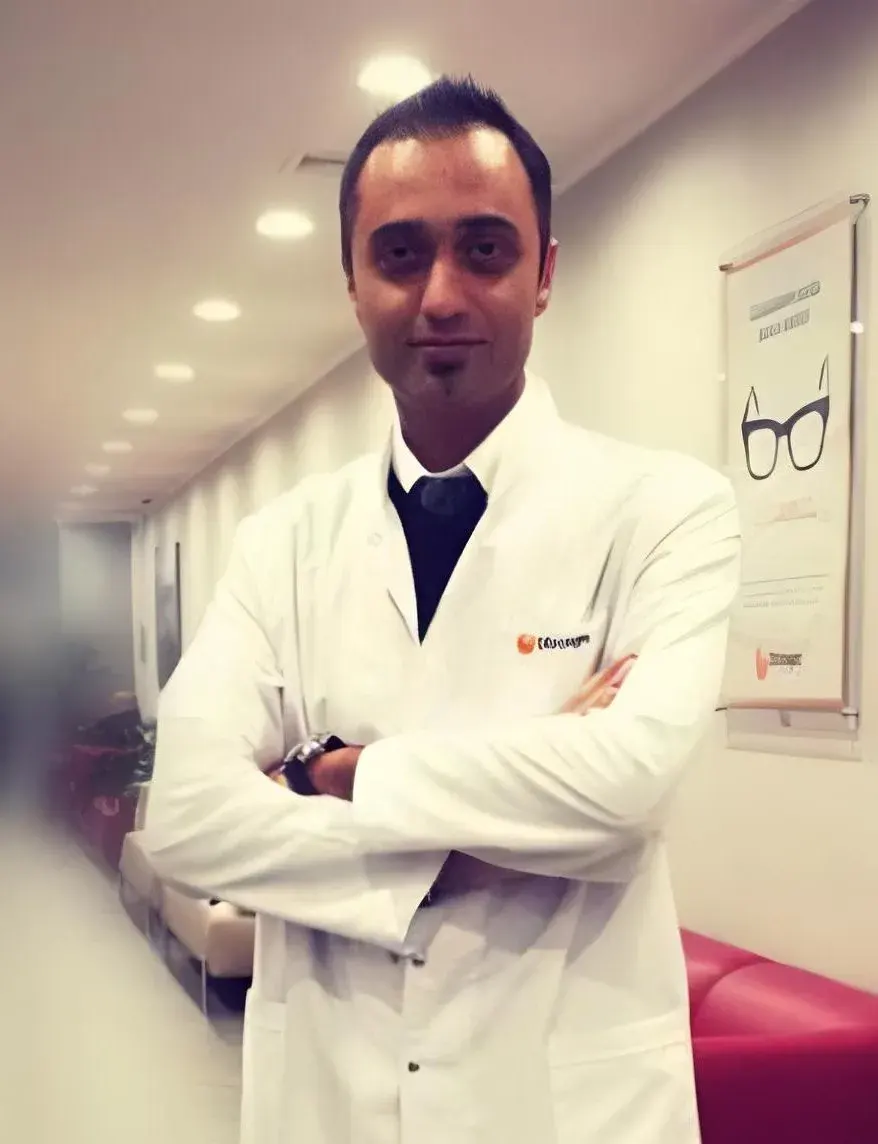
The MyLumineyes physician training program is conducted directly with Dr. Mustafa Mete. The emphasis is on practical clinical experience: patient assessment, treatment planning, observation of real cases, response evaluation and discussion of clinical decisions.
The objective is to transfer not only procedural experience, but also the clinical reasoning that comes from working with real patients over time.
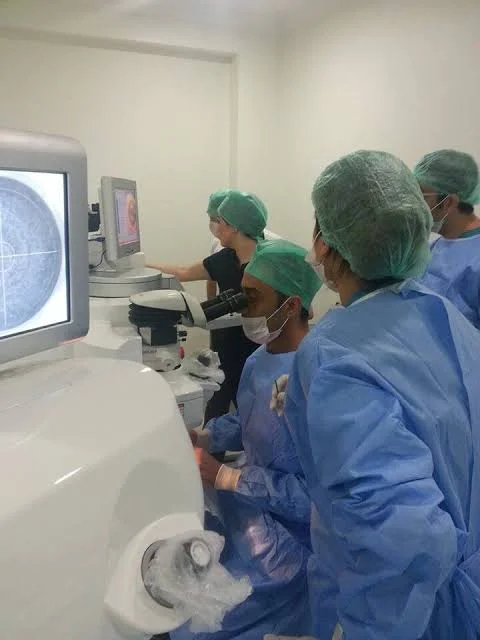
The MyLumineyes physician training program is built around direct clinical observation, real patient cases and supervised decision-making.
The purpose is not simply to demonstrate a procedure. Physicians observe how patient characteristics are assessed, how treatment planning is individualized, how treatment response is evaluated and how the next clinical decision is made.
This distinction is fundamental. Clinical experience develops through seeing how different patients respond over time—not through memorizing a single treatment protocol.
Because meaningful clinical training cannot be reduced to a single demonstration.
The duration allows physicians to move beyond observation and participate in a structured clinical process involving patient assessment, treatment planning, clinical observation, reassessment and discussion of subsequent decisions.
The exact experience may vary according to patient availability, the physician's background and the clinical objectives established before training.
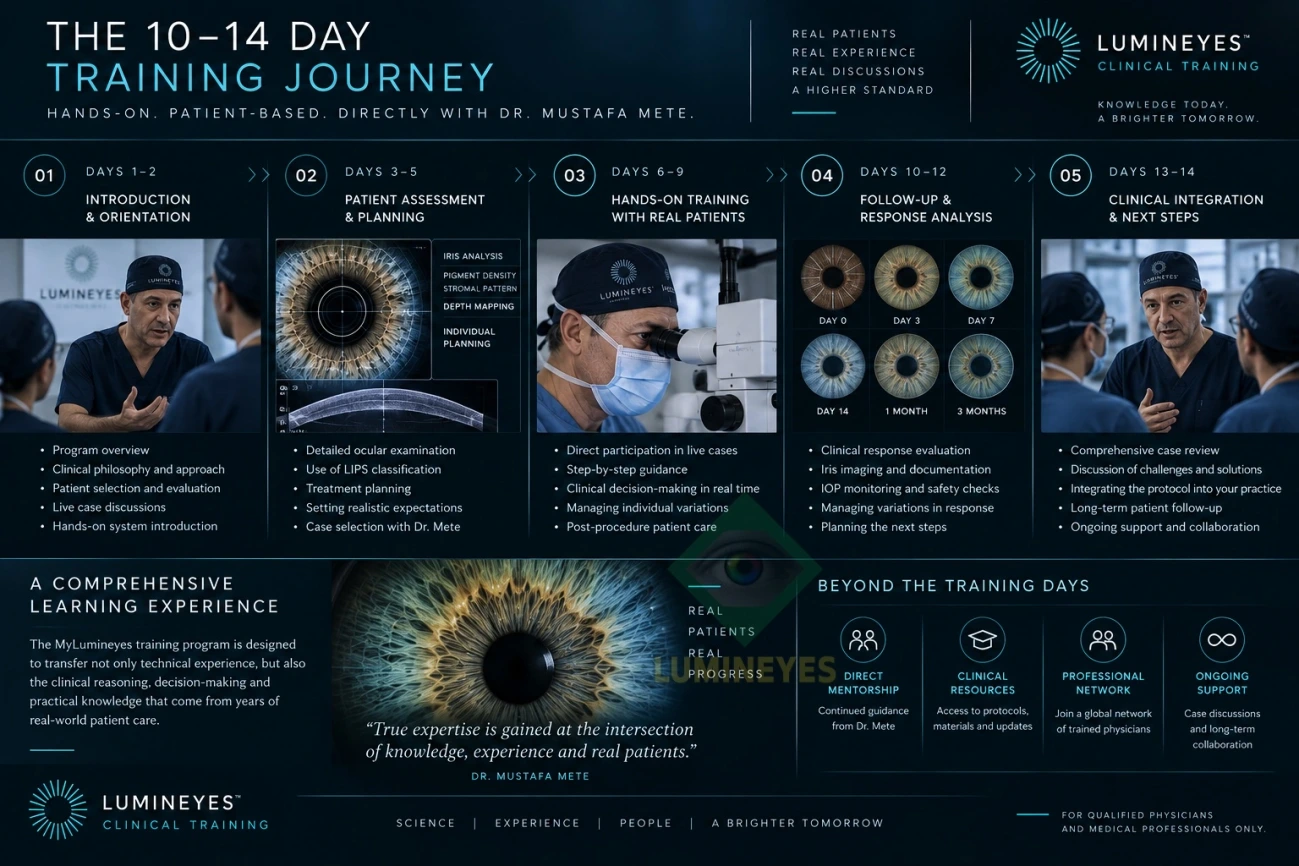
The emphasis is on clinical reasoning as much as procedural experience.
Baseline clinical assessment and the factors that influence individualized treatment planning.
Clinical characterization of iris appearance and relevant features before treatment.
Understanding why patient-specific planning is preferred over applying a single protocol to every case.
Direct observation and hands-on clinical training within the established treatment framework.
Understanding how clinical response is observed and incorporated into subsequent treatment decisions.
Developing a longer-term clinical perspective rather than focusing only on the immediate treatment session.
It is to develop the ability to assess a patient, interpret the clinical response and make the next appropriate decision.
“Clinical experience cannot be reduced to a single treatment protocol.”
Some aspects of the MyLumineyes clinical workflow have been developed through longitudinal clinical experience and are discussed directly with physicians during training.
These discussions may include practical considerations, decision-making approaches and workflow details that are not presented as a public step-by-step treatment protocol on this website.
Training therefore takes place in a professional setting, with appropriate respect for confidential clinical and proprietary information.
Public information on this website should not be interpreted as a complete treatment protocol or as a substitute for supervised professional training.
Dr. Mustafa Mete remains available for ongoing professional support as physicians begin applying their experience to their own clinical cases.
The training approach is informed by clinical observation, longitudinal follow-up and ongoing evaluation of the scientific literature.
Careful baseline assessment, individualized planning, response-guided treatment, reassessment and appropriate clinical monitoring are central to the training philosophy.
No training program can guarantee an identical clinical response in every patient. Outcomes, risks and treatment decisions must be considered on an individual clinical basis.
The program is intended for qualified physicians with an appropriate ophthalmic or relevant clinical background. Eligibility is assessed individually according to professional qualifications, experience and training objectives.
The standard training period is approximately 10–14 days. The exact clinical experience depends on patient availability, the physician's background and the objectives established before training.
Yes. The program is designed around real patient-based clinical experience and direct mentorship with Dr. Mustafa Mete. The level and nature of hands-on participation are determined according to the physician's qualifications and clinical objectives.
Yes. The program is conducted directly with Dr. Mustafa Mete, with emphasis on patient assessment, treatment planning, clinical observation, response evaluation and clinical decision-making.
Paired physician training may be possible depending on the physicians' qualifications, objectives and scheduling. This is assessed individually before training.
No. Training arrangements and fees are discussed privately following review of the physician's professional background, objectives and proposed training requirements.
Dr. Mustafa Mete remains available for ongoing professional support and clinical discussion as trained physicians begin developing their own experience.
No. Individual clinical outcomes cannot be guaranteed. Patient assessment, treatment planning, response and follow-up must be considered on a case-by-case basis.
If you are a qualified physician interested in learning the MyLumineyes clinical approach directly with Dr. Mustafa Mete, submit your professional training inquiry.
Request Professional TrainingTraining eligibility, scheduling and fees are discussed privately following professional review.
 Lumineyes Assistant
×
Lumineyes Assistant
×