Color Contact Lenses: Types, How They Work, Prescription & Safety
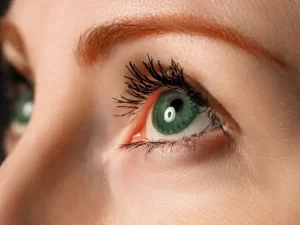
Color contact lenses temporarily alter the visible appearance of the iris by placing a tinted optical pattern over the cornea. They can enhance a natural eye color, transform a dark iris more dramatically, or create a theatrical appearance depending on lens design. They do not change the biological pigment of the iris itself.

What Are Color Contact Lenses?
Color contact lenses are soft or, less commonly, rigid contact lenses that contain a visible tint or printed pattern designed to alter how the iris appears. Some also correct refractive error, while others have no optical power and are worn only for cosmetic purposes.
The visible color of a normal iris is produced by a combination of melanin distribution, stromal architecture and light scattering. Readers interested in the underlying biology can review our eye color chart and genetics guide .
A colored contact lens does not change any of those biological features. Instead, it changes the pattern of light reaching the observer by overlaying a colored design in front of the iris.
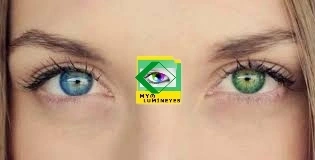
Colored contact lenses modify visible iris appearance by adding an optical tint or printed pattern in front of the natural iris.
Types of Colored Contact Lenses
Not all colored lenses are designed to produce the same effect. Their appearance depends largely on the transparency and density of the printed tint.
A faint blue or green tint primarily intended to make a lens easier to see during insertion and removal. It normally produces little or no cosmetic change.
A translucent tint that intensifies an existing light iris shade rather than completely covering it.
A denser printed pattern designed to mask more of the natural iris color. These lenses are generally required for a pronounced change in darker eyes.
Patterned lenses used for fashion, costume or dramatic effects. Some deliberately enlarge or alter the apparent iris pattern rather than reproduce a natural appearance.
How Do Colored Contact Lenses Work?
The iris lies behind the transparent cornea. A colored contact lens sits on the tear film in front of the cornea and therefore does not need to touch the iris to change its appearance.
Most opaque cosmetic lenses contain a printed iris pattern surrounding a central transparent pupil zone. When viewed from the front, this printed pattern partially or substantially conceals the wearer's underlying iris.
Pupil size matters
The pupil continually changes diameter in response to ambient illumination. The transparent optical zone of a cosmetic lens, however, has a fixed geometry. In dim environments the pupil may enlarge beyond that clear zone, which can allow parts of the colored pattern to enter the visual axis and produce halos, blur or altered peripheral perception in some wearers.
Lighting changes how the color looks
A contact lens can appear different in direct sunlight, indoor lighting and low illumination because both pupil diameter and the interaction between the printed lens pattern and the natural iris change.
This is also why a person's natural color should ideally be identified under neutral lighting before selecting a cosmetic shade. Our guide to identifying your true eye color explains how lighting, pupil size and mixed iris patterns can affect visual classification.
Do Colored Contacts Work on Dark Brown Eyes?
Yes, but translucent enhancement lenses usually have a limited effect on very dark irises. A noticeable change normally requires a more opaque printed design capable of masking a greater proportion of the natural brown background.
This creates a trade-off. Greater opacity can produce a stronger cosmetic transformation, but the final appearance depends heavily on the quality of the printed iris pattern, the size of the pupil opening and how well the lens aligns with the wearer's natural iris.
A lens that looks convincing on one person may therefore look noticeably artificial on another even when the marketed color name is identical.
How Natural Can Colored Contact Lenses Look?
Natural appearance depends on more than simply choosing “blue,” “green” or “hazel.” Real irises contain radial fibers, crypts, pigment variation, darker limbal zones and multiple tones. A flat or repetitive printed pattern can therefore appear artificial even when its nominal color is realistic.
Lens centration is also important. Because the contact lens can move slightly with blinking, the printed iris may not remain perfectly aligned with the underlying iris and pupil.
If the goal is simply to explore which shades suit the face before wearing any lens, our eye color simulator provides a non-contact visual preview. It is a cosmetic visualization tool and does not predict a medical treatment outcome.
Do Colored Contact Lenses Require a Prescription?
In the United States, decorative contact lenses are regulated as medical devices, including lenses that contain no refractive correction. “Plano” therefore means zero optical power; it does not mean that lens fit is medically irrelevant.
Two people with the same glasses prescription may still require different contact-lens parameters. Relevant factors include corneal curvature, diameter, tear-film behavior, ocular-surface health and how the lens moves during blinking.
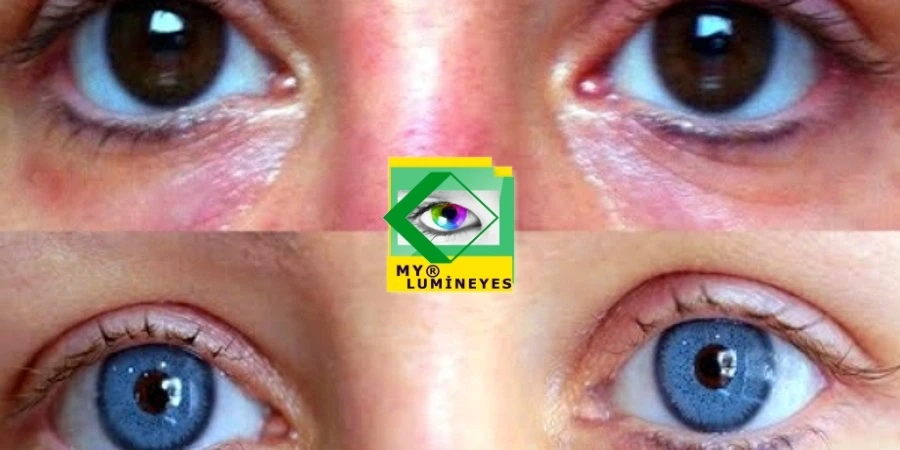
Contact-lens suitability involves more than refractive power; ocular surface health and lens fit also matter.
Plano does not mean risk-free. A non-prescription-power cosmetic lens still rests on the cornea and should be fitted and cared for as a contact lens.
Are Colored Contact Lenses Safe?
Many people can use appropriately fitted colored lenses without serious complications. Safety depends on the individual eye, lens material and fit, replacement schedule, hygiene, water exposure and whether lenses are worn overnight.
Problems associated with inappropriate use can include epithelial abrasion, inflammation, microbial keratitis, corneal ulceration and hypoxic stress. Rather than duplicating that clinical discussion here, we cover those complications, emergency symptoms and prevention measures in our dedicated guide to the dangers and medical risks of colored contact lenses .
Red-eye rule: significant pain, increasing redness, light sensitivity, discharge or reduced vision while wearing a contact lens should not be treated as a routine cosmetic inconvenience. Remove the lens and arrange appropriate professional assessment.
Can Colored Contact Lenses Permanently Change Eye Color?
No. A contact lens changes the visible appearance of the eye only while it remains on the corneal surface. Removing the lens reveals the person's original iris because the lens has not altered iris melanin or stromal anatomy.
This is fundamentally different from permanent eye color change , where the question is whether visible iris pigmentation itself can be modified rather than temporarily covered.
Temporary appearance versus biological eye color
Natural eye color is determined primarily by the quantity and distribution of iris melanin together with stromal optical properties. Our educational page on melanin and eye color explains that biological relationship in more detail.
Claims that cosmetic drops can simply lighten healthy iris pigment should also be evaluated separately from contact lenses. Our review of eye color changing drops discusses what is and is not supported medically.
| Approach | How appearance changes | Duration | Anatomical target |
|---|---|---|---|
| Colored contact lens | Optically covers or enhances the visible iris | Temporary | Lens rests on corneal tear film |
| Digital visualization | Changes an image only | Virtual | No ocular tissue |
| Corneal pigmentation | Adds exogenous pigment within the cornea | Long-term / procedural | Corneal stroma |
| Laser iris depigmentation | Reduces visible pre-existing anterior iris pigmentation | Intended as long-term change | Anterior iris pigment |
Readers researching the non-incisional laser approach can continue to the main Laser Eye Color Change clinical guide , which explains treatment principles, candidacy, staging, monitoring and evidence boundaries rather than treating all laser techniques as a single standardized procedure.
Because visible endpoints alone do not establish biological equivalence, our Research Archive also examines the biological fate of pigment in different cosmetic iris color modification methods , including the distinction between endogenous iris melanin and exogenous pigment deposition.
Choosing Between a Temporary Cosmetic Effect and a Medical Procedure
For someone who wants occasional flexibility, a properly fitted colored contact lens offers an obvious advantage: it can be removed, changed or discontinued. A person can use different colors for different situations without attempting to alter the biological iris.
A permanent intervention is a very different decision. It requires consideration of ocular anatomy, clinical suitability, long-term follow-up and procedure-specific risk. Those issues are discussed separately in our eye color change safety guide .
The two choices should therefore not be presented simply as “temporary versus permanent.” One is an external optical device; the other may involve deliberate modification of ocular tissue. Their benefits, limitations and risk profiles need to be considered within their own clinical contexts.
Frequently Asked Questions About Color Contact Lenses
What is the difference between enhancement and opaque colored contacts?
Enhancement tints are translucent and mainly intensify an existing light iris shade. Opaque lenses contain a denser printed pattern intended to conceal more of the natural iris and can therefore create a stronger color change.
Which colored contacts work best for dark brown eyes?
Dark brown eyes generally require an opaque rather than translucent tint for a pronounced visible change. The final effect depends on print density, pattern, pupil opening and how the lens aligns on the eye.
Can colored contacts look completely natural?
Some sophisticated designs can look convincing, but no printed lens perfectly reproduces the dynamic architecture of every natural iris. Lighting, pupil size, lens movement and the underlying eye color can all reveal that a cosmetic lens is being worn.
What does “plano” colored contact lens mean?
Plano means the lens has zero refractive power. It changes appearance without correcting nearsightedness or farsightedness. It remains a contact lens and still requires appropriate fit and care.
Can I wear colored contacts if I already need vision correction?
Many colored contact lenses are available with refractive correction. Whether a particular design is appropriate depends on prescription, fitting parameters and ocular-surface findings.
Why do colored contacts sometimes look different in photographs?
Flash, ambient light, camera white balance, pupil diameter and reflections from the cornea can all change how both the printed lens and underlying iris appear in a photo.
Can colored contacts change my real eye color over time?
No. They do not alter iris melanin. The original biological eye color remains underneath the lens and becomes visible again when the lens is removed.
Are prescription colored contacts automatically safe?
No contact lens is automatically risk-free. Appropriate fitting, hygiene, replacement schedule and wearing behavior still matter even when the lens has been prescribed.
Medical References
- U.S. Food and Drug Administration. Colored and Decorative Contact Lenses: A Prescription Is a Must.
- American Academy of Ophthalmology. Guidance on non-prescription decorative contact lenses.
Medical information on this page is provided for general educational purposes and does not replace individualized ophthalmic examination, diagnosis or advice. Contact-lens suitability depends on ocular surface health, fitting characteristics, lens design and wearing behavior.