The Most Attractive Eye Colors and Eye Shapes: What Studies and Perception Show
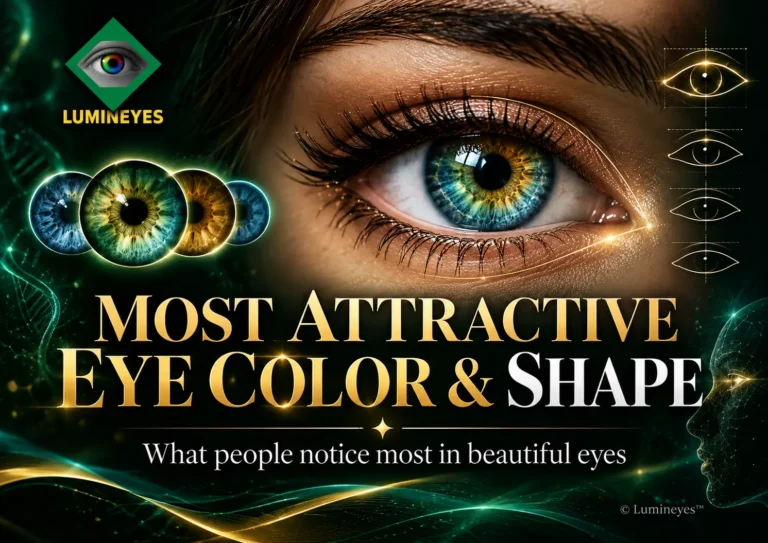
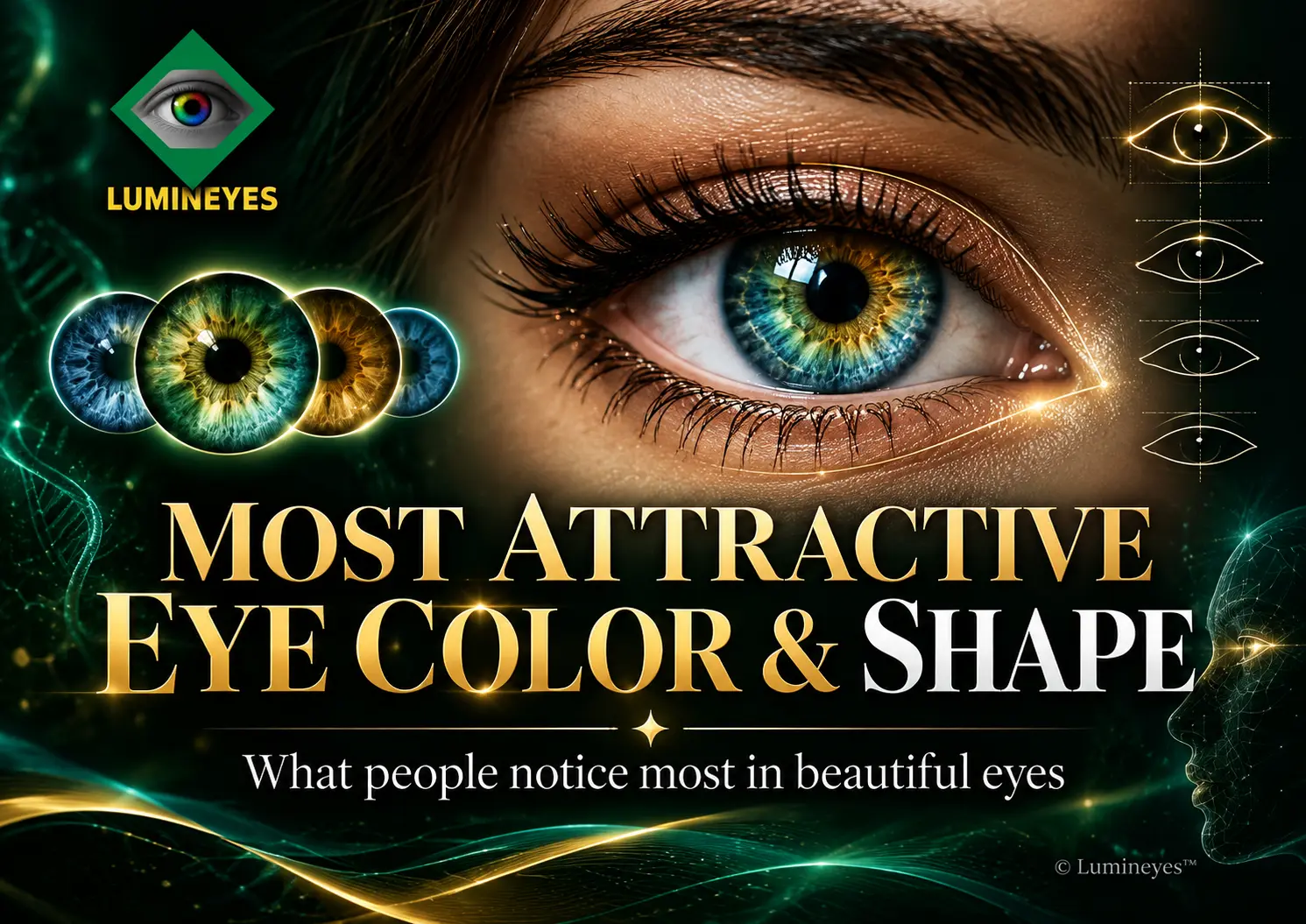
Across different cultures and surveys, certain eye colors and eye shapes tend to be rated as more attractive or memorable. These preferences are influenced by rarity, contrast, symmetry, facial proportions and cultural associations rather than a biological rule. This guide reviews the colors that often attract attention, explains the visual features behind those impressions and distinguishes personal preference from measurable iris anatomy.
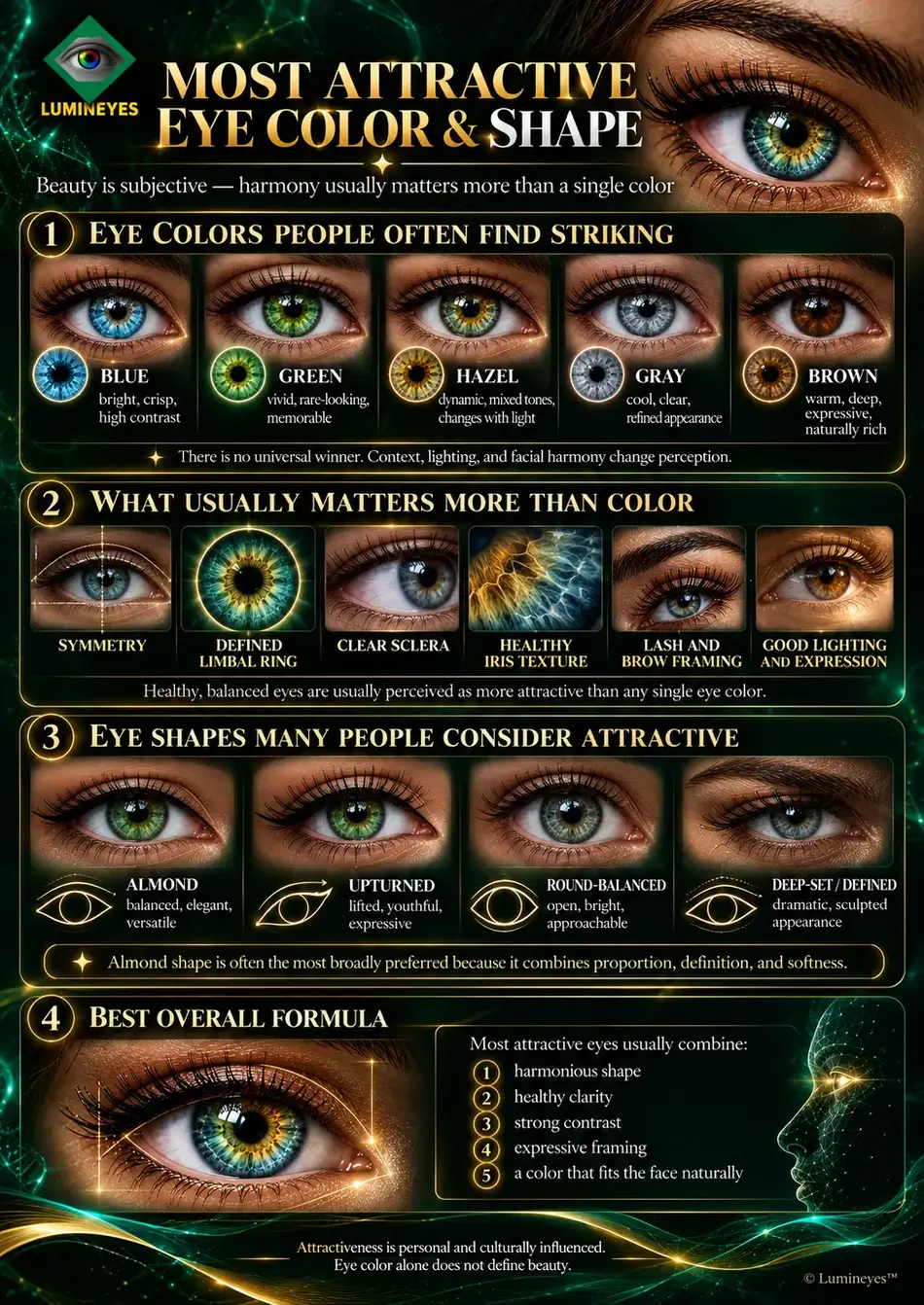
There is no single most attractive eye color or eye shape for everyone. Green, hazel, blue and grey eyes are often described as striking, while dark brown eyes can be equally compelling. Overall facial harmony, iris contrast, expression and personal or cultural preference strongly influence what an observer finds attractive.
Why Do Some Eye Colors Look More Attractive?
Attractiveness is not the result of color alone. Less common eye colors may stand out, particularly when they contrast with the surrounding skin tone, eyelashes and eyebrows. Eye shape and fine iris details also affect how strongly an observer notices the eyes. These are influences on perception, not a formula for beauty.
Uncommon colors such as green, grey and amber can attract attention because viewers encounter them less frequently.
The relationship between the iris, sclera, lashes, brows and skin can make a color look brighter, deeper or more prominent.
Balanced eyelid contours and overall facial proportions influence the impression of the eyes independently of pigmentation.
Visible radial fibers, central color variations and a well-defined limbal border contribute texture and definition.
From a biological perspective, natural eye color depends largely on melanin within the iris and the optical properties of the stroma. The same shade can look quite different in two faces, or even in photographs of the same person taken under different lighting.
Most Attractive Eye Colors in Surveys and Popular Perception
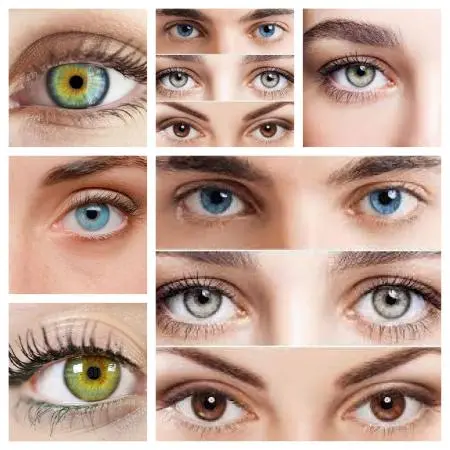
Informal polls and beauty discussions frequently highlight green, hazel, blue and grey eyes. However, polls use different populations, categories and methods, so their results should not be treated as one scientifically established worldwide ranking. The following order preserves the commonly discussed colors and describes why each can be visually appealing.
1. Green Eyes
Green eyes are comparatively rare and often appear vivid because moderate pigmentation combines with stromal light scattering. Olive, emerald and soft green tones may create memorable contrast. Their scarcity can contribute to their appeal, but does not make them objectively superior.
2. Hazel Eyes
Hazel eyes combine brown, golden and greenish areas, sometimes with a visible central ring. Their multi-tonal appearance often seems to shift in different light, giving the iris depth and a distinctive pattern.
3. Blue Eyes
Light blue and bright blue eyes can show strong contrast with dark lashes and brows. Their color is largely an optical effect in a low-melanin iris rather than the presence of blue dye. They are prominent in many beauty and media images.
4. Grey Eyes
Grey eyes have a silvery, smoky or steel-like quality. Their relatively neutral tone can make the pupil and limbal border especially noticeable. Some grey eyes appear bluer or greener depending on ambient light.
5. Amber Eyes
Amber eyes are characterized by warm golden or copper-toned pigmentation. This striking appearance is visually different from hazel, which usually contains a mix of green and brown areas. Explore these colors in our Amber eye colors.
6. Dark Brown Eyes
Dark brown is the most common eye-color family worldwide, but common does not mean less attractive. Rich pigmentation, an expressive gaze, strong scleral contrast and balanced facial features can make dark brown eyes particularly compelling.
Most Attractive Eye Shapes: What Matters Beyond Color?
Eye shape plays a major role in facial appearance. The upper and lower eyelids, canthal alignment, eyebrow position and visible iris area contribute to the overall impression. Certain features are frequently described as balanced or expressive, but no eye shape can reasonably be called the most attractive for every population or individual.
- Almond-shaped eyes: An elongated contour with smoothly balanced upper and lower lids is often described as harmonious.
- Visible upper eyelid crease: In some facial types it adds perceived depth, although both creased and non-creased eyelids have natural aesthetic variation.
- Slight upward outer tilt: The relative position of the outer canthus can influence a youthful or alert impression.
- Clear limbal ring: A darker border around the iris may create a stronger contrast with the sclera and make the iris appear more defined.
These features do not belong to a particular iris color. A person with dark brown eyes may have a highly distinctive gaze because of eyelid shape, iris texture and the way the eyes fit the surrounding face.
Eye Shape Comparison: Contour, Crease, Tilt and Depth
Everyday eye-shape labels describe different features, so they are not mutually exclusive. An eye can be almond-shaped, hooded and slightly upturned at the same time. The comparison below describes visible anatomy rather than ranking beauty; these terms are descriptive labels, not a diagnostic classification.
| Description | Main visual feature | How to interpret it |
|---|---|---|
| Almond-shaped | An elongated eyelid opening that tapers toward the inner and outer corners. | Describes the outline of the opening. It can occur with different eyelid creases, depths and tilts. |
| Round | A more rounded opening with a relatively greater visible vertical dimension. | May create an impression of openness. It does not, by itself, indicate a larger eyeball. |
| Hooded | Upper-lid skin partly covers the crease or the visible mobile eyelid when the eyes are open. | Describes the skin fold rather than the iris or the overall shape of the eye opening. |
| Monolid | No prominent upper-eyelid crease is visible in the usual open-eye position. | A natural eyelid variation compatible with many contours and expressions; it does not determine eye size. |
| Upturned | The outer corner sits higher than the inner corner. | Describes corner alignment. The visual impression depends on the degree of tilt and the surrounding face. |
| Downturned | The outer corner sits lower than the inner corner. | Another variation in alignment. It does not establish a person's mood, age or attractiveness. |
| Deep-set | The eyes appear recessed relative to the surrounding brow and orbital contours. | Describes facial depth; shadows and lighting can make this relationship more or less noticeable. |
| Prominent | The eyes appear more forward relative to the surrounding orbital contours. | Describes projection rather than lid contour or iris color; appearance varies with angle and facial proportions. |
A limbal ring belongs to iris appearance, while an upper-eyelid crease belongs to eyelid structure. Neither is an eye-shape category on its own. Comparing these separate dimensions is more useful than choosing a single “best” shape: expression, lighting and the relationship between the eyes, brows and face all influence the final impression.
Why Rarity, Limbal Rings and Iris Patterns Influence Attractiveness
Novelty can help explain why an uncommon physical trait attracts attention. Yet rarity and attractiveness are not interchangeable: a familiar feature can be beautiful, and an unusual one will not appeal equally to everyone. Cultural familiarity, individual taste and facial context remain important.
Another distinctive characteristic is the limbal ring, the darker boundary visible around the outside of the iris. Experimental work by Peshek and colleagues found that faces with more distinct limbal rings received higher attractiveness ratings under the conditions studied. This is a specific finding about contrast, not proof that a particular eye color is universally more desirable. Read the peer-reviewed limbal ring study indexed in PubMed.
Radial fibers, central heterochromia, golden flecks or a starburst pattern near the pupil can also give an iris visual complexity. They may become easier to notice in good lighting, which is why two eyes classified as the same basic color can look very different.
What Does Research Actually Show About Attractive Eyes?
Research can test how selected features affect ratings under controlled conditions, but it does not establish a universal hierarchy of eye colors or shapes. An observer's stated preference for a color is also different from the attractiveness score they give an actual photograph. Study populations, image selection, lighting, editing and the rating task affect how far a result can be generalized.
Eye color: a preference is not a worldwide ranking. In a study published in Aesthetic Plastic Surgery, Gründl and colleagues asked 80 participants to rate photographs of the eye areas of 60 women. Iris color was not correlated with attractiveness ratings, although participants mentioned blue positively more often than other colors. A familiar beauty stereotype therefore should not be treated as proof that one shade is inherently more attractive. The findings concern that sample and those photographs. Gründl et al., 2012: study and abstract.
Limbal definition: evidence about contrast. Peshek and colleagues found that observers preferred digitally edited faces with distinct dark limbal rings over otherwise matching versions without rings. The experiment involved 45 observers and light-colored irises. It supports a role for iris-edge contrast in that task; it does not establish that lighter eyes are better, that a visible ring diagnoses eye health, or that changing eye color improves attractiveness. Peshek et al., 2011: study and abstract.
Eye shape: proportions depend on the population studied. Patel and colleagues examined 322 right-eye photographs of young East Asian women and reported associations between attractiveness ratings and selected brow and eyelid proportions. These findings belong to that photographic sample and population. They do not justify declaring almond, round, hooded or monolid eyes universally superior. Patel et al., 2022: study and abstract.
Clinical iris research asks a different question. The MyLumineyes Research Archive, authored by Mustafa Mete, MD, discusses pigmentation, optical appearance and clinical response. Proposed frameworks, including the Lumineyes™ Iris Pigmentation Scale (LIPS), should be read according to each record's evidentiary status; LIPS is presented as proposed rather than independently validated. Clinical observations and conceptual models do not independently validate a beauty ranking, guarantee a final color or establish a treatment's safety.
Primary studies: Gründl et al. The blue-eyes stereotype: do eye color, pupil diameter, and scleral color affect attractiveness? (2012), doi:10.1007/s00266-011-9793-x; Peshek et al. Preliminary evidence that the limbal ring influences facial attractiveness (2011), doi:10.1177/147470491100900201; Patel et al. The Asian Eye: Anthropometric Eye Measurements of Attractiveness in Young East Asian Women (2022), doi:10.1097/PRS.0000000000009642.
Which Eye Color Looks Best With Different Facial Features?
There is no rule that blue eyes suit one skin tone and brown eyes suit another. What viewers perceive as a striking combination often depends on the contrast between the iris, sclera, brows and lashes. Makeup and clothing can bring out existing cool or warm tones without changing the actual pigment.
| Feature | How it may affect appearance | What it does not mean |
|---|---|---|
| Dark lashes or eyebrows | Can emphasize pale blue, grey, green or hazel irides through contrast | Light eyes are not inherently more attractive |
| Defined limbal border | May make the iris edge more noticeable and enhance perceived clarity | The ring does not determine iris color by itself |
| Mixed-color iris patterns | Can create depth and changes in perceived color with lighting | Every visible shift is not a biological pigment change |
| Eye and eyelid shape | Influences expression, perceived openness and overall facial harmony | No shape is a universal standard of beauty |
To understand your own shade before comparing it with other colors, see What Is My Eye Color?. You can also explore possible visual appearances using the Eye Color Simulator; simulated colors are illustrative and do not predict a medical outcome.
Why Eye Color Can Look More Attractive in Some Photos
Lighting direction, camera exposure, white balance, pupil diameter and surrounding colors can change how bright or saturated an eye appears in photographs. This is especially evident in hazel, blue-grey and green eyes, where subtle color differences are more visible in the iris.
Diffuse daylight often reveals fine iris textures without the harsh reflections produced by a direct flash.
A smaller pupil can expose more visible iris area; a larger pupil may make the colored area look narrower.
Clothing, makeup and background tones can alter perceived warmth or coolness without changing melanin.
Healthy-looking eyes also depend on more than pigment. Tear-film comfort and the appearance of the ocular surface can affect perceived clarity. Our eye health, vitamins, diet and care guide explains these factors separately from cosmetic color.
Explore Your Iris Color and Preview Other Shades
Look more closely at your existing color pattern or explore a different appearance. Choose the tool that matches your question.
Eye Color Simulator
Curious how another eye color might look? Explore an illustrative preview and compare how different tones change the visual impression.
Open Eye Color SimulatorIllustrative visualization only. A simulated shade does not predict or guarantee a medical outcome.
Iris Color Analyzer
Explore the visible color balance in an eye photograph, including mixed tones that may be difficult to describe with a single color name.
Open Iris Color AnalyzerPhoto-based color estimates only. The tool does not measure melanin, diagnose eye health or determine treatment suitability.
Can You Change Your Eye Color to a More Attractive Shade?
Genetics largely determines natural eye color. In adulthood, some cosmetic options can change the visible appearance of the eyes, while medical procedures act through different anatomical mechanisms. They should not be confused with one another.
- Laser eye color change: Selective laser iris depigmentation aims to reduce visible anterior iris melanin and may gradually reveal lighter blue, grey, green or mixed optical tones in suitable eyes. Within the MyLumineyes approach, treatment is staged and adjusted according to individual ocular response. A particular final color cannot be guaranteed. The clinical method is explained in the Laser Eye Color Change guide.
- Cosmetic colored contact lenses: Properly fitted lenses can temporarily alter the apparent eye color without modifying the underlying iris pigment.
- Cosmetic iris implants: These are placed inside the eye and carry distinct anatomical and safety considerations; they are not equivalent to pigment reduction.
- Keratopigmentation: Pigment is placed within the cornea to simulate a different eye appearance; it does not change the natural iris melanin.
A preference for an eye color is not, by itself, a clinical indication. Candidates considering an elective procedure need individualized ophthalmic assessment, realistic expectations and appropriate follow-up. A more detailed comparison appears in our eye color change surgery guide.
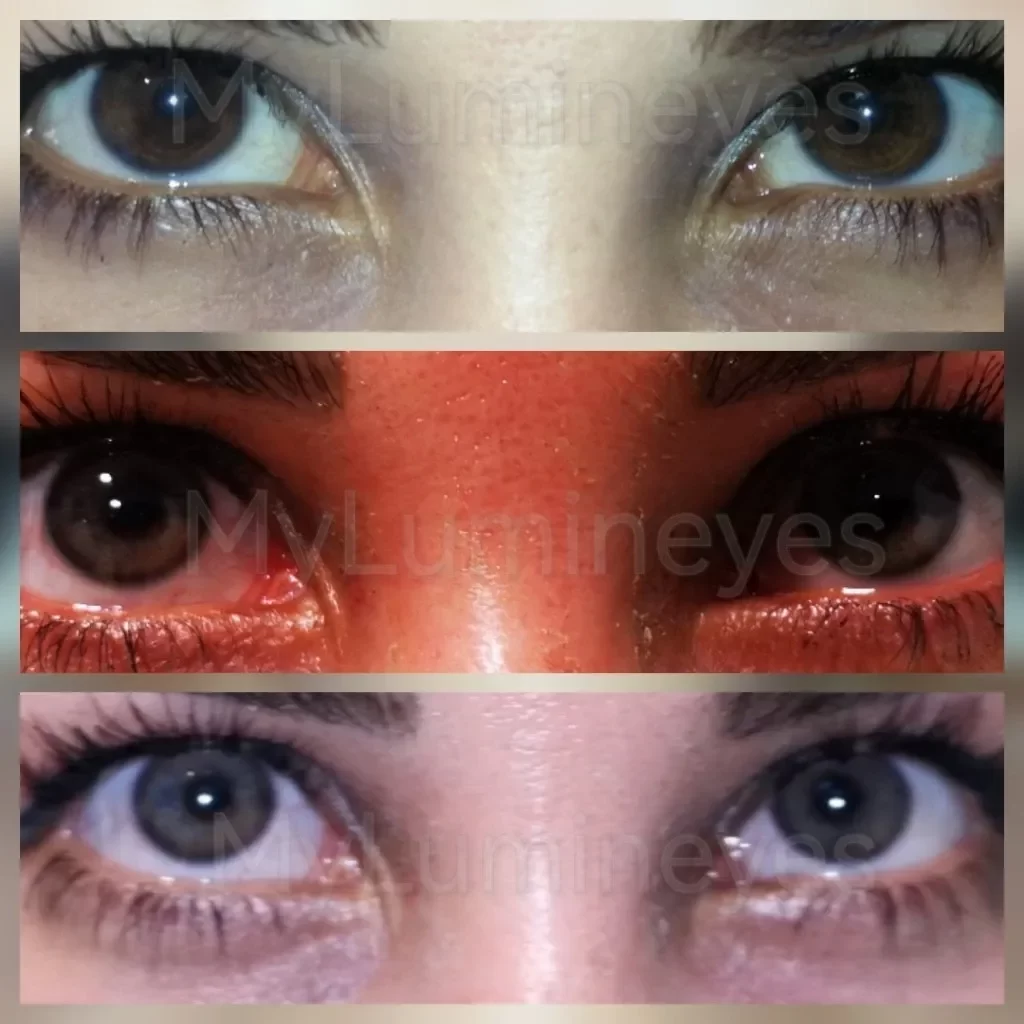
Key Points About Attractive Eye Colors and Shapes
- Green, hazel, blue and grey eyes are often admired, but no universally valid ranking of the most attractive eye color exists.
- Dark brown and amber eyes may be just as striking depending on facial contrast, expression and individual taste.
- Eye shape, symmetry, limbal definition, iris patterns and facial harmony matter alongside base color.
- Rarity may attract attention, but it does not establish a biological hierarchy of beauty.
- Lighting and photography can change apparent eye color without changing iris pigment.
- Any planned medical eye-color change requires suitable candidate selection and ophthalmic evaluation.
For a biological explanation of eye pigments and inheritance, continue with the Eye Color Chart & Genetics Guide.
FAQs About the Most Attractive Eye Color and Eye Shape
Which eye color is considered the most attractive worldwide?
There is no universally most attractive eye color. Green, hazel and blue eyes are frequently admired in informal polls, while brown and other shades may be preferred in different populations. Facial harmony, contrast and individual taste matter more than a universal ranking.
Are rare eye colors always more attractive?
No. Rarity can make an iris more noticeable, but attractiveness is not determined by rarity alone. Iris detail, limbal contrast, eye shape and surrounding facial features all influence perception.
Can dark brown eyes be as attractive as blue or green eyes?
Absolutely. Dark brown eyes can create strong contrast with the sclera and have a rich, expressive appearance. Their attractiveness depends on the individual face, not on how common the color is.
What is considered the most attractive eye shape?
Almond-shaped eyes are frequently described as balanced, but there is no single scientifically established eye shape that is most attractive across all people and cultures. Eyelid contours, proportions, symmetry and facial harmony all contribute.
Does eye shape matter more than eye color?
Eye shape, eyelid contour and the relationship between the eyes and surrounding face can be highly influential. Eye color contributes to the impression, but there is no fixed rule that one feature always matters more.
Do limbal rings make eyes look more attractive?
A darker, clearer ring at the iris border can increase visible contrast. Experimental research has found higher attractiveness ratings for some faces with a more distinct limbal ring, but this effect is not a universal rule.
Can lighting make eye color appear more attractive?
Yes. Daylight, artificial lighting, camera exposure, pupil size and surrounding colors can change the perceived brightness, saturation and contrast of the iris without changing its melanin content.
Can laser eye color change create lighter shades?
Selective laser iris depigmentation is intended to reduce visible anterior iris melanin. Depending on the individual iris, lighter blue, green, grey or mixed tones may become visible, but a specific final color cannot be promised and suitability requires an ophthalmic assessment.