Smart Lenses & Trifocal Intraocular Lenses: The End of Reading Glasses
Ophthalmic technology is advancing at an unprecedented rate. Today, replacing the eye's natural lens with a premium trifocal implant can permanently correct near, intermediate, and distance vision in a single 10-minute procedure.

What Exactly is a "Smart Lens"?
The term "smart lens" is heavily used in modern medical marketing, but what does it actually mean? In clinical ophthalmology, a smart lens refers to a premium multifocal or trifocal intraocular lens (IOL).
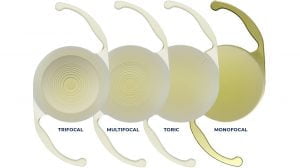
Your eye naturally contains a clear, flexible crystalline lens that bends light to focus it onto the retina. When we are young, this natural lens flexes effortlessly, allowing us to shift focus between reading a book and looking at a distant mountain. However, as we cross the age of 40, this natural lens loses its elasticity—a condition known as presbyopia. Eventually, as we grow older, this same lens becomes cloudy and rigid, forming a cataract.
During smart lens surgery, we surgically extract this failing natural lens and replace it with a highly advanced artificial trifocal implant (like the Alcon Panoptix). Because this new lens has three distinct focal rings built into its optic design, it permanently restores crisp vision at all three distances: far, intermediate (computer screen), and near (reading).
Who is the Ideal Candidate for Trifocal Lenses?
Smart lenses have largely replaced older monofocal lenses because they eliminate the need for postoperative glasses. However, rigorous patient selection is the key to surgical success. You are likely an excellent candidate if:
- You are over the age of 40 and suffer from presbyopia (you rely heavily on reading glasses).
- You have early or advanced cataracts causing cloudy vision.
- Your optical prescription is too high or your cornea is too thin for standard LASIK surgery.
- You want to simultaneously correct myopia, hypermetropia, and astigmatism in one permanent procedure.
How is the Procedure Performed?
Trifocal lens implantation is an outpatient procedure that requires no general anesthesia and no hospitalization.
First, the eye is completely numbed using anesthetic drops. We then use an advanced Femtosecond laser to create a microscopic 2mm incision. The cloudy natural lens is gently broken up and aspirated. The new smart lens is folded into a special injector, gently placed into the eye's empty capsular bag, and unfolded into its permanent position. The entire process takes approximately 10 minutes per eye. Patients typically return home the same day with a protective eye shield and experience drastic visual improvement by the next morning.
Trifocal Lens Surgery Cost in Istanbul, Turkey
One of the most frequent questions we receive from our international patients is regarding the financial aspect of premium lens implants. The cost of this procedure is primarily dictated by the specific brand of the lens used (FDA-approved premium lenses like Panoptix are the gold standard), the surgical technology, and the surgeon's expertise.
Due to optimized healthcare infrastructure and exchange rates, patients traveling to our clinic in Istanbul gain access to the exact same elite FDA-approved lenses used in the US and UK, but at a highly accessible price point. You can review our transparent medical itineraries and the cost of trifocal lens surgery in Turkey to understand the value of medical tourism in ophthalmology.
The Future of Vision: Mojo Smart Contact Lenses
While trifocal IOLs are surgical implants that go inside the eye, the tech industry has been aggressively developing external "smart" wearables. The most famous conceptual project in this space is the Mojo Smart Contact Lens.
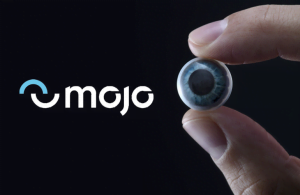
Billed as the world's first "Invisible Computing" device, the Mojo lens was designed as an augmented reality (AR) contact lens. It features a microLED display with a staggering pixel density of over 14,000 ppi, motion sensors to track eye movement, and a built-in radio transmitter. The goal of such technology is to project digital information (like navigation or medical data for those with macular degeneration) directly onto the user's field of view without disrupting reality.
While AR contact lenses represent an exciting technological frontier, they are external, battery-dependent wearables. For patients looking to permanently fix their biological vision and throw away their glasses, surgical trifocal IOLs remain the definitive medical solution.
Important Distinction: Do Smart Lenses Change Eye Color?
No. This is a common misconception. Intraocular smart lenses (trifocals) are entirely transparent optical medical devices designed purely to correct vision. They sit behind your pupil and have zero effect on the color of your iris.
If your primary goal is cosmetic rather than visual, and you wish to alter the hue of your eyes, you are looking for an entirely different procedure. In our clinic, we use a specialized, non-invasive laser to safely alter iris pigmentation. You can read the clinical details regarding eye color change to understand the difference between refractive lens surgery and cosmetic laser applications, or explore how it differs from traditional color contact lenses.
Frequently Asked Questions
Will I ever need glasses again after trifocal lens surgery?
Because the implanted smart lens is an artificial, non-degrading acrylic material, your optical prescription will not change as you age. The vast majority of patients eliminate their need for distance, intermediate, and reading glasses permanently.
Who should avoid smart lens surgery?
Patients with advanced macular degeneration (yellow spot disease), severe diabetic retinopathy, advanced glaucoma, or severe keratoconus are generally not candidates for multifocal or trifocal lenses. In these cases, a standard monofocal lens is often the safer medical choice.
Can cataracts grow back on a smart lens?
No. A cataract is the clouding of your natural biological lens. Once that lens is removed and replaced with an artificial smart lens, a cataract can never grow back. You are protected from cataracts for the rest of your life.