

Ophthalmologist · Clinical Development · MyLumineyes

Dr. Mustafa MetePioneer of Lumineyes™

Dr. Mustafa Mete is an ophthalmologist with 25 years of surgical experience, focused on advanced laser eye surgery, anterior segment assessment and the clinical development of selective laser iris depigmentation.

As the developer of the MyLumineyes™ method, his approach to eye color change is medically guided, non-incisional and centered on patient selection, risk assessment, realistic expectations and long-term follow-up.

Dr. Mustafa Mete
25+Years of surgical experience
15+Years of clinical observation
8+Years of longitudinal follow-up
3000+Patients represented in MyLumineyes materials
Professional Background

Clinical experience behind the MyLumineyes™ concept

The foundations of Dr. Mete’s work developed through ophthalmology training, anterior segment experience, laser-based procedures and long-term clinical observation.

Professional & Academic Development

During residency and subsequent clinical practice in Türkiye, Dr. Mete was exposed to a broad range of anterior segment disease, refractive surgery techniques and laser-based treatments. His training included opportunities to observe and collaborate with experienced ophthalmologists, contributing to his understanding of corneal and anterior segment physiology.
Academic Background

Dr. Mete achieved a national ranking in the Turkish Medical Specialty Examination (TUS). His clinical interests evolved across ophthalmic laser applications, near-vision solutions, corneal procedures and the study of iris pigmentation and selective wavelength response.

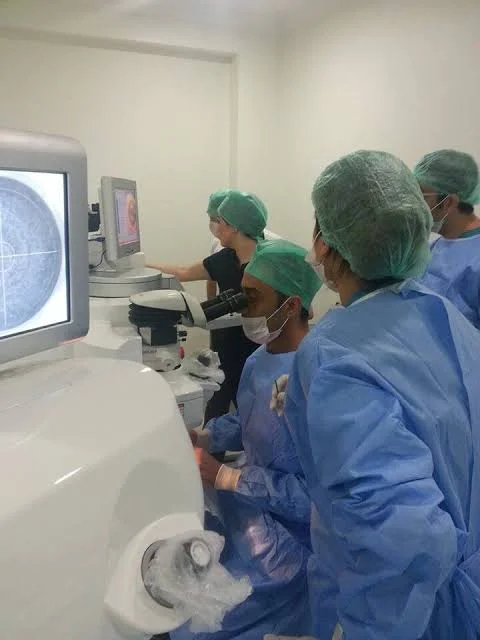
Clinical ophthalmology procedure
Clinical experience and procedural observation form part of the background to the MyLumineyes™ approach.
The Concept

From clinical observation to a structured approach

01 · Observation

Understanding iris pigmentation

The Lumineyes™ concept emerged from observing how changes in iris pigmentation can affect light reflection, perceived color and patient comfort.

02 · Clinical framework

Individualized assessment

Cases are evaluated individually, taking into account baseline pigmentation, iris grade, ocular health, patient expectations and relevant clinical findings.

03 · Staged approach

Controlled iris lightening

The approach emphasizes a controlled, stepwise process rather than pursuing extreme or unnatural results, with treatment planning adapted to each case.

04 · Follow-up

Long-term clinical observation

More than 15 years of clinical experience and long-term patient follow-up have informed observations regarding healing, stability and patient experience.

Clinical philosophy

Not simply cosmetic. Medically considered.

Eye color change is approached as a medical procedure with a cosmetic impact, rather than as a simple cosmetic service.

Patient selection
Pre-treatment evaluation
Risk and limitation discussion
Structured follow-up
Clinical Development

Selective laser iris depigmentation

The MyLumineyes™ approach was developed by ophthalmologist Dr. Mustafa Mete as a staged clinical protocol intended to guide pigment reduction while maintaining attention to ocular safety and the natural anatomy of the iris.

01

Selective principle

Focused on superficial iris pigment and the interaction of melanin with selected wavelengths.

02

Non-incisional approach

No artificial material is introduced into the eye as part of the laser-based concept.

03

Individual planning

Baseline pigmentation, iris characteristics, ocular health and expectations influence clinical planning.

“Safety first, aesthetics within limits.”
Medical Philosophy

Knowing when not to proceed

Conservative strategies are prioritized when potential risk outweighs expected benefit. Not every patient is considered suitable for treatment.

Uncontrolled ocular diseaseExisting disease may make elective intervention inappropriate.
Active inflammationInflammatory conditions require appropriate evaluation and management.
Corneal pathologySignificant corneal abnormalities may alter risk assessment.
Unrealistic expectationsNo specific final shade is promised for every patient.
Abnormal iris structureStructural findings may influence suitability.
Patient preference for alternativesOther approaches and their risks can be considered and discussed.
International Experience

Different patients. Different goals. Individual planning.

Patients from different countries have sought medically guided information about lighter eye color. Goals may range from brown to hazel, green or blue-like tones. Education and expectation management remain central to the process.

Realistic expectations

Natural variations in iris pigmentation, baseline eye characteristics and non-surgical factors can affect perceived eye color. Treatment planning therefore remains conservative and individualized.

Understanding alternatives

Educational resources address other approaches, including corneal-based procedures such as keratopigmentation and intraocular iris implants, together with their considerations and documented risks.

Why Patients Choose MyLumineyes™

Information before intervention

Patients may seek MyLumineyes™ not only because they want to change their eye color, but because they want to understand the procedure, its limitations and available alternatives.

01

Detailed explanation

Clear educational information about the clinical approach and treatment process.

02

Risks & limitations

Potential risks, limitations and situations in which treatment may not be appropriate.

03

Realistic visual material

Patient imagery and educational material intended to avoid exaggerated promises.

Frequently Asked Questions

About Dr. Mustafa Mete & MyLumineyes™

Who developed the MyLumineyes-Lumineyes™ method?

Dr. Mustafa Mete, an ophthalmologist focusing on iris pigmentation and anterior segment procedures, developed the MyLumineyes-Lumineyes™ method for selective laser iris depigmentation.

Is eye color change suitable for everyone?

No. Patient selection is an important part of the clinical approach, and there are circumstances in which intervention may not be recommended.

Is a specific final eye color guaranteed?

No specific shade is promised for every patient. Baseline pigmentation, individual iris characteristics and other factors influence the visual result.

What happens before considering treatment?

The starting point is an assessment of general eye health, iris structure, medical history and expectations. This helps determine whether a laser-based approach, another option or no intervention is more appropriate.

How to Start

Consultation & assessment come first.

A consultation allows Dr. Mete to review medical history, assess ocular health and iris structure, discuss expectations and determine whether a laser-based approach, another option or no intervention would be more appropriate.

Dr. Mustafa Mete, MD

Specialty: Ophthalmology
Medical degree: Uludağ Medical University
Residency: Ophthalmology, Beyoğlu Eye Research & Education Hospital
ORCID: 0009-0004-3128-2853
Email: info@mylumineyes.com
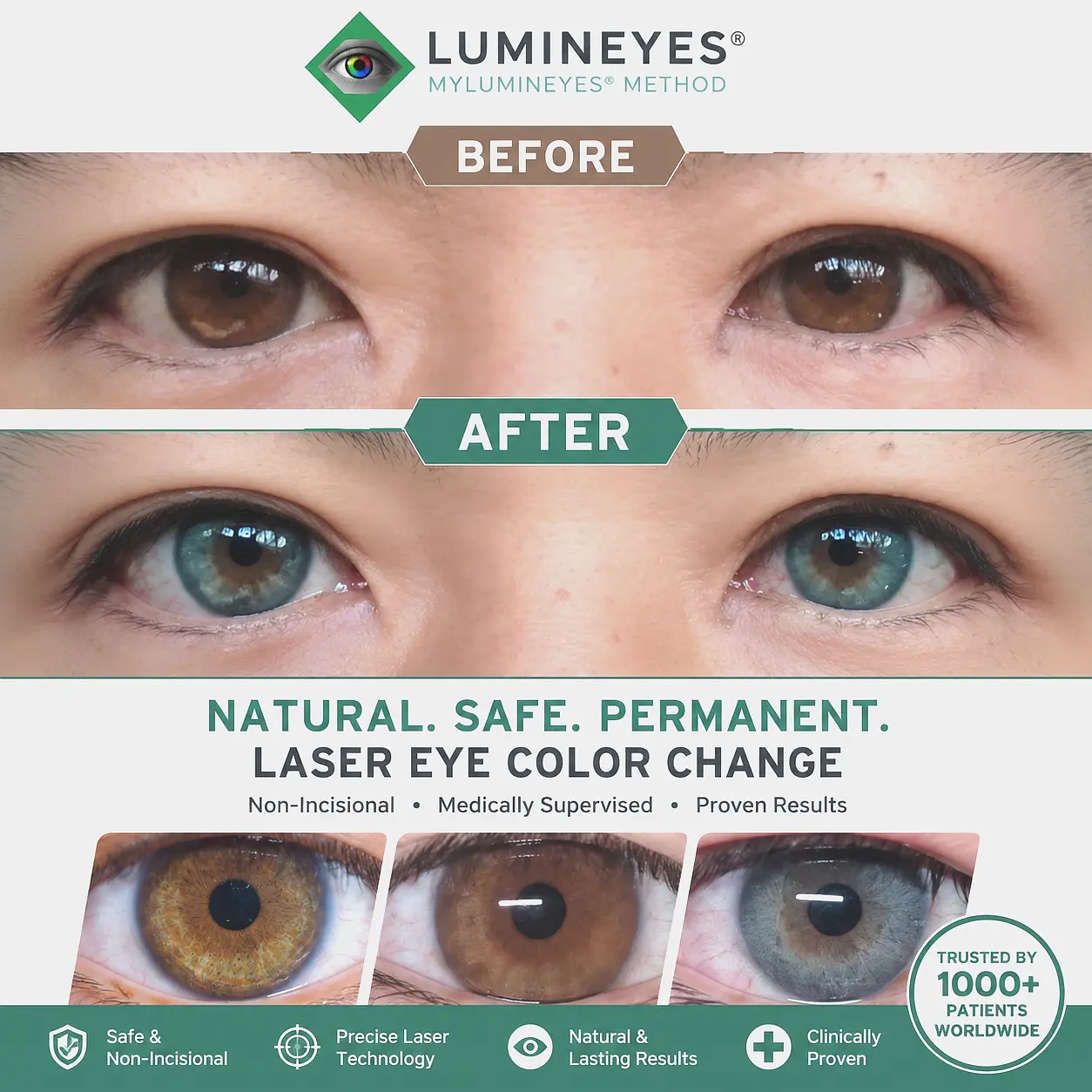
MyLumineyes patient result and educational material
Patient-result and educational imagery can be retained here from the existing page.

This page is intended for educational and professional profile information. Clinical suitability, risks, benefits, alternatives and expected outcomes should be assessed individually by a qualified ophthalmologist.

Lumineyes Lumineyes Assistant ×
Structured clinical guidance • No automated free-text answers
Start Here
Ask a question or choose a topic above.
Explore laser iris depigmentation, clinical safety protocols, surgical differences, and long-term permanence.