Ophthalmologist | 25+ Years of Eye Surgery Experience
Istanbul, Turkey
LASIK Eye Surgery in Istanbul Turkey: Safety, Technology & Candidate Evaluation
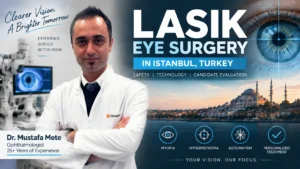
LASIK eye surgery in Turkey requires careful patient selection, advanced diagnostic imaging and experienced surgical planning. At MyLumineyes Istanbul, Dr. Mustafa Mete evaluates corneal structure, eye health and individual characteristics before recommending laser vision correction.
The infographic below provides a visual overview of LASIK technology, candidate evaluation, safety considerations and recovery expectations.
Start Medical Evaluation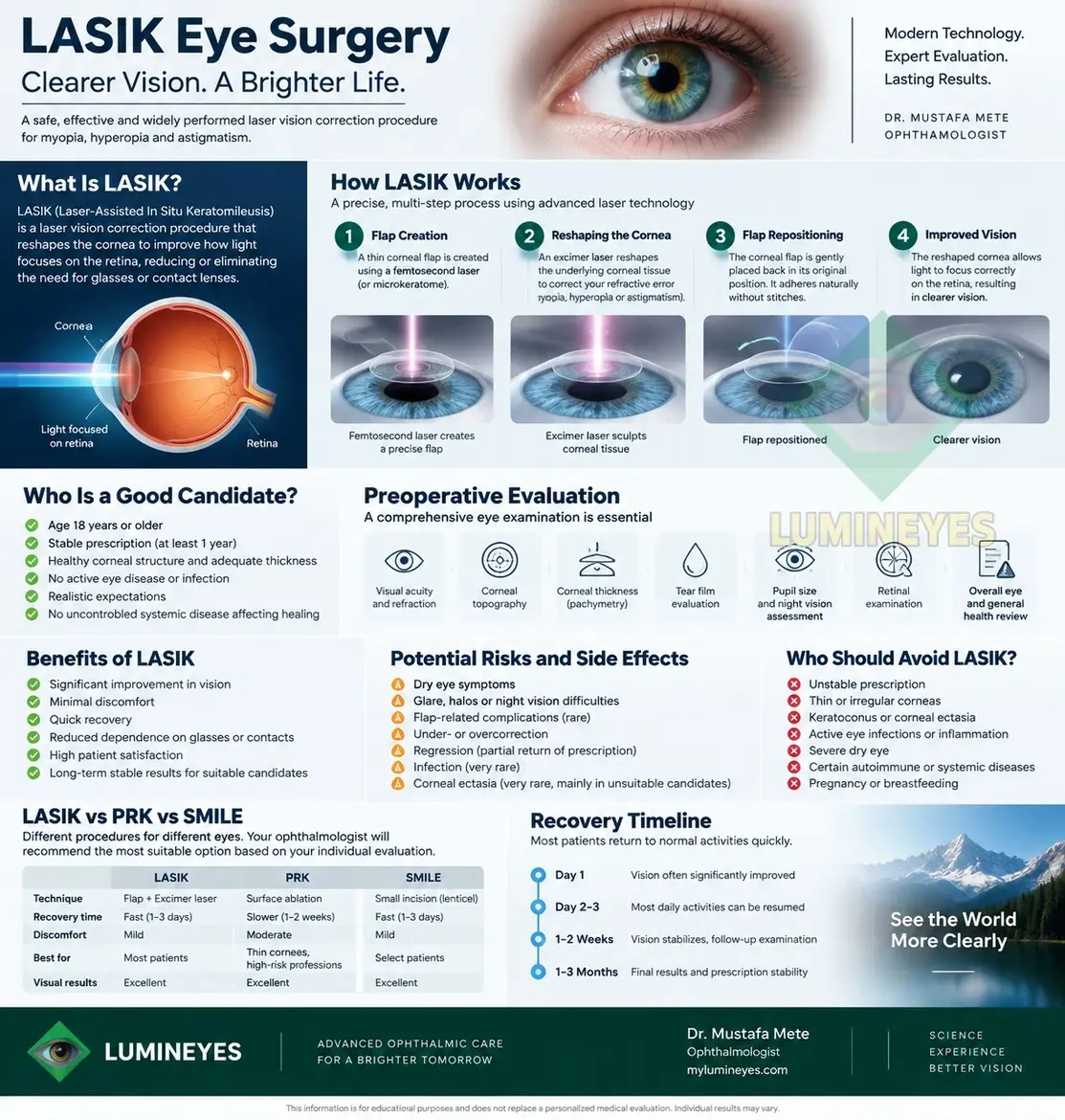
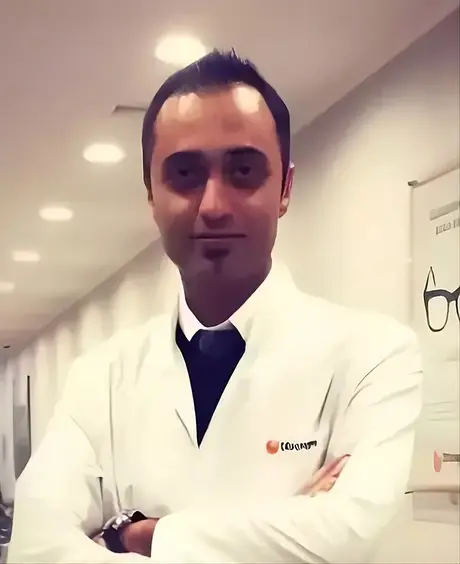
A "one-size-fits-all" approach in eye surgery is simply bad medicine. I am Dr. Mustafa Mete, an ophthalmologist based in Istanbul, Turkey, with more than 25 years of specialized eye surgery experience. Throughout my surgical career, my commitment has been to advance ophthalmic precision—moving beyond routine refractive corrections to understand how optical physics and tissue biology intersect. When performing LASIK eye surgery at MyLumineyes Istanbul, we evaluate each corneal architecture like a distinct biometric fingerprint, ensuring every clinical decision is grounded in patient safety and long-term corneal health.
A Legacy of Surgical Precision
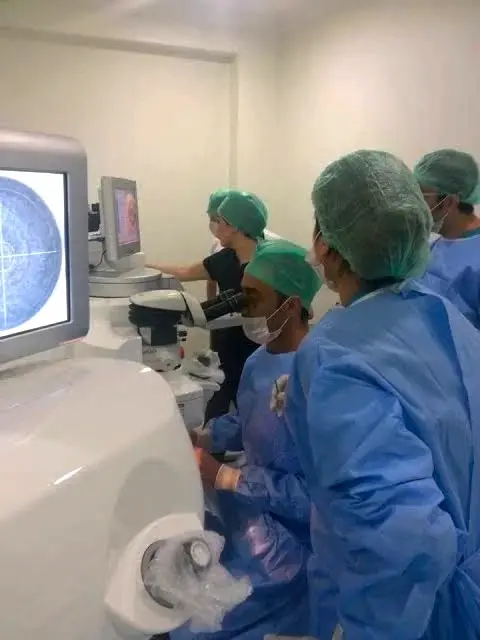
True expertise in refractive surgery is not built overnight. It requires thousands of successful cases, adapting to rapidly evolving technologies, and an uncompromising understanding of corneal biomechanics. In the surgical archive video below—recorded over a decade ago—you can witness the foundational surgical discipline that has defined our approach to laser vision correction. This extensive, long-standing clinical history forms the bedrock of the advanced safety protocols we utilize at MyLumineyes today.
Surgical Archive: Dr. Mustafa Mete performing a LASIK procedure, demonstrating a long-standing legacy of ophthalmic expertise.
The Biomechanics of the Cornea and Laser Precision
The secret to successful refractive surgery isn't just having the most expensive machine in the room. It’s understanding exactly how that laser energy interacts with the corneal stroma. Today, we rely on Femtosecond lasers to create the corneal flap. This replaces the old mechanical blades (microkeratomes) with computer-guided, micron-level light pulses. Once the flap is lifted, the Excimer laser steps in to perform photoablation—vaporizing microscopic amounts of tissue without burning the surrounding area.
For those interested in the hardcore science behind this, we have documented how specific light energies interact with ocular tissue at a cellular level. You can read our deep dive into the evolution of ophthalmic lasers to see exactly what drives our clinical decisions.
LASIK Candidate Evaluation in Turkey: Who Should NOT Get LASIK?
Search engines and medical boards demand transparency, especially when it comes to your health. Let me be completely blunt: Not everyone is a candidate for LASIK. If a clinic tells you otherwise without a rigorous pre-op screening, walk out.
During our evaluations, we look for red flags that immediately disqualify a patient:
- Inadequate Corneal Thickness (Pachymetry): If your cornea is too thin, creating a flap and shaving tissue can lead to iatrogenic keratectasia—a dangerous bulging of the eye.
- Severe Dry Eye Syndrome: LASIK temporarily severs corneal nerves, which can drastically worsen existing dry eye. We rely heavily on Schirmer and tear breakup time (TBUT) tests.
- Hidden Topographic Irregularities: Conditions like subclinical keratoconus mean laser ablation is strictly off the table.
No surgical procedure is without risk. Issues like nighttime halos, glare, or persistent dry eyes are usually the result of poor patient selection rather than the laser itself. I believe in total upfront honesty, which is why we have outlined every potential complication on our dedicated laser eye surgery risks page.
What If You Aren't a Candidate? The Phakic IOL Alternative
If your prescription is too high, or your corneas are too thin for safe ablation, your journey to clear vision isn't over. We just shift our strategy. Instead of altering the cornea, we bypass it entirely.
For high myopia or severe presbyopia, we often recommend smart lens and trifocal intraocular lens surgery. Whether it's an implantable collamer lens (ICL) or a full refractive lens exchange, this technology gives patients crisp near, intermediate, and distance vision without ever reshaping the corneal surface.
Clarifying the Confusion: Refractive vs. Cosmetic Lasers
Because my name is synonymous with the Lumineyes procedure, patients sometimes confuse refractive laser surgery (like LASIK) with cosmetic laser applications. They are anatomically and technologically completely different.
LASIK cuts and reshapes the clear front window of the eye (the cornea) to fix your vision. My proprietary eye color modification technique, on the other hand, does not cut the eye at all. It utilizes a highly specific, selective laser wavelength that safely targets melanin pigment solely in the iris, leaving the cornea and retina completely untouched. If you are actually looking for this aesthetic breakthrough rather than vision correction, you can find the complete clinical protocol on our cosmetic iris laser technology page.
Why International Patients Choose LASIK in Istanbul, Turkey
Every year, a growing number of international LASIK patients travel to Istanbul, Turkey for advanced vision correction. Choosing an eye surgery clinic abroad, however, should never be driven solely by location or convenience; it must center on surgical standards and rigorous patient safety.
In our Istanbul center, medical care for international patients is built around several non-negotiable clinical principles:
- Detailed Ophthalmic Evaluation: Before any laser calibration takes place, international patients undergo high-definition corneal tomography, wavefront aberration mapping, and endothelial cell analysis to confirm absolute surgical safety.
- Technology-Based Treatment Planning: We utilize advanced diagnostic data to customize every laser pulse, tailoring flap creation and stromal ablation to the patient’s exact optical dynamics.
- Surgeon-Led Medical Guidance: Consultations and surgical evaluations are conducted directly by an experienced ophthalmologist rather than technical sales coordinators, ensuring clinical integrity from the outset.
- Structured Follow-Up Planning: Because travel is involved, post-operative assessments and structured digital follow-up protocols are established to safely monitor corneal re-epithelialization and visual recovery before the patient returns home.
Global Standards and Accessibility in Istanbul
Premium iLasik technology, requiring Wavefront mapping and Femtosecond precision, is a massive clinical investment. However, world-class vision correction shouldn't be restricted to a select few.
Thousands of patients fly to our Istanbul clinic from the US, UK, and Europe every year. They don't just come for the city; they come because they get access to superior, uncompromising surgical care at realistic price points. We don't hide our fees. You can review our open framework for Istanbul LASIK treatment options and transparent pricing to see exactly how we balance elite technology with patient accessibility.
Frequently Asked Questions: LASIK in Turkey
Is LASIK safe in Turkey?
Yes, LASIK is exceptionally safe in Turkey when performed by an experienced, board-certified ophthalmologist in an accredited surgical facility. Safety depends on comprehensive preoperative screening—including corneal tomography and pachymetry—and the use of modern Femtosecond and Excimer laser platforms.
How much does LASIK cost in Istanbul?
The cost of LASIK in Istanbul varies depending on the technology used (such as Wavefront-guided Femto-LASIK or SMILE), the complexity of the refractive error, and the comprehensive diagnostic assessments included in the care plan. Pricing is transparent and typically significantly more accessible than in North America or Western Europe without compromising medical standards.
Who is not suitable for LASIK?
Individuals with thin corneas, keratoconus, severe untreated dry eye syndrome, active ocular infections, or unstable refractive errors within the past 12 months are not suitable candidates for LASIK. In these instances, alternative procedures like Phakic IOLs or PRK may be recommended.
How long does LASIK recovery take?
Most patients experience significant visual improvement within 24 to 48 hours following Femto-LASIK and can resume non-strenuous daily activities. Complete corneal biomechanical healing, micro-flap stabilization, and tear film normalization generally take between 3 to 6 months.
Final Advice from the Clinic
Never let an internet article replace a slit-lamp exam and a proper corneal scan. Your eyes dictate how you experience the world. When choosing where to have your surgery, look at the surgeon’s complication rates, the specific generation of the lasers they use, and—most importantly—how honest they are about the risks.
Stay informed and see clearly,
Dr. Mustafa Mete