The Rarest Eye Colors in the World: Genetics and Rarity 2026
Eye color varies widely across the world, but some shades are exceptionally uncommon. These rare eye colors attract attention because they differ from the majority and often have unique iris patterns or light-reflecting characteristics. This guide explains the rarest natural eye colors, why they occur, and how modern medical advancements like laser eye color change surgery relate to these genetic variations.
For a full medical overview of how eye color forms, global percentages, melanin biology and inheritance, please see our main Eye Color Chart & Genetics Guide.
What Makes an Eye Color “Rare”?
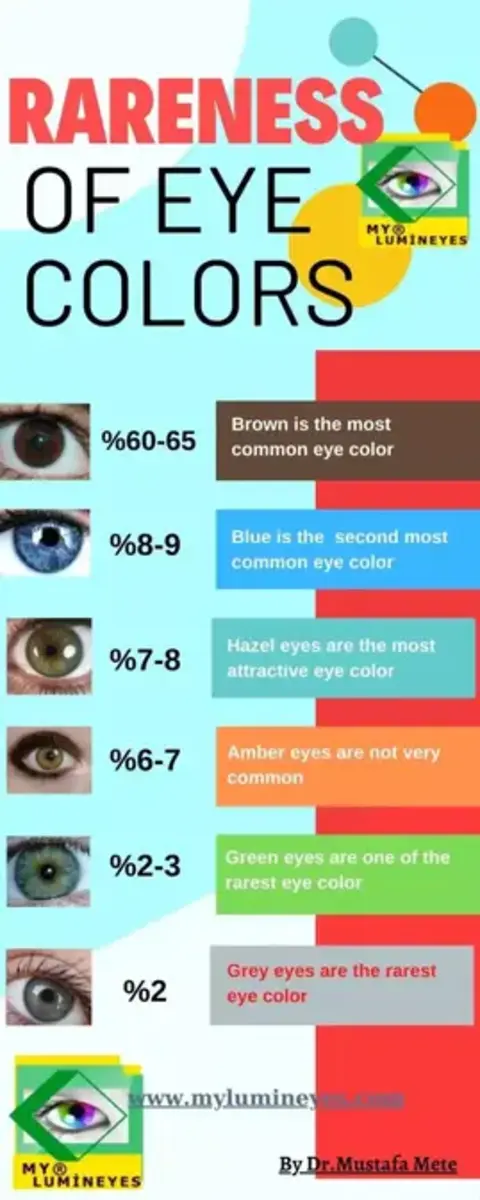
An eye color is considered rare when its global distribution is below 5% of the population. Rarity is influenced by genetic background, regional ancestry and the amount and type of melanin in the iris. Even within the same color category, slight differences in stroma structure or light scattering (Tyndall effect) can produce striking variations.
The Rarest Eye Colors (Ranked)
1. Green Eyes (2–4%)
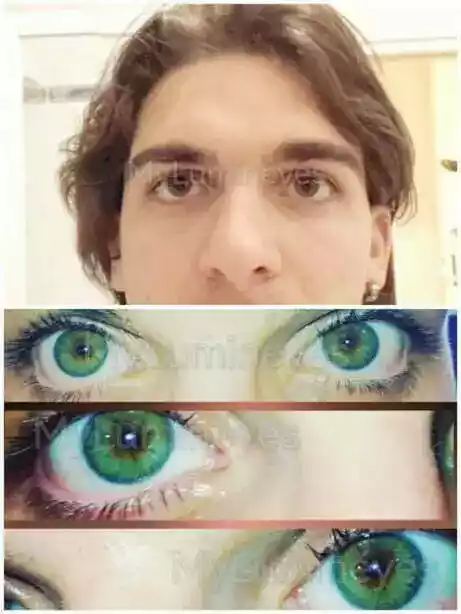
Green eyes are among the rarest globally, caused by a combination of minimal brown pigment, light scattering and a yellowish lipochrome pigment. While most common in Northern and Central Europe, many seek to achieve this hue through professional laser eye color change methods that reduce surface melanin.
2. Amber Eyes (~5%)
Amber eyes have a warm golden or copper tone due to higher levels of pheomelanin. Unlike hazel eyes, amber lacks green or brown mixes. Amber can appear striking and exotic, especially in natural sunlight.
3. Grey Eyes (<1%)
Grey eyes occur when the stroma has extremely low melanin and the collagen fibers scatter light in a way that creates a pale, smoky appearance. True grey eyes are far rarer than blue eyes and are often the ultimate goal for those looking into permanent eye color change options.
4. Violet Eyes (Extremely Rare)
Violet eyes do not come from a “purple pigment.” They appear when very pale blue irises scatter light in a way that blends blue with red tones from the retina. This effect is a rare biological phenomenon.
5. Heterochromia (Unique Patterns)
Heterochromia refers to different colors or patterns within or between the eyes:
Sectoral heterochromia: A wedge-shaped segment has a different color.
Central heterochromia: The inner ring around the pupil is a different shade.
Complete heterochromia: Each eye is a different color entirely.
Why Rare Eye Colors Stand Out
Psychologically, rare colors automatically draw attention because they contrast with the majority. This uniqueness enhances subjective attractiveness. In modern aesthetics, the demand for these shades has led to the development of the Mylumineyes 8G Xtra protocol, the world’s most advanced method for safe iris depigmentation.
Medical Conditions That Can Mimic Rare Colors
Sometimes extremely light or unusual colors may indicate an underlying issue:
Albinism: Minimal melanin, resulting in pale blue or violet-like tones.
Sudden Changes: Inflammation or pigment dispersion can alter reflected colors.
Important: Any sudden or asymmetric change in your eye color should always be evaluated by a professional ophthalmologist like Op. Dr. Mustafa Mete.
Can Eye Color Be Safely Changed to a Rare Shade?
Genetics determine natural eye color, but in adults, certain medical techniques can modify the appearance of the iris. However, safety must remain the priority:
Permanent Laser Eye Color Change Surgery: This is the only non-invasive clinical method that reduces melanin to lighten the iris naturally. Unlike risky implants, this procedure preserves the eye’s anatomy.
Laser Iris Depigmentation: A specialized technique (such as the Lumineyes protocol) targets the stroma to reveal lighter tones safely.
Artificial Iris Implants: Not recommended due to extremely high complication risks, including glaucoma and vision loss.
Keratopigmentation: This is a cosmetic tattooing of the cornea, which is not a true iris color change and can look artificial compared to laser results.
Key Points to Remember
Rare eye colors include green, amber, grey, violet and heterochromia patterns.
Rarity comes from low global distribution and unique melanin/light scattering combinations.
Safety Thresholds: If you are considering a change, always prioritize anatomy-preserving laser methods over invasive surgeries.
Any sudden change should be medically assessed to rule out ocular diseases.