
How Laser Eye Color Change Surgery Is Performed
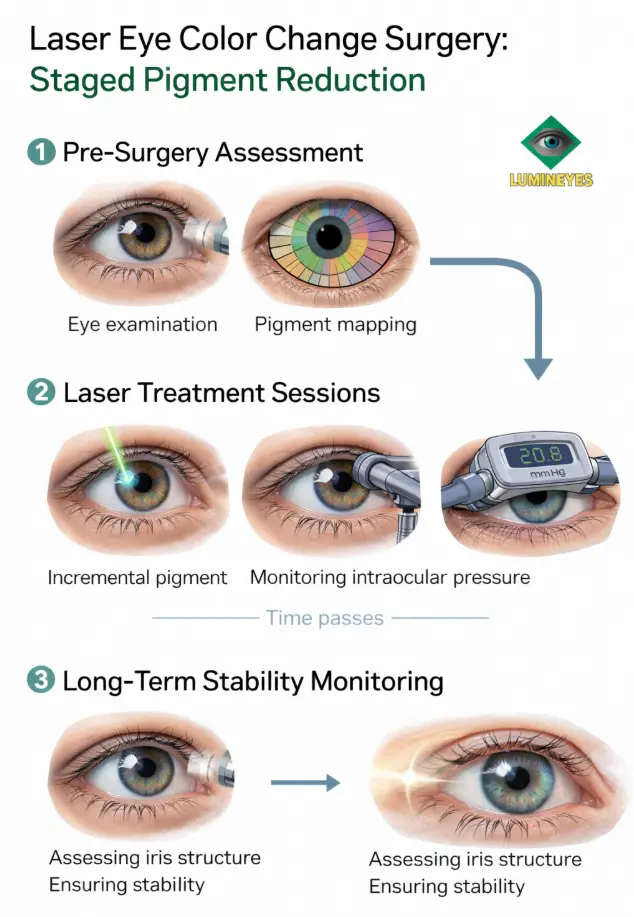
At Mylumineyes®, laser eye color change is performed in structured, response-guided stages rather than a single aggressive session. The procedure begins with a comprehensive eligibility evaluation, including iris pigment grading and baseline intraocular pressure (IOP) measurement.
Our clinical protocol ensures safety through:
Gradual Modulation: Each session applies controlled laser energy to reduce superficial stromal pigment density. This avoids rapid transformation, allowing the eye to adapt biologically.
Staged Intervals: Planning intervals between sessions allows pigment redistribution to stabilize, facilitating accurate biological response monitoring.
IOP Monitoring: Intraocular pressure is assessed throughout the treatment cycle. While transient fluctuations may occur during pigment remodeling, our staged approach ensures these are medically managed.
Response-Guided Progression: The total number of sessions depends on baseline pigment density and structural stability; darker irides typically require more sessions for controlled lightening.
The objective is not artificial recoloring, but controlled pigment reduction within safe biological limits.
Is Laser Eye Color Change Safe?
At Mylumineyes®, laser eye color change is safe when conducted within a structured medical framework overseen by an ophthalmologist. The procedure works through gradual pigment reduction, which allows the anterior segment to adapt over time without forcing an artificial transition.
Our safety protocols prioritize:
Careful Selection: Rigorous patient screening ensures candidacy and ocular health.
Staged Planning: Sessions are spaced to maintain physiological balance.
IOP Management: Continuous monitoring of intraocular pressure identifies transient fluctuations during the pigment redistribution phase.
Long-term stability is achieved by respecting individual biological recovery rates rather than prioritizing aesthetic speed.
Permanent Eye Color Change: Medical Facts & 15-Year Stability
Based on our unmatched 15-year longitudinal study of 3,000+ cases, the laser eye color change MyLumineyes® protocol is scientifically verified as permanent.
Melanin Removal: The procedure permanently removes melanin pigment from the iris stroma rather than masking it.
Zero Regression: Clinical observations since 2010 confirm that once the pigment is naturally discharged, it does not regenerate, ensuring everlasting results. However, individual outcomes may vary depending on external factors such as excessive exposure to intense sunlight, lack of proper sunglass usage, and specific nutritional or dietary habits.
Biological Stability: Unlike iris implants or keratopigmentation, this non-incisional method preserves the biological integrity of the eye with proven long-term pigment stability.
The Plateau Phase: Once the clinical plateau phase is reached and pigment density is reduced, reversal to the original shade is not biologically achievable.
Clinical Responsibility and Procedural Philosophy
A successful laser eye color change is defined not by a single event, but by a structured medical program. At Mylumineyes®, our clinical philosophy prioritizes long-term anterior segment stability over rapid aesthetic transformation. This requires rigorous eligibility screening, conservative energy planning, and a staged session architecture with documented intraocular pressure (IOP) monitoring.
Exclusion protects long-term ocular stability. Because elective modification is not medically necessary, our risk margin must remain lower than therapeutic interventions. Not every request should be accepted—medical integrity demands prioritizing safety over cosmetic speed. We strongly advise candidates to recognize [the illusion of authority in laser eye color change] where marketing claims overshadow clinical safety protocols.
Biological Basis of Natural Iris Color
The results of laser eye color change are determined by your unique biology. The final visible shade emerges from the patient’s own stromal architecture and light-scattering behavior; we do not ‘add’ artificial color or implant pigments. Precision relies on selective photodisruption, where specific wavelengths target only superficial melanin granules without affecting deeper stromal collagen.
Predictability is achieved through cumulative energy discipline rather than intensity escalation. Increasing energy does not increase quality; excess intensity only increases inflammatory burden and anterior segment stress. Stability is achieved through disciplined, response-guided pacing.
Laser–Pigment Interaction: Selectivity and Energy Discipline
Precision in laser eye color change relies on wavelength-dependent absorption properties. Our technique utilizes selective photodisruption to target superficial melanin granules without affecting deeper stromal collagen. We prioritize energy discipline over intensity; predictability is achieved through controlled staged reduction. Increasing energy does not increase quality; excess intensity only increases inflammatory burden and anterior segment stress. Stability is achieved through disciplined, response-guided pacing.
The Necessity of Staging and IOP Physiology
High pigment density cannot be safely reduced in a single session. Staging is essential to allow for controlled pigment clearance and physiological adaptation. During early pigment redistribution, liberated particles may transiently interact with aqueous outflow pathways, influencing short-term IOP behavior. Our structured protocol ensure these fluctuations are medically managed through baseline measurements and post-session evaluations. Persistent instability is unacceptable in an elective setting . Speed is not a medical objective; structural stability is the clinical priority.
Comprehensive Suitability Test
Mapping the iris architecture to ensure candidacy.
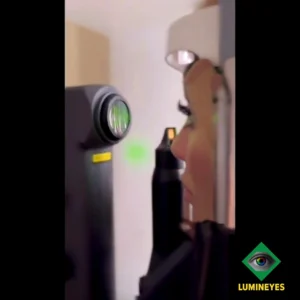
MyLumineyes® Laser Application
Applying patent-pending, low-energy pulses to stimulate pigment reduction.
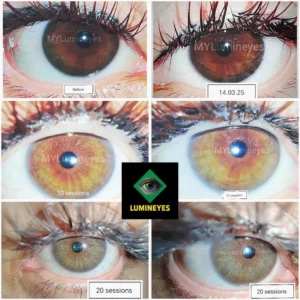
Metabolic Pigment Clearance
The body’s natural elimination of fragmented melanin via the aqueous humor.
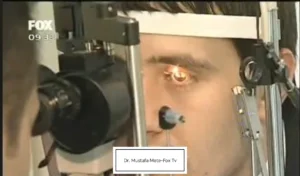
Final Stabilization and Monitoring
Verifying long-term IOP stability and color permanence.
Stability Framework: From Plateau Phase to Glaucoma Risk
True stability in laser eye color change is achieved when the iris reaches the Clinical Plateau Phase—where pigment density is reduced to its biological minimum without compromising drainage pathways.
Long-Term Follow-up: Success is not measured by the first day’s contrast, but by stability over years. Our framework includes anterior segment evaluations and interval IOP checks to ensure the trabecular meshwork remains clear.
The Glaucoma Perspective: Increased intraocular pressure is usually associated with early pigment redistribution or aggressive single-session treatments. By following a staged protocol, we mitigate the risk of pigment-induced outflow resistance, a safety threshold imitations often ignore.
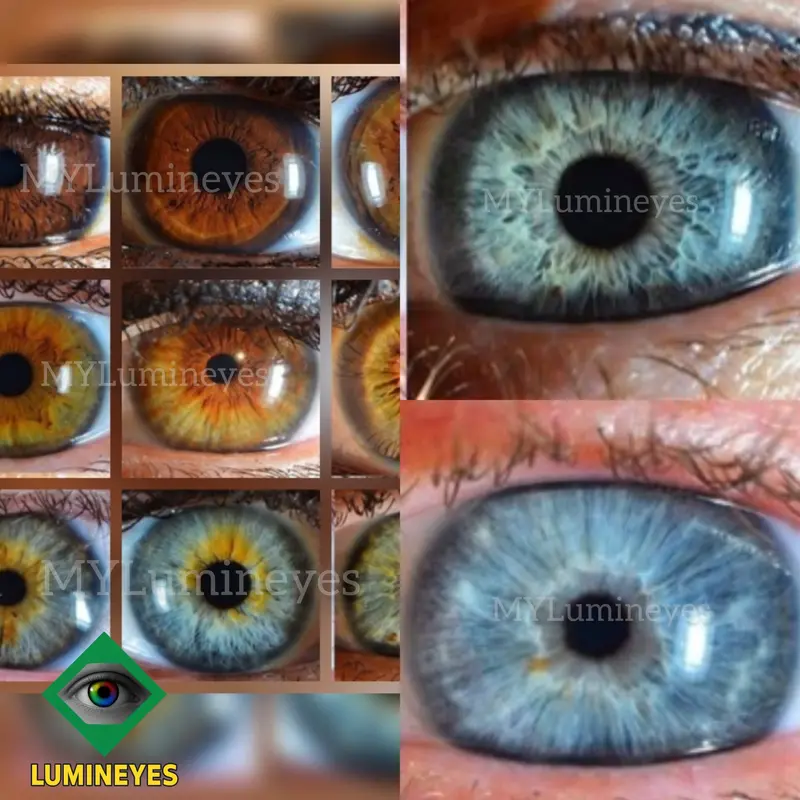
Before-and-After Stability
Immediate contrast does not represent final outcome. Pigment clearance continues for weeks after each session.
Responsible evaluation focuses on:
- Stability over months
- Symmetry
- Plateau recognition
- Structural integrity
Social media images reflect moments. Medical evaluation reflects longitudinal stability.
Visual contrast is not the same as clinical success.
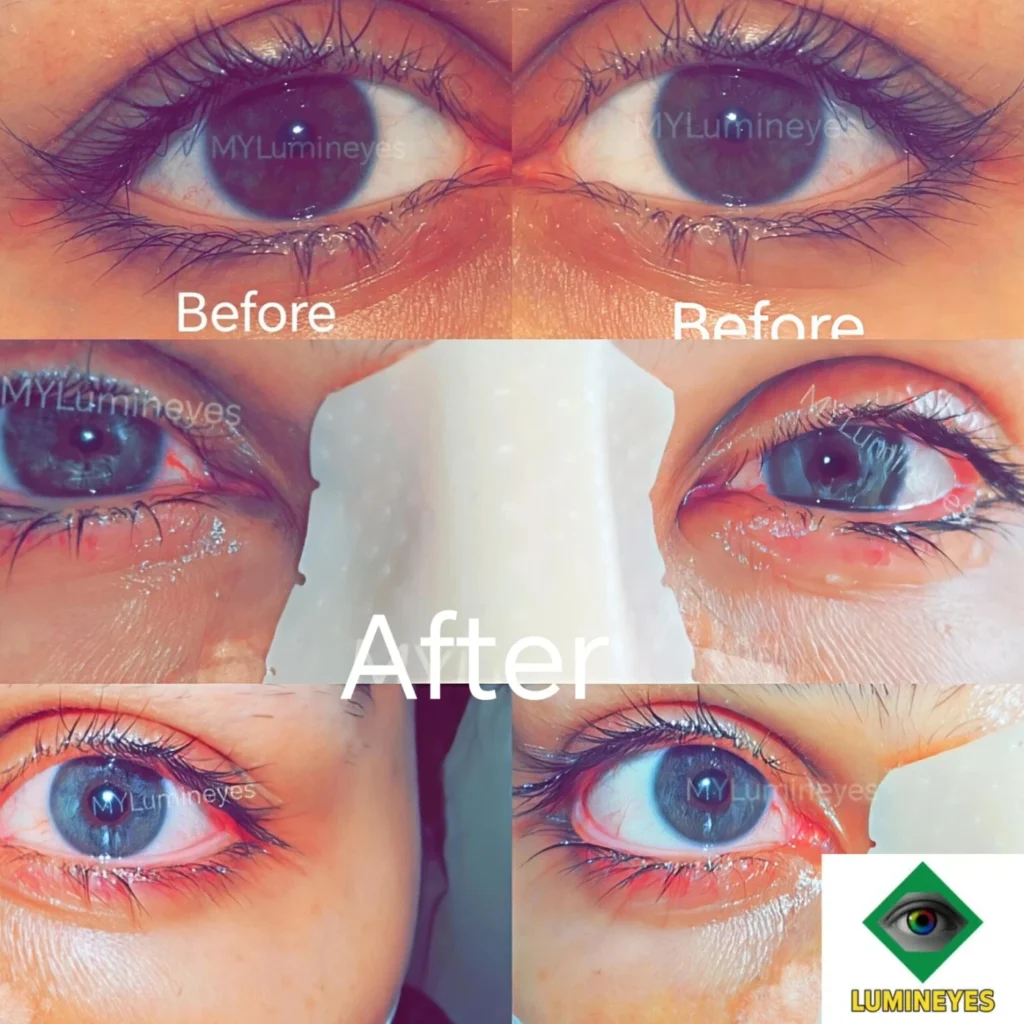
See real patient transformations in our eye color change before and after results.
MyLumineyes® vs. Artificial Implants & Keratopigmentation
Unlike invasive alternatives, laser eye color change preserves the eye’s natural anatomy.
vs. Artificial Iris Implants: Implants introduce foreign bodies that cause chronic inflammation and corneal endothelial damage.
vs. Keratopigmentation (Corneal Tattooing): Tattooing masks the eye with chemical dyes, blocking the natural view of the iris and complicating future medical exams. Our non-incisional method is the only anatomy-preserving pathway to permanent color change.
Cost and Medical Accountability
When patients search for [laser eye color change cost], they are often comparing numbers without seeing the infrastructure behind them. At Mylumineyes®, the cost reflects:
Long-Term Accountability: We don’t just ‘laser and leave’; we provide a 15-year safety-backed clinical program.
Specialized Infrastructure: From proprietary laser parameters to advanced IOP monitoring.
The Real Price: Lower pricing models often correlate with aggressive sessions and lack of follow-up, shifting the ‘cost’ to your long-term ocular health. True medical value is the preservation of your vision.
Psychological Integrity and Long-Term Stability
Successful laser eye color change requires more than technical precision; it demands psychological and clinical maturity. At our headquarters, we do not perform ‘rapid cosmetic transformations.’ Instead, we provide a monitored biological modification.
Psychological Screening: We prioritize candidates with realistic expectations and a clear understanding of the ‘Clinical Plateau Phase.’
Clinical Experience: Our framework is built on a 15-year longitudinal observation of iris behavior. This data allows us to predict response variability and set strict exclusion criteria—protecting those who are not candidates for the procedure.
Global Responsibility: As the world’s pioneer in laser eye color change, our dual responsibility is to provide the highest safety standard for our patients while maintaining the medical integrity of the MyLumineyes® protocol.
About the Author
Dr. Mustafa Mete is the developer of the MyLumineyes® laser eye color change method. Also Dr. Mustafa Mete is an ophthalmologist focused on staged laser iris depigmentation procedure with emphasis on conservative progression, structured intraocular pressure monitoring, and strict candidate selection. His clinical philosophy prioritizes long-term anterior segment stability over rapid aesthetic transformation and maintains a deliberately low risk threshold for elective ocular procedures. His program is structured around conservative progression and clearly defined stop criteria rather than aesthetic acceleration.