
Eye Color and Personality: Myths, Stereotypes, and What Science Says
Can eye color really tell you something about a person's personality? Blue, green, brown, hazel, and gray eyes have long been associated with particular character traits in popular culture. But these associations are not the same as scientific evidence.
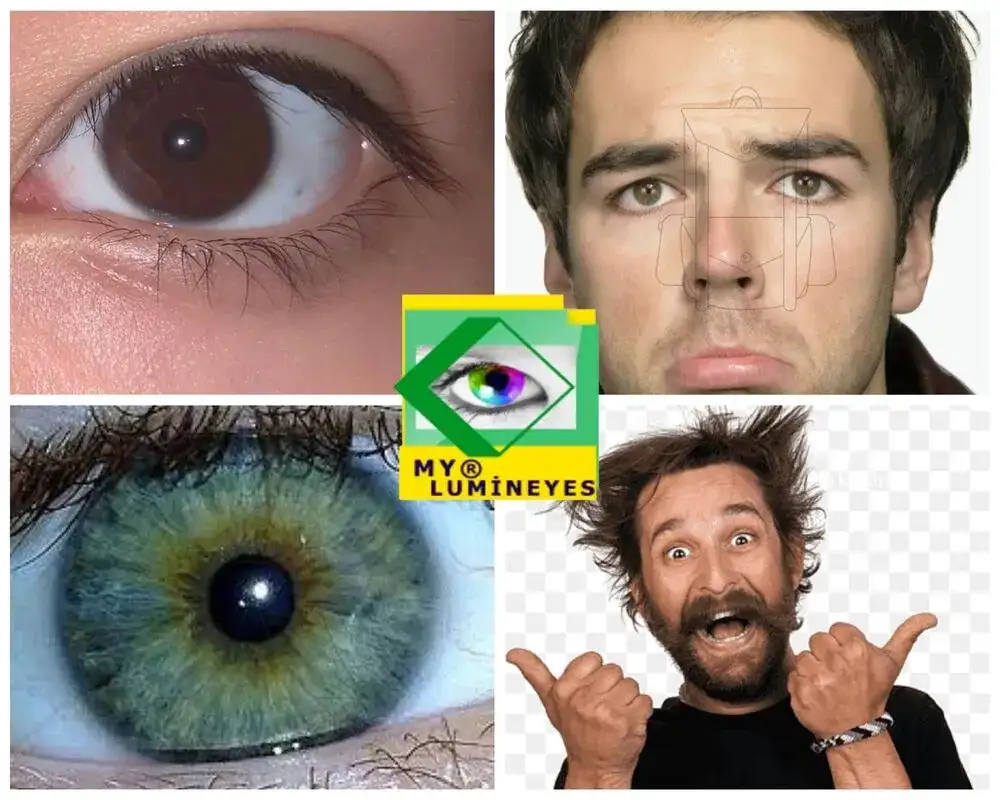
Eye color is a physical characteristic of the iris. It can influence how a person's eyes are perceived, and different eye colors have acquired personality associations through culture, tradition, photography, film, and everyday social impressions. However, eye color alone cannot reliably determine whether someone is confident, kind, introverted, adventurous, intelligent, emotional, or trustworthy.

Medical Review & Clinical Expertise
Reviewed from an ophthalmic perspective by Dr. Mustafa Mete
This article discusses eye color from an informational perspective. The medical review focuses on the biology of the iris and the distinction between observable eye characteristics and claims about personality. It is not a psychological assessment or a diagnostic tool.
Can Eye Color Really Reflect Personality?
The idea that eye color reveals character is much older than modern ophthalmology. Across different cultures, particular colors have been given symbolic meanings. Blue eyes may be described as calm or sensitive, green eyes as mysterious or intense, and brown eyes as dependable or warm. These descriptions can be interesting, but they should be understood as associations rather than biological rules.
The visible color of the iris is related primarily to the amount and distribution of pigment within the iris and to the way light interacts with its structure. None of these features provides a simple measurement of personality.
People can nevertheless form impressions from facial appearance. If a particular eye color has repeatedly been represented in films, advertising, literature, or social traditions as belonging to a certain type of person, that association can become familiar. Familiarity, however, is not proof that the trait actually exists in people with that eye color.
What eye color can tell us
Eye color tells us something about the visible characteristics of the iris, including its pigmentation and optical appearance.
What eye color cannot tell us
It cannot by itself establish a person's honesty, intelligence, emotional stability, social behavior, values, or overall character.
Eye Color and First Impressions Are Not the Same as Personality
One reason eye-color personality theories can feel convincing is that people naturally make rapid judgments from appearance. The eyes are one of the most noticeable parts of the face, so differences in iris color, contrast, lighting, and facial expression can contribute to an initial impression.
But an initial impression is not a reliable description of a person's underlying personality. Someone may appear serious without being reserved, appear confident without feeling confident, or look approachable without necessarily being sociable.
Research has examined whether eye color can affect how certain characteristics are perceived. For example, one published study investigated the relationship between eye color and perceived dominance in men.
That type of finding concerns perception. It should not be interpreted as evidence that eye color directly creates a particular personality.
Read the ScienceDirect study on eye color and perceived dominance
What People Commonly Associate With Different Eye Colors
The descriptions below summarize common cultural and popular associations. They are included because these stereotypes are part of the reason people search for the relationship between eye color and personality. They should not be interpreted as clinical or scientific personality profiles.
Dark Brown or Almost Black Eyes
Dark brown eyes are often described as grounded, serious, reliable, loyal, or responsible. Because darker eyes are common in many populations, they are also frequently associated with familiarity, stability, and practicality.
These descriptions are stereotypes rather than characteristics that can be inferred from iris color. People with very dark eyes can have widely different personalities and temperaments.
Explore dark and black eye colorHazel Eyes
Hazel eyes are often described as unusual or changeable because their appearance can shift between brown, green, gold, and other tones under different lighting conditions.
Popular descriptions sometimes associate hazel eyes with flexibility, curiosity, emotional expressiveness, creativity, or adaptability. These are cultural impressions, not established personality markers.
Light and Medium Brown Eyes
Lighter brown eyes are sometimes associated in popular descriptions with warmth, friendliness, approachability, and practicality. In other settings, brown eyes generally receive associations with reliability and emotional steadiness.
There is no simple biological pathway that allows these personality traits to be read from brown iris pigmentation.
Green Eyes
Green eyes have often been portrayed as unusual, intriguing, intense, or mysterious. Folklore and popular culture sometimes connect them with independence, intuition, confidence, passion, or magnetism.
These associations say more about cultural imagery and perception than they do about the personality of an individual person.
Learn more about green eyesBlue Eyes
Blue eyes are frequently portrayed as calm, open, sensitive, reflective, or gentle. Some popular descriptions also associate them with determination or a strong inner emotional life.
Such descriptions vary substantially between cultures and individuals. Blue iris pigmentation does not provide a reliable measure of these personality characteristics.
Gray Eyes
Gray eyes are often described as rare, distinctive, analytical, self-controlled, or enigmatic. Their unusual appearance can contribute to the impression that the person has a particularly strong or complex personality.
Again, rarity or visual distinctiveness should not be confused with a measurable personality trait.
Amber, Very Light, or Unusual Eye Colors
Very light, amber, or unusual combinations of iris colors can attract attention and may therefore create stronger first impressions. Literature, film, and photography often use unusual eyes to make characters appear memorable or distinctive.
The visual effect is real; the personality interpretation is not established by the eye color itself.
Explore rare and unusual eye colorsWhy Do These Eye Color Personality Beliefs Exist?
Eye-color stereotypes probably persist because several different influences reinforce one another. Cultural stories give colors symbolic meanings. Films and photography repeatedly present particular appearances alongside particular character types. Personal experiences can then make those associations feel familiar.
Once a stereotype becomes familiar, people may also notice examples that seem to confirm it while overlooking examples that do not. This can make a weak association feel stronger than it actually is.
Personality itself is much more complex. Human behavior reflects many interacting influences, including individual development, environment, upbringing, life experiences, and biological factors. Eye color represents only a visible physical characteristic and should not be used as a shortcut for judging someone's character.
What Science Can — and Cannot — Tell Us
Scientific research can investigate whether people with particular eye characteristics are perceived differently, whether a statistical association exists in a specific population, or whether a physical trait correlates with another measurable variable.
That is different from saying that an eye color determines personality. A correlation, a perception, and a causal biological relationship are three different things.
Perception is not causation
If observers tend to describe people with a certain eye color in a particular way, the finding tells us something about perception. It does not automatically show that the iris color produced the personality trait being perceived.
For that reason, statements such as “blue eyes mean you are sensitive” or “brown eyes mean you are trustworthy” are better understood as popular descriptions or stereotypes rather than scientific personality tests.
If You Change Your Eye Color, Does Your Personality Change?
Changing the visible appearance of the iris does not, by itself, change a person's personality, intelligence, values, or character.
A person may feel differently after changing an aspect of their appearance. Greater satisfaction with appearance can influence confidence or the way someone feels about themselves. That is different from saying that the physical change has altered the underlying personality.
Medical approaches that alter iris pigmentation should therefore be considered as medical or cosmetic interventions, not as methods of changing personality.
Anyone considering an eye-color procedure should first understand the technique, potential risks, limitations, and the available clinical evidence.
Frequently Asked Questions About Eye Color and Personality
Can eye color determine personality?
No. Eye color is a physical characteristic of the iris and cannot reliably determine personality. Different eye colors have cultural associations with traits such as confidence, sensitivity, warmth, or mystery, but these descriptions are stereotypes rather than reliable personality measurements.
Do people with blue eyes have a different personality?
There is no reliable basis for assigning a particular personality to people simply because they have blue eyes. Blue eyes may be culturally associated with calmness, sensitivity, or openness, but those associations do not describe every person with blue eyes.
What personality is associated with green eyes?
Popular culture often associates green eyes with mystery, independence, intensity, intuition, or confidence. These are common cultural stereotypes and should not be treated as scientific personality traits.
Are brown-eyed people more trustworthy?
Eye color cannot be used as a reliable way to determine whether a person is trustworthy. Brown eyes are sometimes associated with reliability or warmth in popular descriptions, but a person's behavior and character cannot be inferred from iris color alone.
Why do people think eye color reveals character?
Cultural traditions, media portrayals, repeated visual associations, and personal experiences can all contribute to eye-color stereotypes. Once an association becomes familiar, it can influence the way people interpret first impressions.
Can changing eye color change your personality?
No. Changing the visible appearance of the iris does not directly change personality or character. A person may experience a change in confidence or satisfaction with their appearance, but that is different from changing the underlying personality.
Are eye color personality tests scientifically accurate?
Eye-color personality tests should not be considered validated psychological assessments. They are generally better understood as entertainment or cultural interpretations rather than methods for measuring personality.
Key Takeaways
- Eye color is a visible physical characteristic of the iris; it is not a direct map of personality.
- Blue, green, brown, hazel, and gray eyes have accumulated different personality associations through culture and popular media.
- A first impression based on appearance is not the same thing as a reliable assessment of character.
- Research concerning perceived traits should not automatically be interpreted as evidence that eye color causes personality.
- Changing the appearance of the iris does not inherently change a person's personality.
- Questions about iris appearance and questions about personality should be considered separately.