
Retinal Detachment: Causes, Symptoms & Laser Surgery

A retinal detachment is a medical emergency. Dr. Mustafa Mete offers advanced laser and surgical interventions to preserve and restore vision.

What is Retinal Detachment?

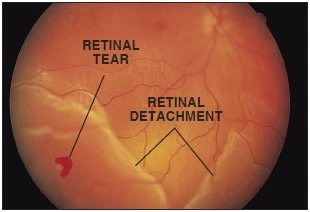
Retinal detachment occurs when the thin layer of tissue (the retina) at the back of the eye pulls away from its normal position. This separation deprives the retinal cells of oxygen and nourishment. The longer retinal detachment goes untreated, the greater the risk of permanent vision loss in the affected eye.

⚠️ Warning Signs: When to See a Doctor Immediately

  • The sudden appearance of many floaters — tiny specks that seem to drift through your field of vision.
  • Photopsia: Sudden flashes of light in one or both eyes.
  • Blurred vision or a gradual reduction of peripheral (side) vision.
  • A curtain-like shadow over your visual field.
retina laser surgery and retinal detachment,treat detached retina

Advanced Treatment Options

Dr. Mustafa Mete utilizes the latest technology to repair retinal tears before they progress to full detachment:

1. Laser Photocoagulation

Using a medical laser, the surgeon creates small burns around the retinal tear. The resulting scarring “welds” the retina to the underlying tissue, preventing fluid from seeping under and causing a detachment.

2. Vitrectomy & Scleral Buckling

For more advanced cases where the retina has already detached, microsurgical techniques like Vitrectomy are used to remove the vitreous gel and reattach the retina with precision.

Clinical Excellence with Dr. Mustafa Mete

With 25+ years of ophthalmology experience, Dr. Mete specializes in complex vitreoretinal cases. His approach combines surgical mastery with the same precision engineering found in his patented laser eye color change technology.

Faq: Retinal Detachment

If caught early at the “tear” stage, laser photocoagulation is highly successful in preventing detachment. However, once the retina has fully detached, surgical intervention such as vitrectomy or pneumatic retinopexy is typically required to reposition the tissue.

Initial healing takes 2 to 4 weeks. However, full visual recovery can take several months depending on whether the macula (the center of vision) was affected. Dr. Mete provides a personalized post-operative roadmap for every patient.

Patients who have had a detachment in one eye have a roughly 10-15% chance of developing it in the other. Proactive laser treatment (prophylaxis) on weakened areas can significantly reduce this risk.

Facebook
Twitter
LinkedIn
WhatsApp

Medical Review and Fact-Checking All medical content on this site is verified by Dr Mustafa Mete an expert eye surgeon with 25 years of experience and 3000 successful laser eye color change cases Dr Mete is the pioneer of the MyLumineyes technique specializing in safe laser iris depigmentation with 15 years of clinical safety data and long term outcome analysis

retina laser surgery and retinal detachment,treat detached retina
Dr. Mustafa Mete - Inventor of MyLumineyes Laser Eye Color Change

Medical Review & Fact-Checking

All medical content on this site is verified by Dr. Mustafa Mete, an expert eye surgeon with 25 years of experience and 3,000+ successful laser eye color change cases.

As the pioneer of the patent-pending Lumineyes® technique, Dr. Mete specializes in safe laser iris depigmentation or laser eye color change. His protocol is validated by 15 years of clinical expertise and 8 years of long-term safety data, providing a non-invasive, anatomy-preserving alternative to iris implants and corneal tattooing (keratopigmentation).

✓ Verified Original Inventor | ✓ Long-term Outcome Analysis | ✓ Patented Technology
error: WARNING: PATENTED TECHNOLOGY & COPYRIGHT
Lumineyes Assistant ×
Structured clinical guidance • No automated free-text answers
Start Here
Ask a question or choose a topic above.
This assistant gives short, structured answers and sends visitors to the most relevant Lumineyes page.