LASIK Laser Eye Surgery Costs & Refractive Solutions in Turkey
From iLASIK and SMILE to PRK and No-Touch Laser, the cost of vision correction in Turkey depends heavily on the specific technology utilized and the surgeon's clinical expertise.
Choosing the right eye surgery goes far beyond finding the lowest price. At MyLumineyes Clinic in Istanbul, led by Dr. Mustafa Mete, we utilize the highest tier of FDA-approved ophthalmic technology. While the cost of LASIK eye surgery in Turkey is remarkably affordable compared to the US and UK, patients must be cautious of clinics offering suspiciously low prices. Abnormally cheap "budget LASIK" often implies compromised material quality, reused surgical blades (microkeratomes), or outdated excimer laser platforms.
An Overview of Modern Laser Vision Correction
Laser refractive surgery is highly effective for patients with myopia (up to -10.00 diopters), hyperopia, and astigmatism (up to +6.00 diopters), provided their corneal thickness meets strict safety parameters. If a patient's prescription exceeds these limits, or if their cornea is too thin, laser ablation is contraindicated. In these cases, we safely shift our strategy to Phakic Intraocular Lens (ICL) implants.
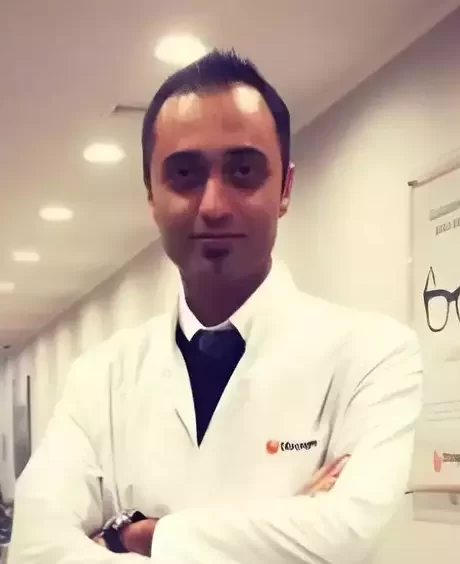
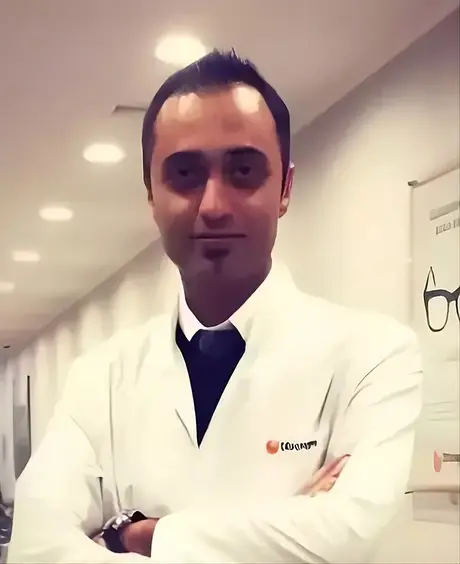
Dr. Mustafa Mete | Premium LASIK & Refractive Surgery in Turkey
Traditional LASIK vs. Femto-LASIK (Bladeless)
LASIK (Laser-Assisted In Situ Keratomileusis) is the world's most popular refractive procedure, renowned for its rapid recovery time and minimal postoperative discomfort. The surgery involves creating a microscopic hinged flap on the corneal surface to access the underlying stroma.
- Traditional LASIK: The corneal flap is created using a mechanical, oscillating surgical blade known as a microkeratome.
- Femto-LASIK (Bladeless LASIK): A computer-guided Femtosecond laser creates the flap using microscopic light pulses. This is vastly superior in precision, safety, and predictability, making it the preferred method for modern clinics.
Once the flap is lifted, an Excimer laser precisely vaporizes the required stromal tissue to correct the refractive error. The flap is then smoothly repositioned, adhering naturally without sutures.
iLASIK (Wavefront-Guided Custom Laser)
iLASIK represents the pinnacle of personalized laser eye surgery. Before the procedure, a high-definition 3D Wavefront map (Wavescan) of the eye is generated, capturing every microscopic optical imperfection. This unique map directs the Advanced CustomVue™ Excimer laser, combining Femtosecond flap creation with hyper-personalized ablation. This technology significantly reduces nighttime halos and glare. It is so precise that it is the approved vision correction method for NASA astronauts and US Air Force fighter pilots.
SMILE (Small Incision Lenticule Extraction)
SMILE is a revolutionary, flapless laser eye surgery. Using only a VisuMax Femtosecond laser, the surgeon creates a microscopic, disc-shaped piece of tissue (lenticule) entirely within the intact cornea. This lenticule is then extracted through a tiny 3mm keyhole incision, flattening the cornea and correcting myopia.
Because there is no large flap creation, SMILE preserves the maximum amount of corneal biomechanical strength and significantly reduces the risk of postoperative dry eye. It is the gold standard for professional athletes, military personnel, and those engaged in contact sports.
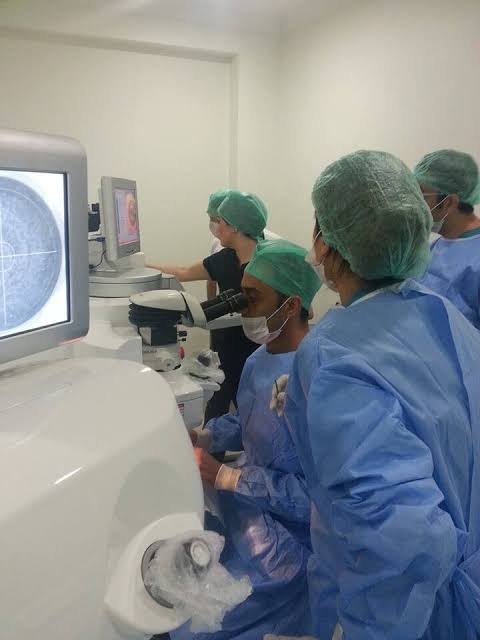
Advanced Refractive Suite: iLASIK, SMILE, and PRK Procedures
Surface Ablation: PRK, LASEK, and No-Touch Laser (Trans-PRK)
For patients with thin corneas, asymmetrical topography, or those who practice extreme combat sports, creating a corneal flap (LASIK) is not recommended. Instead, we perform surface ablation techniques:
- PRK (Photorefractive Keratectomy): The outermost layer of the cornea (epithelium) is gently brushed away before the Excimer laser reshapes the stroma. A protective contact lens is placed on the eye for 3-4 days while the epithelium regenerates.
- LASEK: A diluted alcohol solution is used to loosen and peel back the epithelial layer. After the laser is applied, the epithelial sheet is rolled back into place.
- No-Touch Laser (Trans-PRK): No blades, alcohol, or instruments ever touch the eye. The Excimer laser itself is programmed to instantly vaporize the epithelium and immediately proceed to correct the refractive error in a single, continuous step.
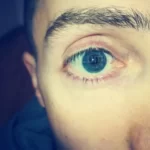
Can LASIK or an Excimer laser change the color of your eyes? No. Excimer lasers operate strictly on the clear cornea to fix focus issues. To alter eye color, a completely different anatomical structure (the iris) must be targeted using specialized wavelengths. Dr. Mete is the pioneer of the non-invasive Lumineyes laser eye color change protocol, which specifically targets iris melanin safely.
What If You Are Not a Candidate for Laser? (ICL & Smart Lenses)
Phakic Intraocular Lenses (ICL)
If your myopia exceeds -10.00 diopters, or your corneas are dangerously thin, laser ablation poses a risk of corneal ectasia (bulging). The safest alternative is an Implantable Collamer Lens (ICL). In a reversible 10-minute procedure, a bio-compatible micro-lens is inserted directly behind the iris, leaving your natural lens entirely intact. ICLs provide exceptional contrast sensitivity and do not induce dry eye.
Smart Lenses (Trifocal Intraocular Lenses)
For patients over the age of 45 experiencing presbyopia (the inability to read up close) or developing cataracts, a Smart Lens (Trifocal IOL) is the ultimate solution. The eye's aging natural lens is removed and replaced with a premium, FDA-approved artificial lens (such as Alcon Panoptix). This permanently restores near, intermediate, and distance vision, curing cataracts and eliminating the need for reading glasses forever.
MyLumineyes Transparent Medical Pricing Guide (2026)
Please note: The following costs are estimated starting prices in Euros (€). We strictly utilize premium American and European surgical materials (e.g., Alcon, Zeiss, AMO). We do not compromise patient safety by using secondary market or generic surgical equipment.
Laser Refractive Surgery (Vision Correction)
| No-Touch Laser (Trans-PRK) | €1500 |
| PRK with Mitomycin C | €1600 |
| iLASIK (Femtosecond Bladeless LASIK) | €1850 |
| SMILE Laser (VisuMax) | €3200 |
| LASIK XTRA (Laser + Corneal Cross-Linking) | €4000 |
| Presbyopia Support Laser (Near Vision) | €2500 |
Lens Implantation & Cataract Surgery (Per Eye)
| Phacoemulsification with Monofocal IOL | €1200 |
| Phacoemulsification with Bifocal IOL | €1500 |
| Phacoemulsification with Trifocal Smart Lens | €2,500 |
| Phakic ICL Implantation (Spherical) | €4000 |
| Toric ICL Implantation (Astigmatism) | €3300 |
Specialized Ophthalmic Procedures
| Corneal Transplantation (Keratoplasty) | €8000 |
| Keratoconus Treatment (Topo-guided Laser) | €3500 |
| Pars Plana Vitrectomy (PPV - Retina) | €4000 |
| Macular Degeneration (Anti-VEGF Injection) | €900 |
| Glaucoma Surgery (Trabeculectomy) | €4000 |
| Glaucoma SLT Laser | €900 |
| Strabismus (Cross-eye) Surgery | €3600 |
Oculoplastic (Eyelid) Surgery
| Upper Eyelid Blepharoplasty | €2000 |
| Lower Eyelid Blepharoplasty | €2500 |
| Combined (Upper + Lower Eyelid) | €3500 |
| Ptosis (Drooping Eyelid) Surgery | €4500 |