Eye Color and Health: What Clinical Science & Melanin Biology Really Show
Eye color is determined by the precise architecture of the iris and its melanin density. Beyond aesthetics, the concentration and distribution of iris pigment directly govern how intraocular tissues absorb light, manage oxidative stress, and respond to environmental ocular pathology.
The human eye is an optical chamber lined with pigmented tissue. While public discussions treat eye color primarily as an aesthetic trait, ophthalmic photobiology evaluates the iris as an active physiological aperture. The degree of pigmentation inside the iris stroma dictates intraocular light filtration, light scatter across the retina, and cellular protection against ionizing radiation.
Genetics and molecular pathways create the vast spectrum of human eye hues. To understand the polygenic inheritance patterns and chromosomal loci that govern these variations, consult our comprehensive Eye Color Chart & Genetics Guide.

Ophthalmic evaluation: Iris pigmentation serves as a physiological light shield for internal ocular structures.
The Biochemistry of Melanin in Ocular Photoprotection
The perceived color of your iris is dictated by the density and molecular subtype of melanin density in the iris. Brown and dark irises contain high concentrations of dense eumelanin granules packaged within stromal melanocytes. In contrast, blue, green, and hazel eyes possess far less eumelanin and variable ratios of pheomelanin, resulting in optical Rayleigh scattering that reflects shorter blue and green wavelengths back to the observer.
From a photoprotective standpoint, eumelanin functions as an exceptional broadband optical filter and free-radical scavenger:
- Optical Attenuation: Denser pigment blocks excessive stray light from penetrating transilluminating zones of the iris, directing light strictly through the physiological pupil.
- UV Absorption: Melanin absorbs high-energy photons across ultraviolet (UVA, UVB) and high-energy visible (HEV) blue light spectra, converting photon energy into harmless vibrational heat rather than toxic reactive oxygen species (ROS).
- Free Radical Neutralization: Active melanin polymers bind redox-active metal ions (such as iron and copper), suppressing lipid peroxidation in surrounding anterior segment fluids.
Ocular Disease Correlations: Epidemiological Facts vs. Clinical Myths
| Condition | Primary Correlation | Pathophysiological Mechanism | Clinical Weight |
|---|---|---|---|
| Uveal Melanoma | Higher in light-colored eyes (blue, green, gray) | Low anterior stromal melanin permits greater trans-scleral UV penetration to choroidal melanocytes. | High; verified major epidemiological risk factor. |
| Age-Related Macular Degeneration (AMD) | Slightly elevated in light irises | Lower overall ocular pigmentation correlates with reduced retinal pigment epithelium (RPE) protection. | Moderate; smoking, family history, and age are far stronger predictors. |
| Nuclear Cataracts | Slightly higher in dark eyes in equatorial zones | High melanin density absorbs more infrared radiation, causing slight thermal elevation in the crystalline lens. | Low to Moderate; UV index and lifetime exposure dominate. |
| Photophobia & Glare Disability | Significantly higher in light-colored eyes | Iris transillumination allows off-axis stray light to scatter across the retina, lowering contrast threshold. | Very High; daily functional impact on visual comfort. |
1. Uveal Melanoma (Intraocular Malignancy)
The most significant medical association documented in ophthalmic oncology is between light iris color and uveal melanoma. Large-scale multicenter analyses consistently confirm that individuals with blue, gray, or hazel eyes have a several-fold higher relative risk of developing choroidal or ciliary body melanoma compared to individuals with dark brown irises.
The biological hypothesis centers on melanin's protective shield: darker eyes maintain a dense barrier that attenuates actinic DNA damage in uveal melanocytes throughout decades of environmental solar exposure.
2. Age-Related Macular Degeneration (AMD)
Age-related macular degeneration involves progressive degradation of the central retina and photoreceptor matrix. Some clinical registries indicate a modest statistical trend toward higher AMD incidence among light-eyed populations.
However, iris color is not the primary determinant. Macular protection relies predominantly on the density of lutein, zeaxanthin, and macular pigment optical density (MPOD) within the fovea, alongside RPE health. As outlined by the National Eye Institute (NEI), advanced age, tobacco consumption, arterial hypertension, and complement factor H (CFH) genetic mutations carry vastly greater predictive weight than iris shade alone.
3. Photophobia, Glare Sensitivity, and Visual Quality
Patients with light blue, gray, or pale green irises experience significantly higher rates of photophobia (light sensitivity) and daytime glare disability. In an eye with minimal stromal pigment, intense ambient light is not entirely absorbed by the iris tissue; a fraction undergoes trans-illumination and internal reflection.
This intraocular light scatter falls across peripheral retinal receptive fields, washing out contrast sensitivity and producing ocular discomfort, squinting, and headaches in bright outdoor environments or under harsh LED lighting.
Addressing Common Internet Myths
Unscientific wellness blogs frequently publish unfounded assertions linking iris color to systemic personality traits, pain thresholds, or metabolic capabilities:
- Pain Tolerance Myths: Small early studies suggested light-eyed women experienced less labor pain or that dark-eyed athletes had faster reactive motor skills. Modern systematic reviews demonstrate that pain perception is a complex neuro-chemical interaction involving endorphin pathways, sleep, anxiety, and central sensitization—not iris pigment.
- Alcohol Tolerance Hypotheses: Claims that blue-eyed individuals metabolize alcohol differently have been widely discredited. Alcohol dehydrogenase (ADH) and aldehyde dehydrogenase (ALDH) liver enzymes govern systemic alcohol clearance entirely independently of anterior segment melanogenesis.
- Skin Cancer (Melanoma): While individuals with blue eyes experience higher rates of cutaneous melanoma, eye color is simply a co-inherited genetic marker of fair skin (Fitzpatrick Type I/II) and MC1R receptor variants. The skin cancer risk is driven by cutaneous epidermal vulnerability, not by the eye itself.
Universal Ophthalmic Protection Rules
Regardless of whether your irises are deep mahogany brown or ice blue, the internal optical structures require rigorous protection against environmental degradation:
- Certified Broad-Spectrum UV400 Protection: Darker eyes reduce glare, but UV photons still penetrate through the clear pupil directly to the lens and retina. Always utilize sunglasses certified to block 99% to 100% of UVA and UVB radiation.
- High-Energy Visible (HEV) Blue Light Management: Minimize cumulative phototoxic stress by utilizing anti-reflective or blue-attenuating filters during prolonged digital monitor exposure, especially in low-light environments.
- Antioxidant Nutritional Support: Support macular pigment optical density through diets rich in dark leafy greens (spinach, kale) containing lutein and zeaxanthin, alongside zinc and omega-3 fatty acids.
- Routine Biomicroscopic Fundus Examinations: Undergo regular dilated examinations with your ophthalmologist to track peripheral retinal health, optic nerve cupping, and choroidal nevi over time.
Elective Eye Color Modification & Ocular Health Realities
Because melanin serves a physiological role in the anterior chamber, procedures intended to change iris color must be evaluated with strict surgical discipline:
⚠ Surgical Implants vs. Corneal Tattoos: The Medical Danger
Invasive procedures such as cosmetic silicone iris implants remain among the most dangerous elective procedures in modern ophthalmology, leading to refractory secondary glaucoma, uveitis-glaucoma-hyphema (UGH) syndrome, and permanent endothelial cell destruction. Similarly, keratopigmentation (corneal tattooing) creates permanent stromal micro-distortion, disabling night glare, and irreversibly obstructs the operating surgeon's view of the retina and anterior chamber angle for future medical care.
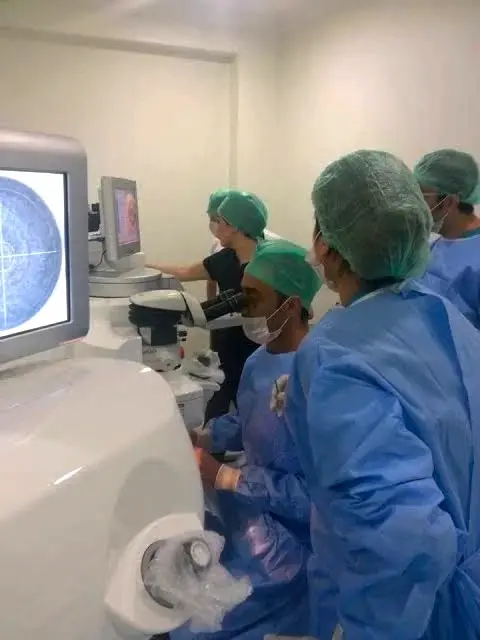
Non-invasive laser depigmentation does not insert foreign synthetic materials and does not alter the transparent corneal stroma. The patented MyLumineyes® technique relies on low-fluence, selective photo-disruption tailored exclusively to superficial iris stromal melanin.
By deploying titrated, fractionated laser energy and monitoring aqueous outflow dynamics under an early IOP surveillance framework, microscopic pigment is cleared naturally by ocular macrophages without damaging trabecular tissue or destabilizing intraocular pressure. Detailed surgical protocols and candidate safety criteria are documented in our clinical guide to laser eye color change.
Frequently Asked Questions: Eye Color & Health
Are blue eyes weaker or more prone to eye diseases?
Blue eyes are not structurally weaker, but they contain significantly less melanin in the iris stroma. This allows more light scatter across the retina, resulting in higher light sensitivity (photophobia) and an epidemiologically higher risk for uveal melanoma and glare disability compared to brown eyes.
Do dark brown eyes need sunglasses?
Yes. While brown eyes have higher melanin density that absorbs stray light and reduces daytime glare, harmful ultraviolet (UV) radiation still passes through the pupil directly into the crystalline lens and retina. UV exposure accelerates cataract development and macular damage regardless of eye color.
Can eye color indicate internal health problems?
A stable, genetic eye color does not indicate internal illness. However, sudden changes in iris appearance—such as sectoral depigmentation, heterochromia, white pupillary reflexes (leukocoria), or brown nodules—can signal serious medical issues like Fuchs' heterochromic iridocyclitis, Horner's syndrome, or intraocular tumors that require immediate ophthalmic evaluation.
Does changing eye color with a selective laser damage night vision?
No. When performed under the controlled MyLumineyes protocol, the selective laser targets only superficial stromal melanin without altering the pupil's muscular dynamics or obstructing the central visual axis. Unlike corneal tattooing (keratopigmentation), there is no artificial pigment ring to induce night halos or restrict optical clarity.
Medical Disclaimer: This clinical guide is prepared by Dr. Mustafa Mete for educational purposes and does not constitute formal medical consultation. If you notice sudden alterations in iris pigmentation, unilateral pupil changes, or persistent photophobia, consult a board-certified ophthalmologist immediately.