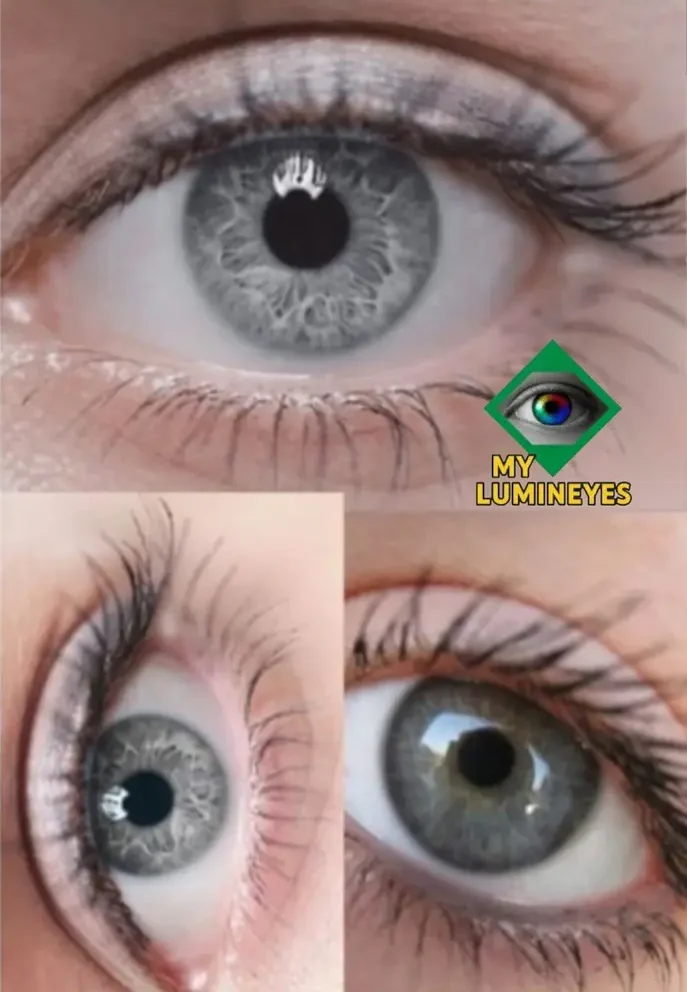
Grey Eyes
Grey eyes are a rare eye color characterized by very low melanin and a cool, ash-like appearance. They often look like a desaturated version of blue, with more diffuse light scattering and sometimes a subtle mixed tone toward green or hazel.
The grey effect is created when stromal melanin is minimal and the structure of collagen fibers scatters light in a way that reduces strong blue or brown dominance.
What Makes Eyes Look Grey?
Grey eyes are associated with:
• Very low melanin in the iris stroma
• Dense collagen fibrils that scatter light broadly
• Slight admixture of other tones, sometimes producing blue-grey or green-gray hues
The result is a soft, muted color that can change slightly with lighting and background contrast.
How Rare Are Grey Eyes?
Grey eyes are among the rarest natural eye colors worldwide. They are primarily observed in certain Northern and Eastern European populations but remain uncommon even there.
For a comparison of grey eyes with other rare colors, you can visit our page on rare natural eye colors.
Do Grey Eyes Have Any Special Genetic Pattern?
Grey eyes share many genetic factors with blue eyes, but with additional modifiers that influence stromal structure, melanin density and light scattering. Multiple genes act together to create the final shade.
Further details on eye color genetics can be found at MedlinePlus Genetics.
Can Grey Eyes Look Different Day to Day?
Yes. Grey eyes often appear slightly different depending on light intensity, clothing, makeup and pupil size. These shifts are optical. The underlying pigment remains the same.
Can Grey Eyes Be Changed Safely?
No natural or nutritional method can change grey eyes. Cosmetic lenses can temporarily intensify or modify the apparent shade. For an iris pigment modulation method that targets melanin under clinical supervision, you may read more in our laser section.
FAQ — Grey Eyes
Are grey eyes different from blue eyes?
Yes. Grey eyes usually have even less melanin and a different stromal structure, producing a softer, more muted tone compared with typical blue eyes.