
Many people wonder whether a lifelong change in eye color is medically possible and what the term “permanent” truly represents from a biological perspective. In ophthalmology, permanence does not describe a cosmetic promise but rather a stable alteration in ocular tissue behavior over time. Because the iris is a living structure with individual variability, any discussion of permanent eye color change surgery must be grounded in anatomy, pigment biology, and long-term clinical observation.
At specialized eye care centers focusing on advanced ocular procedures, permanence is evaluated through measurable factors such as melanin stability, stromal response, inflammatory activity, and the absence of progressive tissue remodeling. From a medical standpoint, a change can only be described as permanent if it remains stable without continuous intervention and does not compromise ocular health. This distinction is essential in differentiating scientifically observed outcomes from marketing terminology.
Clinicians who work in laser-based eye color modification emphasize that permanence is not a binary outcome but a spectrum influenced by iris structure, baseline pigmentation, and individual healing characteristics. For this reason, reputable ophthalmic practices avoid absolute claims and instead rely on documented follow-up, peer-reviewed literature, and transparent patient education.
This page examines permanence as a biological and clinical concept, not as a promotional claim. It provides an evidence-based framework for understanding how permanence is defined in eye color change—across natural, surgical, and laser-assisted contexts—while maintaining a clear distinction between scientific explanation and treatment decision-making.
For the full clinical explanation of the method, visit the
Laser Eye Color Change Procedure.
1. What Does “Permanent” Really Mean in Eye Color?
Eye color is determined by melanin content in the iris stroma and the scattering characteristics of the anterior iris surface. Any technique claiming permanence must alter these structures or their optical behavior in a stable and lasting way. In medicine, “permanent” refers to:
- Long-term structural change without reversal
- Predictable biological stability
- No ongoing progression or secondary complications
- No need for continuous maintenance or repeated interventions
Very few methods meet these criteria—especially in healthy eyes.
2. Natural Permanent Eye Color Changes
Natural color change occurs in infancy and early childhood as melanin production increases. In rare conditions such as heterochromia, trauma or pigment disorders, eye color may change unexpectedly. However, natural adult eye color is typically stable for life and does not shift without underlying disease.
3. Are Color-Changing Eye Drops Permanent?
Some prostaglandin-analog eye drops used for glaucoma can darken the iris over months. This darkening may be long-lasting but is considered an unwanted side effect, not a cosmetic technique. These drops are not intended or approved for aesthetic use, and the change is often patchy rather than uniform.
4. Are Surgical Methods Permanent?
Surgical methods can create permanent appearance changes, but often at the cost of structural risk.
More about: Surgical Techniques for Permanent Eye Color Change
Artificial Iris Implants
Cosmetic iris implants provide a new visible color by placing a device inside the eye. The color appearance is permanent as long as the implant remains in place. However, medical literature reports high complication rates, and many patients eventually require implant removal. Because of this, permanent cosmetic use is not medically recommended.
More details: Artificial Iris Implants: Risks and Complications.
Keratopigmentation (Corneal Tattooing)
Keratopigmentation inserts pigment into corneal layers to simulate a new iris color. The visual effect is generally permanent but may fade irregularly or require revisions. Since it alters corneal optics, visual quality is a major consideration.
Procedure details: Keratopigmentation Eye Color Change
5. Is Laser Eye Color Change Permanent?
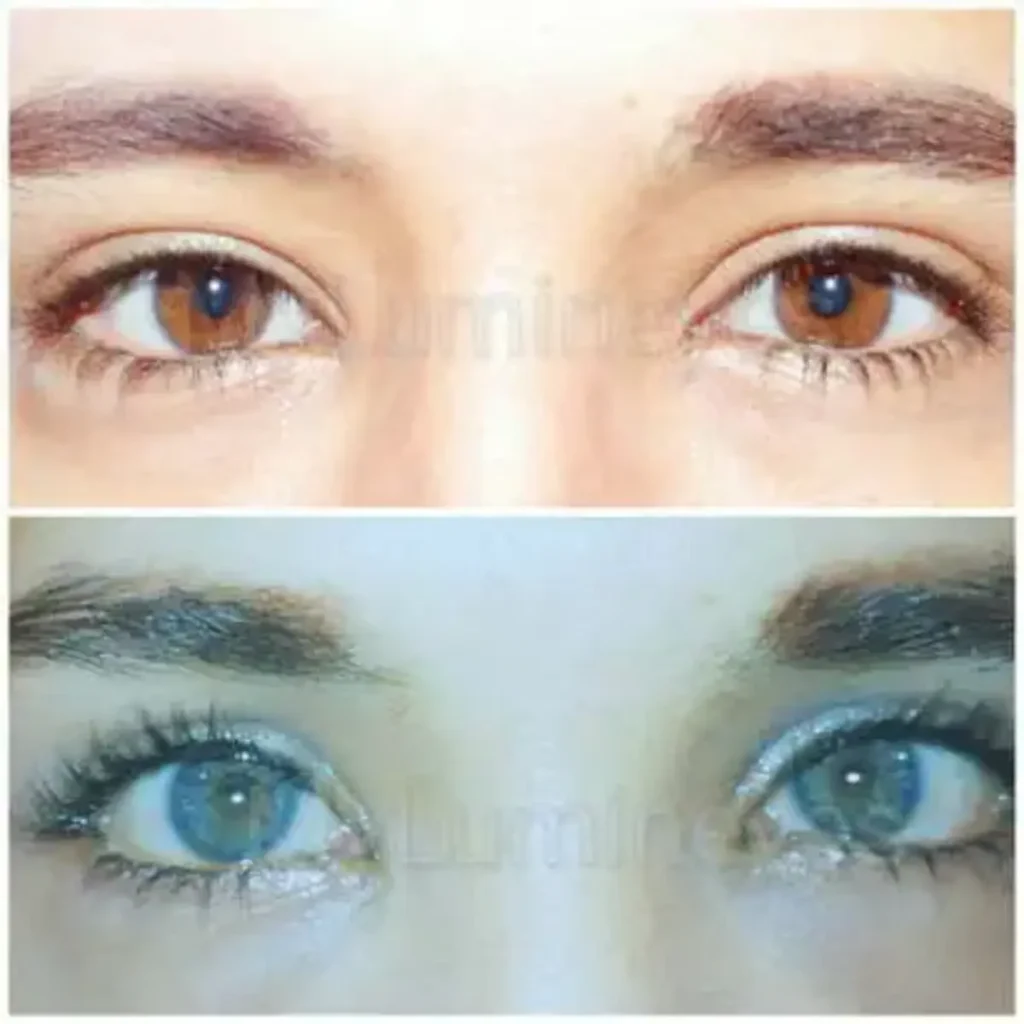
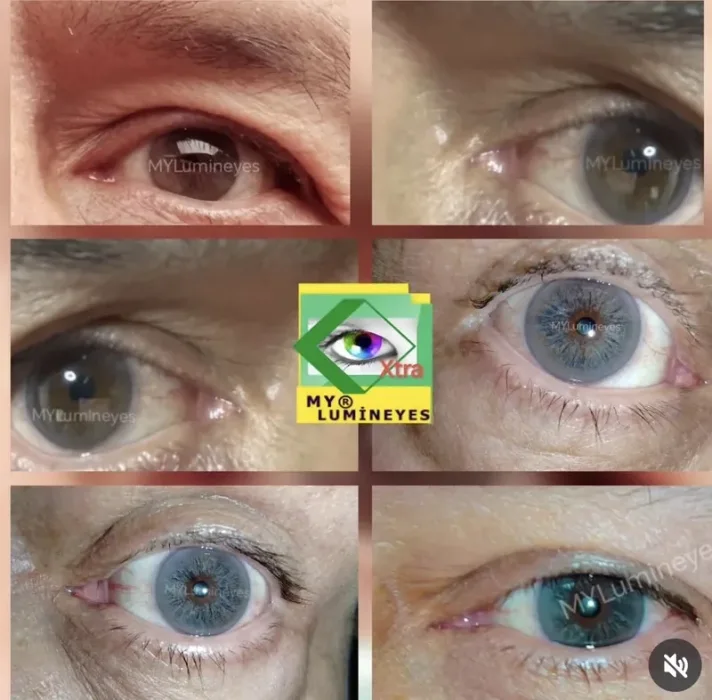
Laser-based iris depigmentation—such as the MyLumineyes® method—targets melanin granules to gradually lighten the natural iris. Because melanin in adult irises does not typically regenerate to its original density, laser-based brightening may show long-term stability in many cases; however, permanence varies and remains under clinical evaluation. For this reason, the long-term stability of laser-based brightening depends on several clinical factors that vary from person to person:
- Baseline pigmentation
- Session count and biological response
- Iris healing characteristics
- Long-term tissue stability
The procedure remains in the clinical evaluation phase. Therefore, individual permanence cannot be guaranteed, and long-term outcomes continue to be studied.
6. Why “Guaranteed Permanent Results” Do Not Exist
Any claim promising a guaranteed final eye color violates medical ethics and scientific understanding. Iris tissue varies significantly between individuals, and healing behavior is not uniform. Additionally:
- No method can promise a specific shade (e.g., blue vs green)
- Asymmetry or partial response may occur
- Medical contraindications can halt treatment
- Long-term follow-up is essential for safety
For this reason, reputable centers avoid fixed promises and focus instead on safe, staged treatment planning.
7. Cosmetic vs Medical Permanence
Some methods offer “visual permanence” but not true biological permanence. Examples:
- Implants: Visually permanent but medically high-risk and often removed
- Keratopigmentation: Permanent appearance but may degrade or cause optical side effects
- Laser: Long-term natural brightening, but individual response varies
Medical permanence prioritizes safety and tissue health—not just cosmetic stability.
8. Who Is a Candidate for Long-Lasting Color Change?
Permanent or long-lasting results depend heavily on patient factors:
- Iris thickness and melanin density
- Absence of inflammatory disease
- Stable intraocular pressure
- Healthy optic nerve
- Realistic expectations
An in-person examination is necessary to evaluate these variables.
Disclaimer: This page provides scientific explanations only. No shade or result can be guaranteed. Suitability must be determined through a full ophthalmic examination.