Laser Eye Color Change Cost & Risks: Prices, Safety and Clinical Value
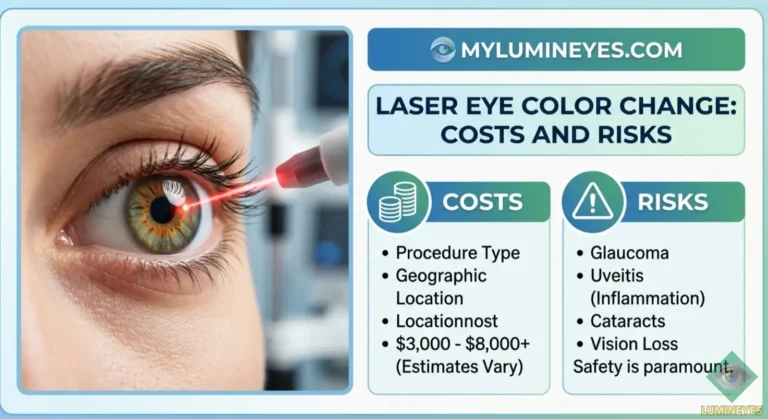
How much does laser eye color change cost? The answer depends on the technique, the treatment scope and the clinical care involved. This guide explains publicly advertised price examples, the difference between an initial fee and total treatment expenses, and why medical expertise and patient safety matter more than a headline price.
Important pricing distinction: The figures discussed below reflect examples of publicly advertised prices for eye color change procedures. They are not MyLumineyes® Standard, XTRA or other package prices, and they are not a verified market average.
How Much Does Laser Eye Color Change Cost in 2026?
There is no single universal price for laser iris depigmentation. Advertised figures may describe one session, an initial stage, several treatment phases or a defined package. The same applies to other cosmetic eye color change procedures, which use different techniques and involve different clinical resources.
The following figures are published examples, included to illustrate variation in advertised pricing—not to establish a statistically representative industry range or a quotation for any individual patient.
| Procedure / example | Publicly advertised figure | What the figure means |
|---|---|---|
| Laser iris depigmentation Some provider's advertised multi-stage programs | €3,600–€9,500 | Different published laser treatment programs and grades; not one standardized course, not a multi-clinic average. |
| Keratopigmentation (KTP) Published bilateral corneal pigmentation offer | €7,000 | A separate provider's advertised price for both eyes; uses a different anatomical technique. |
| Individual clinical plan Any eye color change procedure | Varies | Consultation, stages, medicines, follow-up and travel may change the overall expenditure. |
Pricing Information: The figures presented are indicative estimates based on publicly available pricing information for eye color change procedures in European markets, reviewed in October 2026. Actual costs may vary depending on the technique, treatment protocol, clinical expertise, and included services. These figures are provided for general informational purposes only and do not represent official MyLumineyes® treatment fees or a statistically established market average.
Why prices differ: A lower displayed fee may apply to fewer sessions or a narrower package, while a higher advertised fee may involve multiple stages. Comparing the numbers without understanding the procedures can be misleading.
What Determines the Total Cost of Eye Color Change?
The full cost may include more than the initial treatment. Important factors include the method itself, the patient's ocular findings, the number of clinically appropriate sessions and the scope of follow-up.
Laser iris depigmentation, keratopigmentation and cosmetic iris implantation are fundamentally different interventions.
Baseline pigment density and the eye's response can affect the number and timing of treatment stages.
Clinical examination, indicated imaging, intraocular pressure measurements and follow-up contribute to responsible care.
For international patients, transportation, accommodation and possible return visits are separate practical expenses.
Why Physician Experience, Safety and Quality Matter More Than Price Alone
High-quality ophthalmic care requires specialized training, sound clinical judgment, suitable technology and a sustained commitment to patient follow-up. These elements involve genuine professional and clinical resources. The lowest price should never be the sole criterion for choosing a procedure involving healthy eyes.
Physician Reputation and Professional Recognition
Look at recognized qualifications, relevant professional contributions, transparency and the physician's established clinical standing. Reputation is meaningful when accompanied by verifiable credentials and outcomes.
Ophthalmic and Surgical Experience
Years of eye care and hands-on familiarity with the specific procedure matter, including the ability to identify unsuitable candidates and respond to complications.
Safety, Patient Selection and Monitoring
Appropriate evaluation, intraocular pressure monitoring, inflammation assessment and structured follow-up are essential clinical considerations, not optional extras.
Treatment Effectiveness and Realistic Results
Review the quality of documented outcomes, expected variability and important limitations. No treatment fee can guarantee a particular final iris color.
Clinical Quality and Continuity of Care
Equipment, clinical standards, communication, individualized planning and continuity after the initial appointment all contribute to the care experience.
Advantages and Limitations of the Method
Consider the procedure's anatomical target, degree of invasiveness, scientific rationale and available evidence. Comparative superiority should be demonstrated rather than assumed.
Clinical History and Long-Term Follow-Up
The duration and quality of patient follow-up matter, especially for elective procedures where reliable long-term data may remain limited.
Exceptional medical care requires expertise, responsibility and appropriate resources. These should not be compromised merely to advertise the lowest possible price.
An unusually low price is a reason to understand the treatment scope and care standards—not proof of poor quality. Equally, a premium price alone is not evidence of superior safety or effectiveness. Value is measured by credible clinical quality, not cost alone.
Price Per Session vs. Total Treatment Course
An advertisement for a single laser session cannot be compared directly with the cost of a multi-stage course. Some programs describe a fixed initial number of visits, while later treatment depends on medical findings and individual biological response.
For laser iris depigmentation, darker or more densely pigmented irises may require extended planning. However, no online price range can reliably establish how many sessions a particular person will need. The appropriate stopping point should be determined by clinical findings—not by a target shade or a preset sales package.
Initial fee ≠ total lifetime expense. A responsible discussion of cost also considers clinically indicated assessment, monitoring, possible additional treatment and follow-up.
Laser Eye Color Change Cost in Turkey and Abroad
Prices may differ between Turkey and other countries because of clinical operating expenses, available technology, physician expertise, care structure and local economic conditions. Geographic location alone does not establish the safety or quality of a treatment.
For patients traveling internationally, the total budget may also include accommodation and any subsequent visits. The most useful comparison is between the same procedure, a similar treatment scope and comparable clinical oversight—not two isolated numbers.
What Risks Should Be Considered Alongside Treatment Cost?
Every cosmetic intervention affecting the eye requires an informed assessment of potential benefit and harm. Laser iris depigmentation can be associated with inflammation, transient or sustained intraocular pressure elevation, pigment-related outflow problems, light sensitivity and uneven pigmentation. More serious ocular injury has also been reported after some laser depigmentation procedures; published evidence does not establish a uniform risk rate across all protocols.
Clinical vigilance must not depend on package price. The specific laser parameters, ocular examination, session planning and response to treatment matter. A lower fee does not establish higher risk; a higher fee does not eliminate it. For the detailed medical discussion, consult the Eye Color Change Safety guide.
Lumineyes and Other Laser Iris Depigmentation Approaches
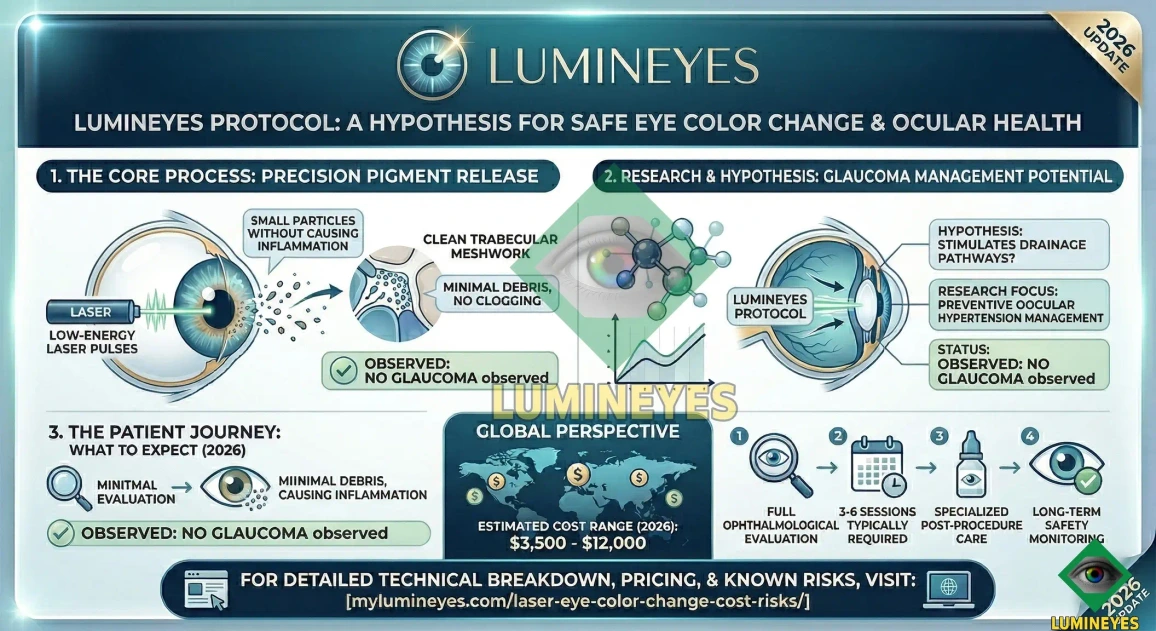
Laser iris depigmentation describes a broad category of procedures, not one uniform protocol. The Lumineyes™ method is a named, physician-led approach based on individualized patient assessment, staged treatment decisions and longitudinal ophthalmic monitoring.
Its non-incisional design avoids placing artificial iris implants inside the eye or pigments within the cornea. This anatomical difference is important, but it does not prove that every clinical risk is absent or establish superiority over other approaches without appropriate comparative evidence. Learn about the technique in the Laser Eye Color Change Procedure guide.
In interpreting published complications, the exact laser system, treatment parameters, patient findings and follow-up should be identified whenever possible. The proposed P-CLEAR pigment release–clearance framework discusses the relationship between pigment release and biological clearance; it is a research framework, not a validated complication-rate calculator.
Keratopigmentation, Cosmetic Iris Implants and Laser Depigmentation
These procedures can all change the appearance of eye color, but they act on different tissues and carry different clinical considerations.
Laser Iris Depigmentation
Targets iris pigment without implanting a device or placing artificial pigment into the cornea. Pigment release and pressure-related risks still need evaluation.
Keratopigmentation (KTP)
Places pigment within corneal tissue. Corneal complications, visual symptoms and implications for later examinations are distinct concerns.
Cosmetic Iris Implants
Involve placing artificial material inside the eye. Serious complications reported with cosmetic implantation include glaucoma and corneal damage.
American Academy of Ophthalmology: Relevant Safety Warning
The American Academy of Ophthalmology (AAO) has warned about sight-threatening complications associated with cosmetic iris implant surgery and keratopigmentation. This specific warning should not be presented as though those two operations are identical to laser iris depigmentation. Each procedure—including laser depigmentation—requires its own evidence-based risk assessment.
For a broader anatomical and clinical comparison, see our Eye Color Change Surgery: Methods and Risks article.
Laser Eye Color Change Cost & Risk FAQ
How much does laser eye color change cost?
There is no universal price. Published European laser depigmentation program examples reviewed in October 2026 included different offers from €3,600 to €9,500, but these are listings from different providers—not an industry average or MyLumineyes clinic prices. The individual cost depends on the treatment scope and care required.
Are these prices the official MyLumineyes Standard or XTRA fees?
No. The numerical examples on this page illustrate public pricing for eye color change procedures. They are not MyLumineyes® package tariffs, quotations or offers. A clinical treatment plan and any applicable individual fee are communicated separately.
Why do laser iris depigmentation prices vary?
Advertised programs may cover a different number of sessions or phases, and individual ocular findings may affect appropriate treatment planning. Clinical assessment, monitoring, follow-up and travel can also influence the total budget.
Does a higher price guarantee a safer or more effective result?
No. Physician qualifications, relevant experience, method, patient selection, evidence, treatment quality and follow-up are more informative than price alone. Neither a premium fee nor a discounted offer guarantees a specific color or eliminates medical risk.
Are keratopigmentation and laser iris depigmentation the same procedure?
No. Keratopigmentation introduces pigment into the cornea, whereas laser iris depigmentation aims to reduce visible iris pigment. Cosmetic iris implantation is different again. Their techniques and risk profiles must be evaluated separately.
Can the total number of laser sessions be guaranteed in advance?
No. The number and timing of clinically appropriate sessions depend on iris characteristics, ocular health and response between stages. A predefined number of sessions should not be mistaken for a guaranteed final eye color.