Beyond the Surface: Selective Photo-disruption
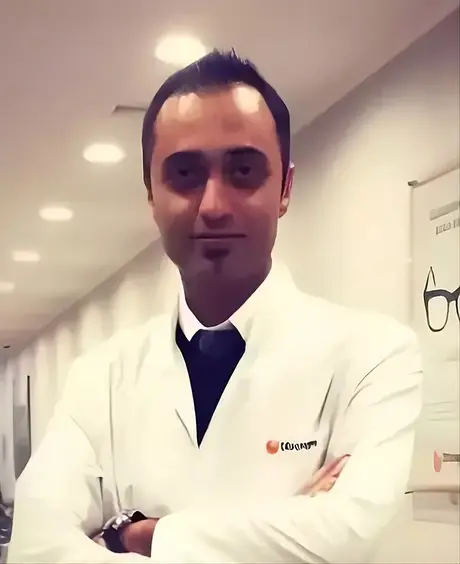
It’s easy to hit a target with a laser, but it’s difficult to hit only the target. In our current clinical practice, we use a specific wavelength that talks only to the melanin. We aren’t burning the tissue; we are inducing what I call “selective fragmentation.” By keeping the energy pulses at a millisecond level, we ensure the surrounding collagen fibers and nerves remain “cold.” This is why my patients don’t experience the structural thinning or scarring often seen in amateur attempts. We preserve the stroma’s biomechanical stability—this is the secret to a natural look that lasts a lifetime.
The Invisible Cleanup: Phagocytosis in Action
What happens to the fragmented pigment? This is where the eye’s natural “janitors”—the macrophages—come in. This biological cleanup, known as phagocytosis, is the most critical phase of the recovery.
In 2026, we’ve optimized our post-op drop protocols to support these cells. We ensure the pigment is swallowed and cleared through the trabecular meshwork without causing a “traffic jam” (intraocular pressure spikes). By managing this cellular traffic, we keep the eye’s drainage system as healthy as it was on day one.
15 Years of Evidence: Why “Stability” is Not a Myth
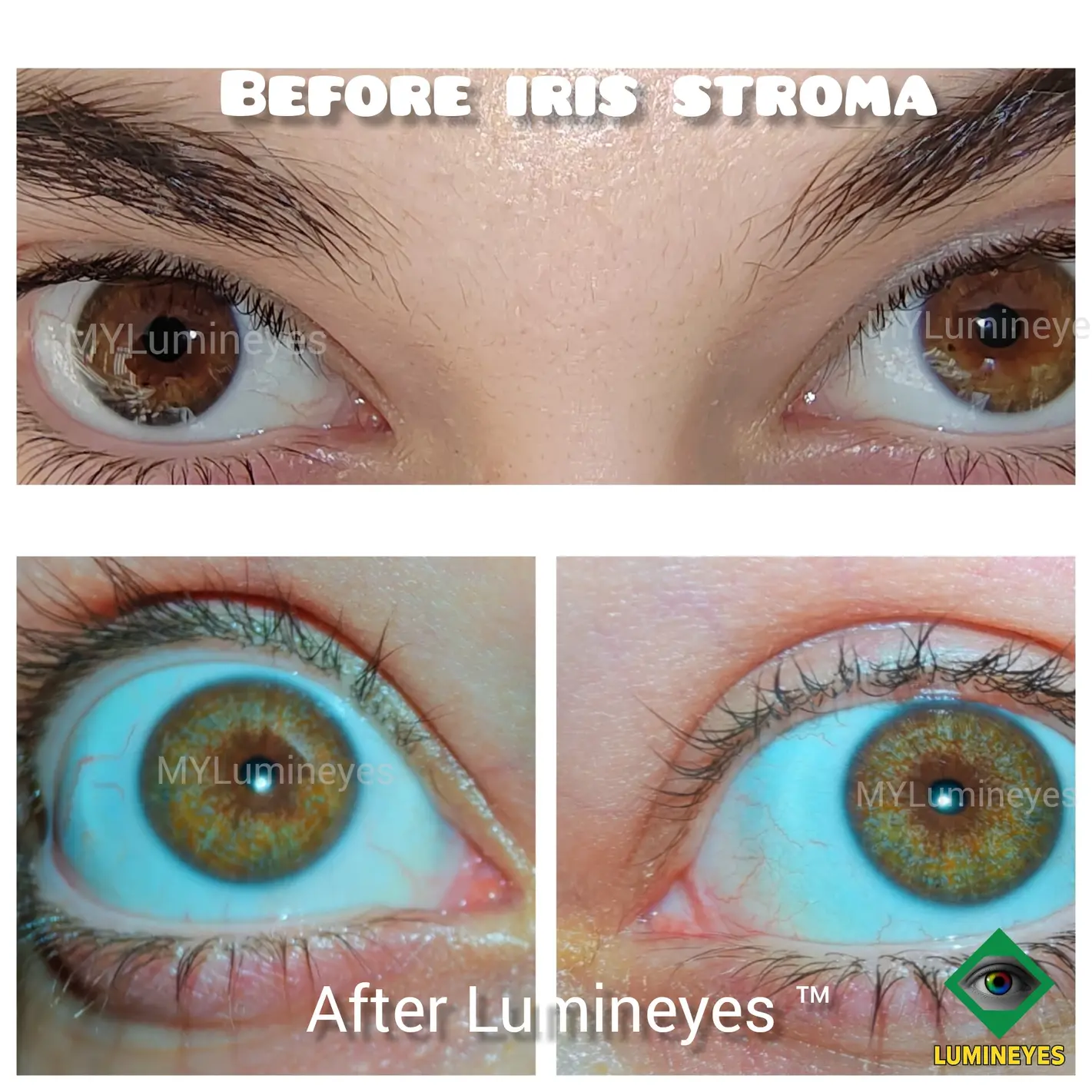
I often see claims of “permanent” results online, but without long-term data, those are just words. Our 15-year longitudinal study proves that once the iris stroma stabilizes after the Lumineyes protocol, pigment regression is biologically impossible. Through repeated OCT (Optical Coherence Tomography) scans and gonioscopy over a decade, we’ve seen that the iris doesn’t just “change color”—it adapts and maintains its new, lighter state without losing its functional integrity. This is the difference between a temporary cosmetic fix and a permanent medical evolution.
Navigation for Patients and Researchers:
- Step-by-Step Evolution: If you want to understand the day-by-day clinical process and how the treatment is actually performed, visit our [Detailed How-To Guide]
- The Proof of Permanence: To see the 15-year stability data and why the results never fade, explore our dedicated [Permanent Results & Clinical Stability]
- Clinical Research adn sciencetific documentions explore more.