Cost, Safety, And Risks Of Procedures For Changing Eye Color
The cost and risk profile of changing eye color treatments varies according to the number of sessions, the patient’s baseline iris pigmentation, medical suitability and treatment response. Because the procedure is still in a clinical trial phase, pricing and safety evaluations must follow strict medical protocols. This page explains the main factors that determine cost, potential risks, and why staged treatment is essential.
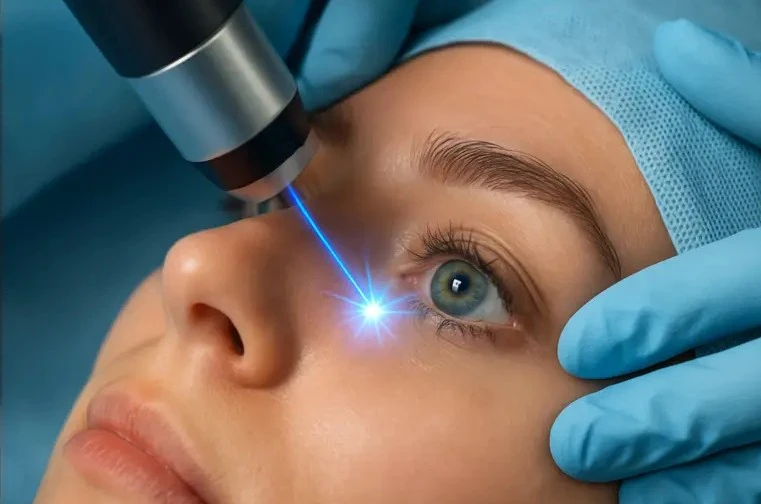
For example “laser eye color brightening” is a gradual, non-surgical procedure that reduces superficial iris pigment to reveal a lighter, natural-looking eye color. Because every eye responds differently, patients want clear and reliable information about three things: how much the treatment costs, what risks exist, and which treatment plan applies to their pigmentation type. This page explains all three in a simple, accurate, medically grounded way. For a complete clinical overview of the procedure, visit the Laser Eye Color Change Procedure page.

How Is the Cost of Changing Eye Color By Laser Determined?
The total cost depends on several medical and procedural factors. There is no universal price because each patient requires an individualized session plan based on safety limits and biological response.
- Number of sessions: Darker irises require more sessions. Grade 4 eyes may need 40 or more safe sessions.
- Complexity of the case: Eyes with high baseline pigment, large pupils, history of irritation or borderline pressure need more careful staging.
- Clinical imaging: Anterior segment OCT or additional diagnostics may be needed for safe planning.
- Follow-up requirements: Some patients require more frequent pressure checks and evaluation visits.
- Travel and accommodation: International patients must consider repeated visits to Istanbul based on their session schedule.
Because these variables change from patient to patient, exact cost can be confirmed only after a full ophthalmic examination. Online photos or self-reported descriptions cannot determine pricing.
Why Multiple Sessions Affect Pricing
A staged approach is medically necessary. Reducing iris pigment too rapidly may increase intraocular pressure or induce inflammation. For this reason, the treatment is deliberately slow and distributed across many sessions. Each session includes:
- Laser application under controlled parameters
- Post-session pressure monitoring
- Inflammation screening
- Adjustment of the next session plan
Because each stage carries both clinical work and monitoring, session count remains the main cost determinant.
Potential Risks of Changing Eye Color With Laser
Lumineyes® is a proprietary laser technology specifically designed for safe iris depigmentation. Although many patients complete treatment safely, potential risks must be understood clearly. These risks may be short-term or long-term. These risks refer only to non-incisional laser modulation and should not be confused with the much higher complication rates associated with surgical procedures such as artificial iris implants or keratopigmentation.
1. Intraocular Pressure Spikes
Laser-induced pigment release can temporarily raise intraocular pressure (IOP). Some cases require pressure-lowering treatment or delayed sessions until stability returns.
2. Inflammation (Iritis or Uveitis)
Inflammation can occur after laser exposure. Most cases resolve with appropriate medical management, but close follow-up is essential.
3. Light Sensitivity and Visual Phenomena
Temporary glare, halos and photophobia may occur, particularly in early sessions or when pigment response is uneven.
4. Uneven or Patchy Color Response
Because each iris responds differently, perfect color symmetry cannot be guaranteed. Some patients develop lighter zones before others.
5. Pigment Dispersion and Rare Complications
Excess pigment release may contribute to glaucoma risk. Rare but serious complications can include corneal edema or optic nerve damage if not properly monitored.
These risks emphasize the need for detailed baseline examination, staged dosing, and continuous follow-up by an experienced ophthalmologist.
How Laser Risks Compare with Surgical Alternatives
Laser color surgery avoids foreign implants and corneal incisions. However, it still modifies intraocular tissues and must be approached with caution. For comparison, you may review:
These procedures carry fundamentally different risk profiles. Laser treatment is non-incisional, but this does not eliminate the need for strict medical supervision.
Can Costs Be Guaranteed Online?
Many factors influencing safety and pricing are invisible in photographs. Pupil size, anterior chamber depth, baseline pressure and iris architecture require clinical evaluation. For this reason:
- Online estimations can be misleading
- Session count may increase or decrease depending on progress
- Costs can only be confirmed after an in-person assessment
International patients are encouraged to plan their visit according to the expected number of evaluations and sessions.
Understanding Expectations and Limitations
The goal of lchanging eye color is gradual, safe lightening of the natural iris. No exact shade can be promised. Some patients obtain hazel or greenish tones, while others see more subtle brightness.
Final outcomes depend on:
- Baseline melanin density
- Individual tissue response
- Total number of safe sessions performed
- Healing patterns and inflammation control
For a broader understanding of natural eye color ranges, you may review our Eye Color Chart & Genetics Guide.
Disclaimer: This information is for educational purposes only. It does not guarantee outcomes or determine suitability. Medical evaluation is required for all patients.