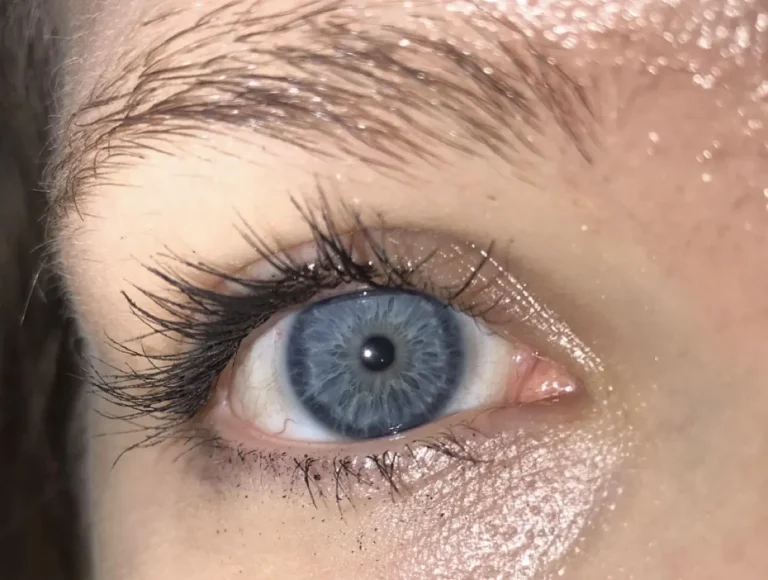
Blue Eyes: Genetics, Rarity, Shades and Medical Facts
Blue eyes are one of the most recognized and studied eye colors in the world. Their vivid appearance does not come from blue pigment but from the way light scatters inside a low-melanin iris. This page explains how blue eyes form, why they appear so bright, how common they are globally, and what factors influence their shade.
For a complete overview of all eye color categories and genetic patterns, see the main Eye Color Chart & Genetics Guide.
What Makes Blue Eyes Look Blue?
Blue eyes contain very little melanin in the stroma. Because there is no blue pigment, the color is produced through Rayleigh scattering, the same optical phenomenon that makes the sky appear blue. Light enters the iris and shorter blue wavelengths scatter outward while longer wavelengths are absorbed.
The intensity of blue depends on:
- Melanin level: Less melanin → brighter blue.
- Stroma structure: Dense collagen fibers increase scattering.
- Limbal ring strength: A darker limbal ring increases contrast.
How Common Are Blue Eyes?
Blue eyes are most common in Northern and Eastern Europe but occur worldwide at lower frequencies. Globally, only about 8–10% of the population has blue eyes. Many genetic studies trace modern blue eyes to a single mutation in the HERC2 gene thousands of years ago.
Different Shades of Blue Eyes
Blue eyes exist in many variations depending on melanin content and scattering patterns:
- Ice-blue: Very pale, high scattering, almost greyish.
- Bright blue: Strong, vivid reflection under natural light.
- Deep blue: Slightly more melanin, giving a darker tone.
- Blue-green mix: Transitional tones with small amounts of pigment near the pupil.
Why Do Blue Eyes Sometimes Look Different?
Lighting, background color, pupil size and camera settings can strongly influence the appearance of blue eyes. Under natural daylight, blue appears brighter, while under artificial or dim light the eyes may look darker or more grey.
Do Blue Eyes Have Higher Light Sensitivity?
Because blue eyes contain less melanin, they are slightly more sensitive to bright sunlight. Melanin helps protect internal eye structures from UV and high-intensity light. People with blue eyes often benefit from sunglasses with full UV protection, especially outdoors.
Are Blue Eyes Linked to Specific Health Risks?
Most people with blue eyes have normal ocular health. However, some research suggests:
- Slightly higher sensitivity to bright light.
- Possibly higher risk of certain UV-related eye conditions due to low pigment.
- No direct link between blue eyes and poor vision.
Any sudden or asymmetric change in blue eye color should be evaluated by an ophthalmologist.
Blue Eyes and Genetics
Blue eyes are typically inherited when both parents carry recessive variants related to melanin reduction. The main genes involved include OCA2 and HERC2. These genes influence how much pigment the iris produces during development.
Two brown-eyed parents can still have a blue-eyed child if both carry the necessary recessive variants.
For a scientific overview of how melanin levels produce blue and lighter eye colors, you can visit the NCBI medical review on iris pigmentation.
Can Blue Eyes Change Over Time?
- In infants: Blue eyes may darken in the first 1–2 years as melanin increases.
- In adults: Blue eyes generally remain stable; significant changes should be checked medically.
Cosmetic or Medical Ways to Enhance Blue Eyes
Cosmetic approaches can highlight natural blue color through lighting, makeup, lens choice and contrast. Medical options for modifying iris appearance include:
- Laser eye color change – may lighten darker eyes, but cannot guarantee a specific blue shade; results depend on anatomy. More info on our Laser Eye Color Change page.
- Artificial iris implants – high risk; not recommended.
- Keratopigmentation – corneal tattoo, not natural iris color change.
Key Points
- Blue eyes contain very little melanin; color comes from Rayleigh scattering.
- Only 8–10% of the world has blue eyes.
- Shade varies with scattering properties, stroma structure and lighting.
- Blue eyes can be more light-sensitive due to low pigment.
- Genetics, not environment, determines natural blue eye color.
This page offers general medical and educational information and is not a substitute for professional diagnosis.