Hazel Eyes
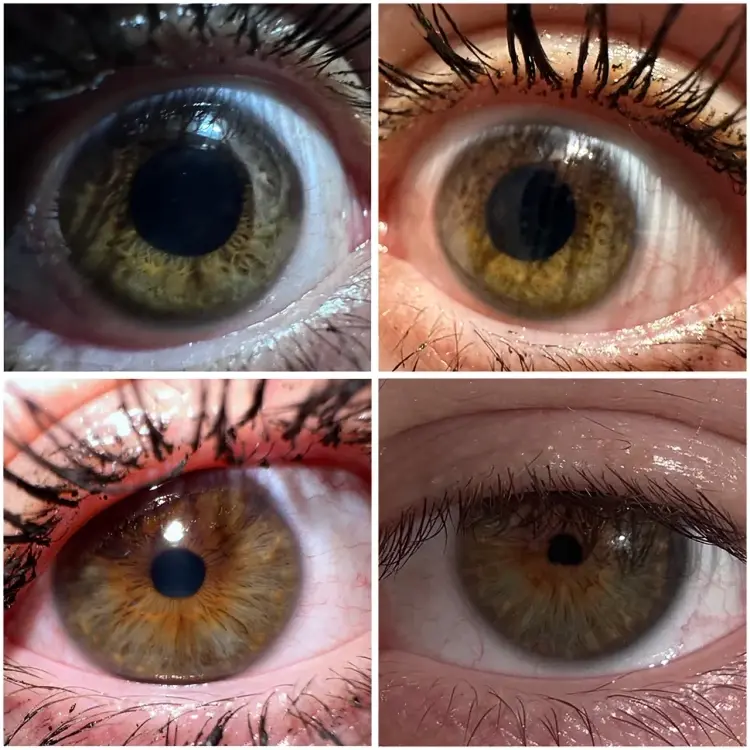
Hazel eyes are one of the most intriguing natural eye colors. Instead of a single uniform shade, they show a mixture of brown, green and golden tones that can look different depending on light and background. This multicolored structure makes hazel eyes difficult to classify and very interesting from a medical point of view.
What Are Hazel Eyes Exactly?
In clinical terms, hazel eyes are irises with intermediate melanin levels and visibly variable pigment distribution. The central zone around the pupil often looks lighter or more golden, while the outer ring appears darker and more brown. Between these areas there may be subtle green or grey components. The result is a mosaic-like color pattern rather than a single shade.
Hazel eyes should not be confused with amber eyes. Amber usually has a uniform yellow–gold or copper appearance without green patches. Hazel always shows at least two different color areas or a clear transition from one shade to another.
Why Do Hazel Eyes Look Multicolored?
The mixed appearance of hazel eyes is caused by three main factors working together in the iris:
• Intermediate melanin in the stroma, higher than in blue eyes but lower than in dark brown eyes.
• Uneven pigment density, with some stromal regions containing more melanin granules than others.
• Light scattering in collagen fibers, which adds optical effects and can create green or golden reflections.
Where melanin is denser, the eye looks more brown. Where pigment is thinner and light scattering dominates, the color can shift toward green or yellow. This fine balance explains why hazel eyes sometimes appear to “change” with lighting, clothing or makeup, even though the actual pigment pattern does not move.
How Common Are Hazel Eyes?
Hazel eyes are less common than brown eyes but more frequent than pure green or grey. They are seen in many populations, especially in people with mixed European ancestry. In some regions they may be considered ordinary; on a global scale they still count as uncommon eye colors.
Genetics Behind Hazel Eyes
Eye color is a polygenic trait. Several genes influence melanocyte activity, melanin production and how pigment is stored inside the iris. Variations in key genes such as OCA2 and HERC2, combined with additional modifiers, create intermediate pigment levels and irregular patterns characteristic of hazel eyes.
Instead of a single “hazel gene,” different combinations of variants produce a spectrum that ranges from light hazel with more green to dark hazel with more brown. Current genetic research continues to refine this model. For general information about pigmentation genetics, you can visit MedlinePlus Genetics.
Do Hazel Eyes Really Change Color?
Many people feel that their hazel eyes look greener on some days and more brown on others. In most healthy adults these changes are optical, not structural. Factors that influence perceived color include:
• Illumination (natural daylight versus artificial light)
• Pupil size and contrast with the iris
• Surrounding skin tone and redness
• Clothing, hair color and makeup choices
True pigment change in the iris is uncommon in adulthood. Any sudden or progressive color change, especially if it affects only one eye, should be examined by an eye specialist to rule out medical conditions.
Can Hazel Eyes Be Lightened or Made More Even?
Diet, herbal remedies, eye exercises, subliminal recordings or household products cannot reorganize iris pigment or turn hazel eyes into a different color. At best they may change surrounding tissues, such as eyelid skin or conjunctival redness, which can slightly influence the way the existing color is perceived.
Temporary cosmetic changes are possible with properly fitted color contact lenses, provided they are prescribed and monitored by an eye care professional. For people who are medically suitable and specifically interested in adjusting natural melanin within realistic limits, there are controlled clinical options. You can read more about these approaches in our section on melanin-based eye color change surgery.
Conclusion
Hazel eyes represent a complex interaction between genetics, pigment biology and optics. Their characteristic mixture of brown, green and golden tones is created by intermediate melanin, uneven pigment distribution and light scattering inside the iris. Although the appearance of hazel eyes can vary with environment and contrast, the underlying pigment pattern is usually stable throughout adult life.
FAQ—Hazel Eyes
Are hazel eyes rare?
Hazel eyes are less common than brown eyes but more frequent than pure green or grey. On a worldwide scale they are considered an uncommon natural eye color.
What is the main difference between hazel and amber eyes?
Hazel eyes show mixed brown, green, and golden areas or a clear transition between shades. Amber eyes usually have a uniform golden or copper color without visible green patches.