Baby Eye Color Change: How Newborn Eye Color Develops
Many parents look at their newborn and wonder, “What color will my baby’s eyes be?” In the first months of life, eye color is not always final. Most babies experience a period of change as melanin builds up in the iris and the eyes gradually take on their long-term shade. Understanding this process can help you know what is normal and when to ask an eye doctor for advice.
This page explains how a baby’s eye color forms, why many newborns have blue-grey eyes, and at what age eye color usually stabilizes. For a full medical overview of all eye color types and genetics, you can refer to our main pillar article, the Eye Color Chart & Genetics Guide.
What Determines a Baby’s Eye Color?
A baby’s eye color is mainly determined by genetics and melanin. Melanin is the pigment produced by specialized cells called melanocytes in the iris. The more melanin there is, the darker the eye color appears; the less melanin, the lighter the eyes look.
- High melanin → brown or dark brown eyes
- Moderate melanin → hazel or green eyes
- Low melanin → blue, grey or very light eyes
Genes inherited from both parents influence how much melanin the baby’s iris will eventually contain. However, this process takes time, which is why the eye color seen at birth is often not the final one.
Why Many Newborns Have Blue-Grey Eyes
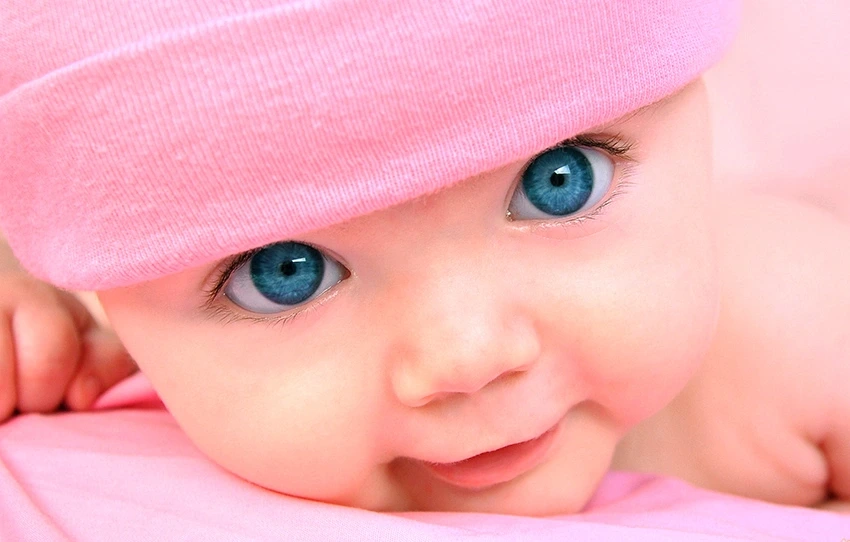
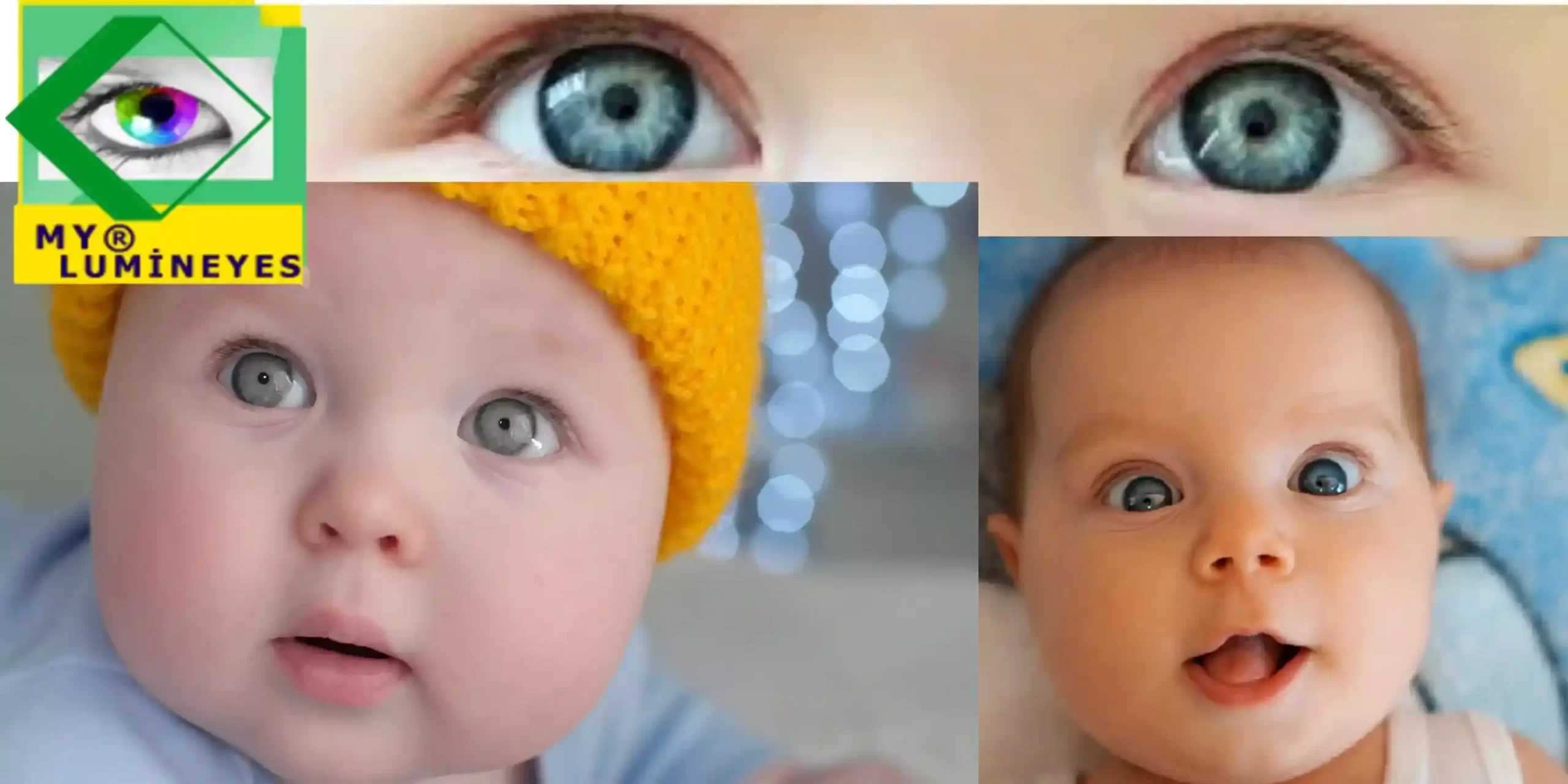
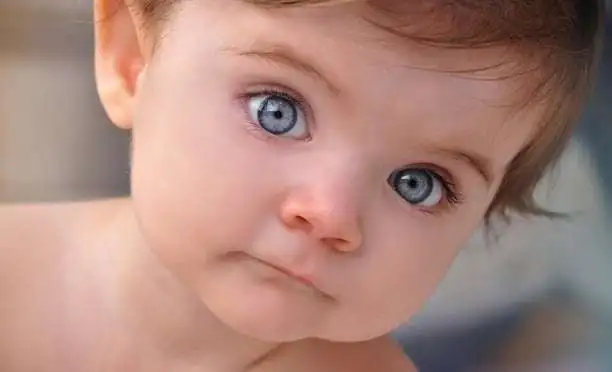
In the first weeks of life, many babies, especially with lighter skin types, have blue or grey-blue eyes. This is because the iris is still relatively low in pigment and the collagen structure scatters light in a way that makes the eyes look bluish. As melanin production increases, the eyes may slowly darken to green, hazel or brown.
Babies with darker skin frequently have brown eyes already at birth. In these cases, melanocytes are more active from the beginning and the iris contains more pigment, so there is less visible change over time.
Typical Timeline of Baby Eye Color Change
Every child is unique, but most changes follow a general pattern:
0–3 months
The iris is still developing. Eye color may look grey-blue or dark blue in many babies. The pupil reacts to light, but melanin production is just starting. Parents often notice that the eyes can look different in various lighting conditions.
3–6 months
Melanin synthesis increases. If the baby’s genetic background favors darker eyes, the iris may begin to shift gradually from blue-grey to hazel or brown. Subtle green or golden tones may appear around the pupil. In some babies with lighter genetic background, eyes may stay blue but become more vivid.
6–12 months
For many children, the main direction of eye color becomes clear. Brown eyes usually look fully brown, while green or hazel patterns become more obvious under natural daylight. Small adjustments in shade can still continue throughout this period.
After 1 year
In most cases, the primary eye color is visible by the first birthday. However, minor refinements may still occur up to 18–24 months as melanin continues to mature in the iris. Beyond early childhood, truly significant color changes are less common and should be evaluated if they occur.
For eye colors of Newborns check here : Prevalence of Iris Color in the Newborn Eye Screening Test
When Does a Baby’s Eye Color Become Permanent?
There is no exact day when eye color “locks,” but clinically we often use the following rule of thumb:
- Initial changes are most noticeable between 3 and 12 months.
- In many children, eye color is largely stable by 12 to 18 months.
- Subtle shifts in depth or brightness may continue into the preschool years.
Genetics plays a major role. If both parents have brown eyes, the baby is more likely to end up with brown or hazel eyes, even if the eyes look blue in the first months. If one or both parents have blue or green eyes, lighter final colors are more likely, but still not guaranteed. For a more detailed explanation of inheritance patterns, see the Eye Color Chart & Genetics page.
Can You Predict Your Baby’s Final Eye Color?
No method can predict a baby’s future eye color with 100% accuracy. However, some clues can help:
- Family history: Eye colors of parents and grandparents give the strongest hints.
- Current shade at 6–9 months: Eyes that remain very light blue at this age are more likely to stay blue or turn grey-green; those that already look darker are more likely to become hazel or brown.
- Skin and hair color: Babies with darker skin and hair often develop darker eyes, although this is not a strict rule.
Online prediction tools can be fun, but they are only estimates based on simple models. Real genetics is more complex and involves many genes working together.
When Should Parents Be Concerned?
Most changes in baby eye color are normal and harmless. However, you should consult an ophthalmologist or pediatrician if you notice:
- Sudden color change in just one eye
- New dark or very light spots on the iris
- Persistent redness, pain, tearing or light sensitivity
- Cloudy areas on the cornea or inside the eye
- White reflex or very abnormal reflections in photos
These findings may indicate inflammation, congenital eye conditions or other issues that need early diagnosis and treatment. Regular eye examinations in infancy are important, especially if there is a family history of serious eye diseases.
Baby Eye Color and Future Cosmetic Decisions
Some parents are curious about cosmetic procedures that might change eye color later in life. It is important to understand that your baby’s natural eye color is determined by their genes and iris anatomy, and it should not be altered in childhood for cosmetic reasons.
In adults, experimental methods such as laser eye color change aim to reduce melanin in the iris under strict medical conditions. These procedures are not designed for babies or young children and are still under clinical investigation. If you are interested in how eye color can be safely evaluated or lightened in adults, you can read more on our dedicated Laser Eye Color Change page.
Key Takeaways for Parents
- A baby’s eye color is influenced by genetics and melanin development in the iris.
- Many newborns, especially with lighter skin, have blue-grey eyes that may darken over the first year of life.
- Most children show their stable eye color between 12 and 18 months, but small changes can continue longer.
- Sudden, marked or asymmetric color changes, or changes associated with other symptoms, should always be evaluated by an eye doctor.
This page is intended for general information only and cannot replace a full medical examination. If you are worried about your baby’s eye color or vision, please contact a qualified ophthalmologist for an in-person assessment.