How to Change Eye Color with Laser: A Personalized Clinical Approach
Changing eye color with laser is not simply a matter of applying laser energy to the iris. Every eye has unique anatomical characteristics, pigmentation patterns, biological responses, and treatment goals. For this reason, modern laser eye color change requires individualized clinical evaluation and continuous physician-guided decision-making rather than a standardized treatment protocol.
This guide explains how ophthalmologists evaluate candidates, develop personalized treatment strategies, and adapt each stage of care throughout the treatment journey. Rather than focusing only on laser technology, it explores the clinical reasoning that helps determine when treatment should begin, how it progresses safely over time, and how every decision is tailored to the individual patient.
Laser eye color change is based on individualized clinical planning rather than a one-size-fits-all treatment approach.
This article focuses on the clinical planning and physician-guided decision-making involved in laser eye color change. Readers seeking a broader understanding of the procedure itself can explore our comprehensive Laser Eye Color Change guide, while those interested in the biological mechanisms responsible for iris lightening can continue with our in-depth guide to Laser Iris Depigmentation.
Although laser technology plays an important role, the outcome of treatment depends on careful patient assessment, ongoing clinical observation, and individualized treatment planning. Every treatment decision should be based on medical findings, biological response, and continuous ophthalmic evaluation rather than predetermined session numbers or fixed timelines.
Table of Contents
A Personalized Approach to Laser Eye Color Change
No two irises are biologically identical. Differences in stromal pigmentation, iris anatomy, healing characteristics, and individual treatment objectives mean that every patient requires a personalized clinical approach. For this reason, treatment planning begins long before the first laser session and continues throughout every stage of care.
Instead of following a universal protocol, ophthalmologists continually evaluate clinical findings and biological response to determine the most appropriate treatment strategy for each individual. This personalized approach helps ensure that every treatment decision is based on current clinical observations rather than assumptions or predetermined treatment schedules.
Why Every Treatment Begins with Clinical Evaluation
Comprehensive ophthalmic evaluation provides the clinical foundation for every personalized treatment plan. Factors such as ocular health, iris pigmentation characteristics, medical history, and individual expectations are considered together before treatment planning begins. This assessment allows physicians to determine whether laser eye color change may be appropriate and how treatment should be individualized for each patient.
Why No Two Eyes Are Identical
Natural variations in iris structure and pigmentation mean that patients may respond differently throughout treatment. Because biological response cannot be predicted solely from appearance, continuous clinical evaluation remains an essential part of the treatment process. Personalized planning allows physicians to adapt treatment according to individual findings rather than applying identical protocols to every patient.
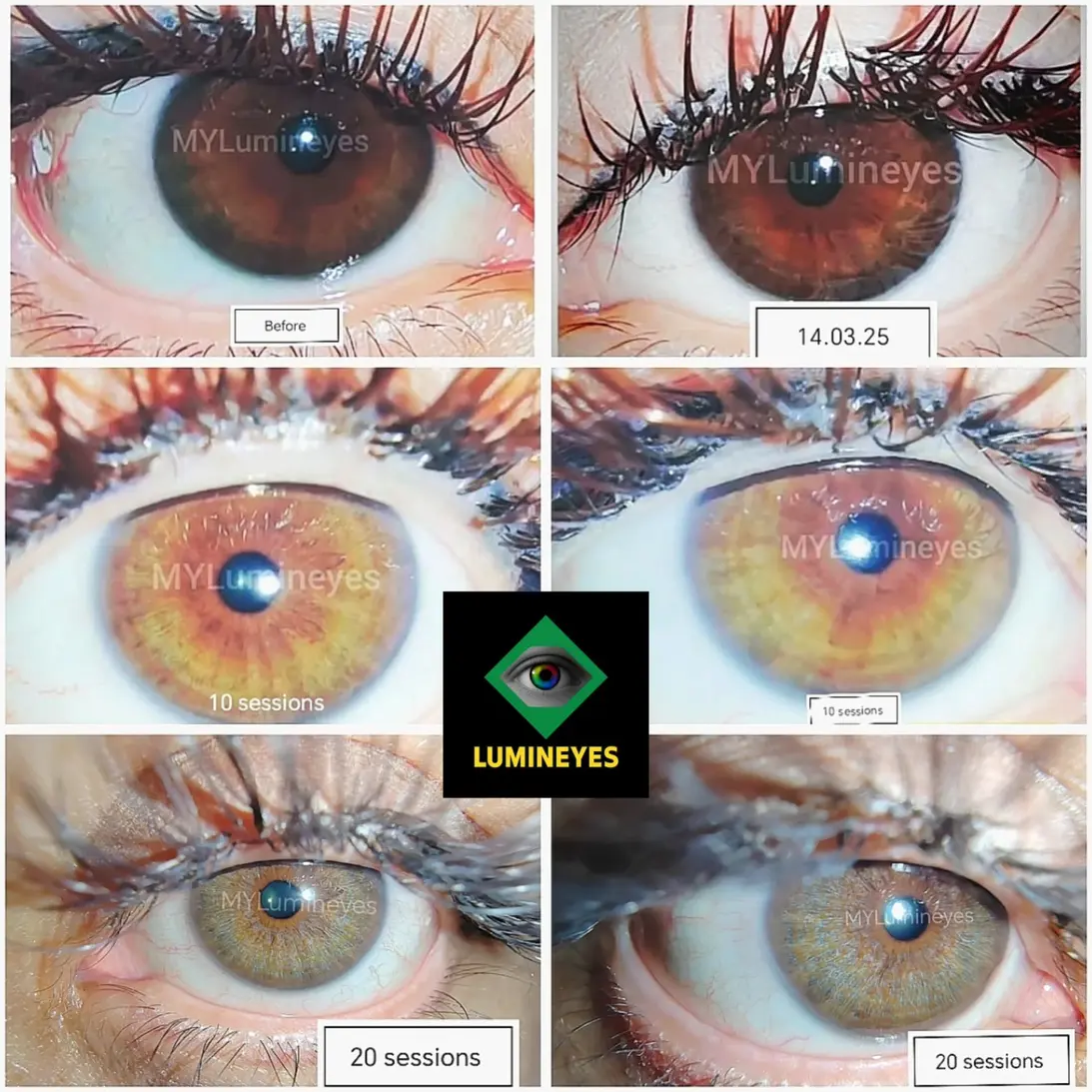
Clinical Case Example: Two-Year Follow-Up
This real patient follow-up illustrates how eye color may continue to evolve over time after laser eye color change. Individual outcomes vary depending on baseline pigmentation, biological response, and personalized treatment planning.
Every treatment begins with a comprehensive ophthalmic examination and individualized clinical evaluation.
Each patient’s treatment plan is developed according to iris pigmentation, anatomy, and clinical findings.
The Lumineyes® Protocol follows a gradual treatment strategy instead of attempting immediate color change.
Clinical decisions are continuously refined throughout treatment based on the eye’s individual biological response.
No two patients follow identical treatment timelines because every eye responds differently.
Temporary pauses or treatment completion are determined through ongoing physician assessment rather than a fixed number of sessions.
Visible eye color changes continue to develop progressively after treatment as part of the normal clinical process.
Long-term follow-up helps physicians evaluate treatment progression and individualized outcomes.
Understanding the complete treatment journey allows patients to develop realistic expectations before beginning laser eye color change.
How Ophthalmologists Evaluate Treatment Candidates
Successful laser eye color change begins with a thorough clinical evaluation rather than the laser itself. Before any treatment plan is created, ophthalmologists carefully assess each patient’s ocular health, iris characteristics, medical history, and treatment goals. This evaluation establishes the clinical foundation for every personalized treatment strategy and helps determine how the treatment should be planned for the individual rather than applying a standardized approach.
Because every eye is unique, clinical evaluation is not simply a preliminary step—it is an ongoing process that continues throughout the treatment journey. The information gathered during this stage helps physicians make informed decisions before treatment begins and provides the baseline needed to evaluate biological response over time.
Medical History
Every personalized treatment plan begins with understanding the patient’s medical background. Previous ocular conditions, past eye procedures, medications, general health, and individual expectations all contribute to the overall clinical assessment. Rather than relying on a single finding, ophthalmologists consider multiple factors together to develop an appropriate treatment strategy tailored to each patient’s circumstances.
Comprehensive Ocular Examination
A detailed ophthalmic examination provides essential information about the overall health of the eye before treatment planning begins. Clinical evaluation includes careful assessment of the anterior segment, iris anatomy, corneal health, intraocular structures, and other findings that may influence treatment planning. This examination helps establish a reliable baseline for future clinical comparisons throughout the treatment process.
Iris Pigmentation Assessment
Every iris presents unique pigmentation characteristics that influence treatment planning. Physicians evaluate the distribution, density, and appearance of stromal pigmentation to better understand how each eye may respond throughout treatment. These findings assist in developing individualized treatment strategies rather than assuming identical biological responses between patients.
Individual Clinical Suitability
Clinical suitability is determined by evaluating the complete clinical picture rather than a single measurement or observation. Ophthalmologists combine information obtained during the medical history, ocular examination, and iris assessment to determine the most appropriate clinical approach for each individual. Once this evaluation has been completed, a personalized treatment plan can be developed based on the patient’s unique clinical findings, biological characteristics, and treatment objectives.
The next stage of the process focuses on translating these clinical findings into an individualized treatment strategy. In the following section, we explain how ophthalmologists create a personalized treatment plan and why no two laser eye color change journeys are exactly alike. For readers seeking a broader overview of the complete procedure, our Laser Eye Color Change guide explains the overall treatment process from consultation through follow-up.
How the Lumineyes® Laser Protocol Is Performed Step-by-Step
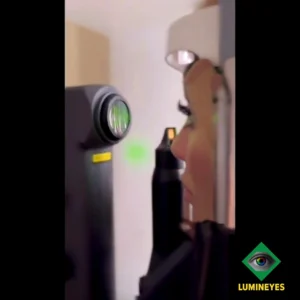
Every laser eye color change procedure begins long before the first laser pulse is delivered. Once the personalized treatment plan has been established, each treatment session follows a structured clinical workflow designed specifically for that patient’s iris characteristics. Rather than performing aggressive pigment removal in a single intervention, the Lumineyes® Protocol follows a carefully staged medical approach that combines individualized laser application with continuous clinical assessment throughout treatment.
The objective of each session is not simply to lighten the iris, but to perform controlled treatment while continuously evaluating the eye’s biological response. This structured workflow allows physicians to adapt future treatment decisions based on clinical observations rather than predetermined treatment schedules.
A Structured Clinical Workflow
As illustrated above, every treatment cycle follows the same clinical sequence while remaining individualized for each patient. The process begins with confirmation of the treatment strategy established during the clinical evaluation, continues with carefully controlled laser application, and is followed by immediate clinical assessment before future sessions are planned. Rather than representing separate procedures, these stages form one continuous physician-guided treatment process.
Readers looking for a comprehensive overview of the complete procedure can explore our Laser Eye Color Change guide, where the entire clinical protocol is discussed in greater detail.
Individualized Laser Application
Laser treatment is performed according to the individualized treatment strategy created during the planning stage. Treatment parameters are selected according to each patient’s clinical findings rather than applying identical settings to every eye. Throughout the procedure, ophthalmologists continuously observe tissue response to ensure that treatment remains consistent with the original medical objectives established before therapy began.
Because every eye responds differently, a single treatment session represents only one step within a longer clinical process. Future sessions are determined by ongoing clinical evaluation rather than by a fixed numerical treatment schedule.
Continuous Clinical Assessment
Following each treatment session, physicians reassess the eye before determining the next stage of care. This ongoing evaluation helps verify that treatment continues to follow the individualized clinical plan while providing an opportunity to refine future decisions based on observed biological response. Continuous assessment is one of the reasons why modern laser eye color change is managed as a progressive medical process instead of a single cosmetic intervention.
The biological changes that occur after each treatment session continue beyond the clinic. In the next section, we explain how fragmented iris pigment is gradually processed following laser treatment and why visible color change develops progressively over time. Readers interested in the underlying biological mechanisms can also learn more in our detailed guide to Laser Iris Depigmentation.
Metabolic Pigment Clearance
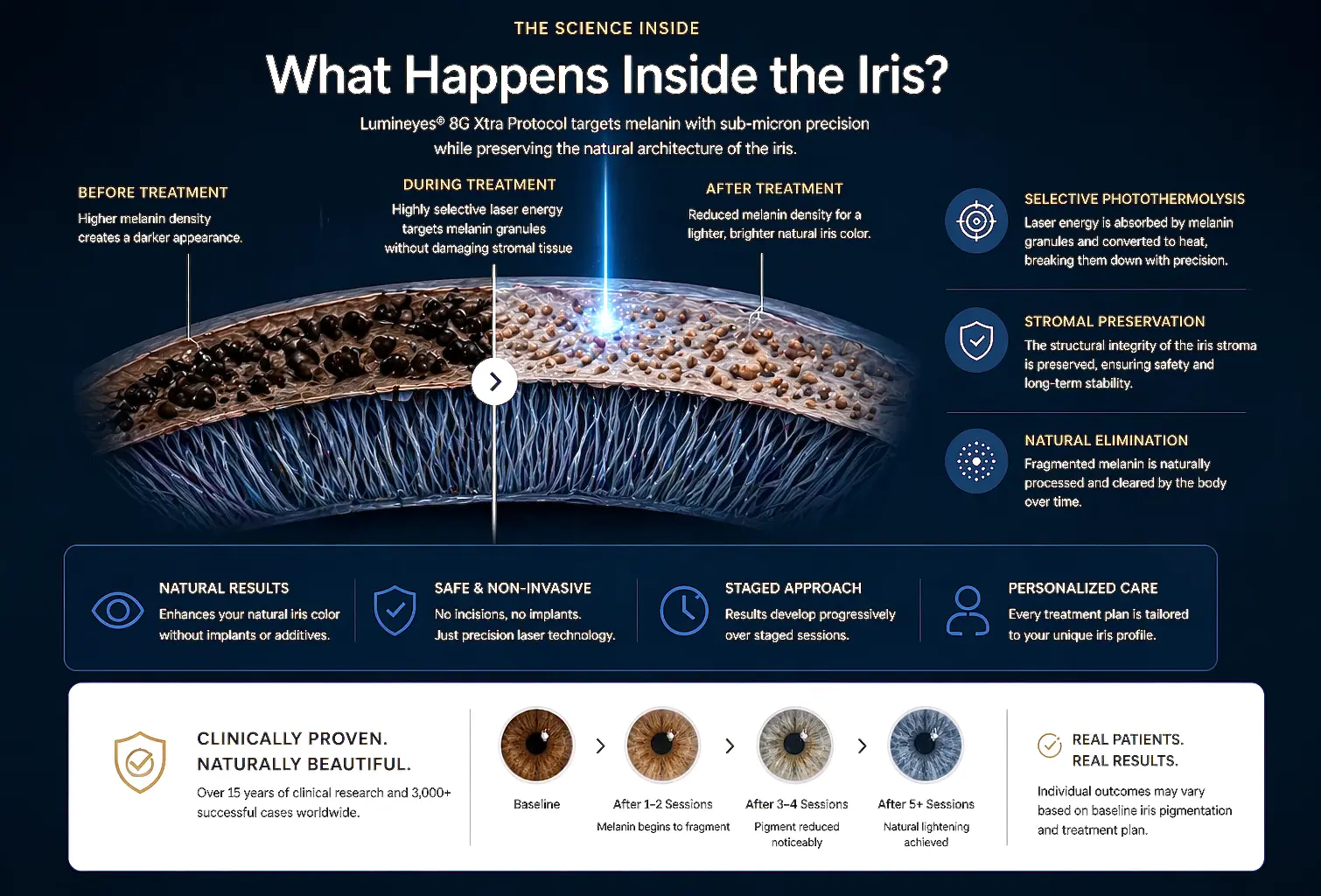
The body’s natural elimination of fragmented melanin via the aqueous humor.
Why Treatment Is Performed Gradually
One of the most distinctive characteristics of the Lumineyes® Protocol is its staged treatment philosophy. Rather than attempting to produce immediate cosmetic change, laser eye color change is performed progressively, allowing physicians to evaluate the eye’s biological response throughout the treatment process. This gradual approach enables treatment decisions to be refined continuously according to clinical findings rather than predetermined expectations.
Because every iris contains a unique distribution of pigmentation and every patient responds differently, biological adaptation cannot be predicted solely before treatment begins. A progressive treatment strategy allows physicians to observe how the eye responds over time before determining whether additional treatment is appropriate.
Biological Changes Continue Between Treatment Sessions
Laser treatment initiates biological processes that continue after each clinical session has been completed. Visible color change develops progressively as the eye continues responding between visits, making follow-up evaluation an important part of the overall treatment strategy rather than a separate stage of care.
Readers interested in the biological mechanisms responsible for these gradual changes can explore our detailed guide to Laser Iris Depigmentation, where the underlying physiological processes are explained in greater depth.
Changes in eye color do not occur at the same speed for every patient. Factors such as baseline pigmentation, iris characteristics, and individual biological response influence how rapidly visible changes become apparent. For this reason, physicians evaluate treatment progress using ongoing clinical observations rather than comparing patients with standardized timelines.
Progress Determines the Next Clinical Decision
Each follow-up examination provides new clinical information that helps physicians determine the most appropriate next step. Treatment may continue, be temporarily paused, or be considered complete depending on observed biological response and overall clinical stability. This continuous decision-making process is one of the reasons why the Lumineyes® Protocol emphasizes physician-guided progression rather than fixed treatment schedules.
As treatment progresses, patients naturally begin asking whether their individual journey will resemble someone else’s. In the next section, we explain why no two treatment timelines are identical and why individualized progression is considered an essential part of modern laser eye color change.
Comprehensive Suitability Test
Lumineyes™ Laser Application
Why Every Patient Follows a Different Timeline
Although the clinical workflow remains consistent, the pace of treatment differs from one patient to another. Individual variations in iris pigmentation, biological response, healing characteristics, and clinical findings mean that treatment timelines are developed according to each patient’s progress rather than predetermined schedules. Personalized timing is therefore considered an essential part of physician-guided laser eye color change.
Instead of measuring success by the number of treatment sessions completed, ophthalmologists evaluate how the eye responds throughout the clinical process. Each follow-up examination provides new information that helps determine whether treatment should continue, be modified, or be temporarily paused.
Progress Is More Important Than Speed
Visible color change is only one aspect of treatment progression. Physicians also consider clinical observations, biological adaptation, and the stability of previous treatment before planning future sessions. This individualized approach allows every patient to progress according to their own clinical response instead of attempting to follow another person’s timeline.
Different Starting Points Create Different Journeys
Patients begin treatment with different levels of iris pigmentation and unique anatomical characteristics. As a result, some individuals may experience noticeable changes earlier, while others progress more gradually. These differences are expected in personalized medical care and do not necessarily indicate better or worse treatment outcomes. These baseline differences can also be characterized using the Lumineyes® Iris Pigmentation Scale (LIPS), a structured framework described in our [clinical research and scientific documentation].
Comparing Patients Can Be Misleading
Online photographs and treatment stories often highlight individual experiences, but they cannot accurately predict another patient’s clinical journey. Every treatment plan is created from the patient’s own baseline findings and is continuously refined through ongoing physician evaluation. Comparing treatment timelines between different individuals may therefore create unrealistic expectations about how quickly visible changes should occur.
Every Timeline Ends with the Same Goal
Regardless of how quickly visible changes develop, the objective remains the same: to achieve stable, natural-looking results through individualized medical decision-making. Treatment continues only as long as clinical evaluation supports further progression, reinforcing the principle that personalized care is always more important than standardized timelines.
This individualized approach naturally leads to another important question: how do physicians determine when treatment has achieved its intended objective? The following section explains how clinical findings guide decisions to continue treatment, temporarily pause therapy, or conclude the treatment process.
When Treatment May Be Paused or Completed
One of the defining characteristics of physician-guided laser eye color change is that treatment does not follow a predetermined endpoint. Instead, every decision to continue, temporarily pause, or conclude treatment is based on ongoing clinical evaluation rather than reaching a specific number of treatment sessions. This individualized decision-making process allows physicians to adapt care according to each patient’s unique clinical progress.
Throughout the treatment journey, ophthalmologists continually compare current clinical findings with the objectives established during the personalized treatment planning stage. As new information becomes available during follow-up examinations, treatment recommendations may evolve to reflect the patient’s biological response and overall clinical status.
Clinical Findings Guide Every Decision
Treatment decisions are based on a combination of clinical observations rather than a single measurement. Physicians assess treatment progression, iris appearance, biological adaptation, and the overall direction of clinical change before determining whether additional treatment is appropriate. This comprehensive evaluation helps ensure that future recommendations remain individualized instead of following standardized treatment schedules.
Temporary Pauses Can Be Part of Personalized Care
Not every treatment journey progresses continuously. In some situations, physicians may recommend allowing additional time for ongoing biological changes to develop before considering further treatment. A temporary pause should therefore be understood as part of the individualized treatment strategy rather than as an indication that treatment has been interrupted or has become unsuccessful.
Completion Is Determined by Clinical Objectives
Treatment is considered complete when the individualized clinical objectives established during the planning process have been achieved and further treatment is no longer expected to provide meaningful clinical benefit. Because every patient begins with different iris characteristics and treatment goals, the point at which treatment concludes naturally varies from one individual to another.
Readers interested in understanding how long-term outcomes are evaluated after treatment has been completed can continue to our Permanent Eye Color Change guide, where we discuss stability, long-term follow-up, and the principles used to assess lasting results.
Individualized Care Continues Beyond the Final Session
Completing laser treatment does not mark the end of clinical care. Follow-up evaluations allow physicians to monitor long-term progress and confirm that treatment objectives have been achieved according to the individualized plan established for each patient. This ongoing relationship between clinical observation and medical decision-making reflects the core philosophy of the Lumineyes® Protocol.
After understanding how physicians determine when treatment has reached its clinical objective, the next question becomes equally important: how are long-term changes evaluated after treatment has been completed? The following section explores how eye color continues to develop over time and how long-term stability is assessed during follow-up.
Final Stabilization and Monitoring
Verifying long-term IOP stability and color permanence.
How Results Continue to Develop After Treatment
Although each laser treatment session is completed within the clinic, the visible transformation of eye color continues to develop over time. This gradual evolution reflects the individualized nature of the Lumineyes® Protocol, where clinical progress is observed not only during treatment sessions but also throughout the follow-up period. For many patients, meaningful changes become more apparent as the eye continues adapting after treatment has been completed.
Rather than expecting an immediate final appearance, physicians evaluate results across multiple follow-up visits. This allows the natural progression of color change to be documented while ensuring that future recommendations remain based on clinical observation instead of predetermined expectations.
Visible Changes Continue Beyond the Final Session
The final treatment session does not necessarily represent the final visible result. Individual biological responses continue to influence how eye color evolves over time, which is why follow-up assessments remain an important part of the overall clinical process. Patients may notice subtle refinements in appearance as the eye continues its natural progression after treatment.
Long-Term Evaluation Is Part of Personalized Care
Every patient’s long-term outcome is assessed individually. Physicians compare follow-up findings with the original treatment objectives established during the planning stage, allowing the overall result to be evaluated within the context of each patient’s unique clinical journey. This individualized approach helps provide realistic expectations while recognizing that no two patients experience identical patterns of change.
Natural Appearance Is the Primary Objective
The goal of laser eye color change is not simply to create a lighter iris, but to achieve a natural-looking appearance that reflects careful clinical planning and individualized treatment. Throughout the entire process, medical decision-making focuses on progressive improvement rather than rapid cosmetic change, supporting outcomes that develop gradually and harmoniously over time.
Readers who would like to explore how long-term stability is evaluated, what influences lasting outcomes, and how permanence is assessed can continue to our comprehensive guide on Permanent Eye Color Change.
The Treatment Journey Extends Beyond the Procedure
Laser eye color change should be viewed as a complete clinical journey rather than a single procedure. Personalized evaluation, structured treatment, ongoing follow-up, and long-term observation all contribute to the overall experience. By integrating these stages into one physician-guided process, the Lumineyes® Protocol emphasizes individualized care from the initial consultation through long-term clinical follow-up.
Understanding the Complete Lumineyes® Treatment Journey
Laser eye color change procedure is best understood as a carefully structured medical journey rather than a single cosmetic procedure. From the initial consultation through personalized treatment planning, staged laser application, ongoing clinical evaluation, and long-term follow-up, every phase is connected by one guiding principle: individualized physician-led care.
Instead of relying on standardized treatment schedules or identical protocols for every patient, the Lumineyes® Method emphasizes continuous clinical decision-making. Each recommendation is based on how the individual eye responds throughout treatment, allowing physicians to adapt the treatment strategy whenever necessary while maintaining the original clinical objectives.
A Personalized Process from Beginning to End
Every patient begins with different iris characteristics, different treatment objectives, and different biological responses. For this reason, no two treatment journeys are expected to be identical. Personalized planning, gradual progression, and regular clinical reassessment work together to create a treatment experience that reflects the needs of the individual patient rather than a predefined formula.
Building Realistic Expectations
Understanding how laser eye color change is performed helps patients develop realistic expectations before beginning treatment. Rather than focusing on rapid cosmetic transformation, the Lumineyes® Protocol is designed around progressive clinical evaluation and individualized medical decision-making. This philosophy allows each stage of treatment to contribute to the overall objective of achieving natural-looking results through a structured physician-guided process.
If you are beginning your research into laser eye color change, we recommend continuing with the resources below, where you can explore the science, safety considerations, long-term stability, and frequently asked questions in greater detail.
Scientific References
American Academy of Ophthalmology (AAO). Eye Health Information.
National Eye Institute (NEI). Facts About the Eye, Iris, and Vision.
PubMed®. U.S. National Library of Medicine. Peer-reviewed scientific literature related to iris pigmentation, ophthalmology, and laser-based ocular procedures.
Medical Disclaimer: This page is intended for educational purposes only and should not be considered medical advice. Every patient requires an individualized ophthalmic examination before treatment recommendations can be made.
Yes, permanent laser eye color change is a clinical procedure that reveals the natural lighter tones of the iris. Unlike artificial implants, the MyLumineyes® protocol uses specific low-energy wavelengths to stimulate the body’s natural removal of superficial melanin. The result is a biologically natural transition based on your own iris stroma architecture.
The required number of laser eye color change sessions typically ranges from 5 to 70 sessions, depending entirely on your initial iris melanin density (Grade 1 to 5). Treatment outcomes vary from person to person. Genetics, pigment resistance, iris structure, drainage pathways, overall eye health, and individual biological response all influence how the eyes react to laser treatment. For these reasons, it is not possible to determine an exact number of required sessions in advance. While not guaranteed, statistical averages indicate:
Light to medium brown eyes (Grade 1–2): May require approximately 5–15 sessions.
Darker brown eyes (Grade 3–4): May require approximately 30–50 sessions.
Grade 5 eyes: May require 40–70 sessions.
Changes from the first 10 sessions typically become noticeable within 4–6 months. Specific eye color results cannot be guaranteed. This procedure is not recommended for individuals who are impatient, expect immediate results, or are uncomfortable with gradual and variable outcomes.
The results of laser eye color change surgery are scientifically verified as permanent. Clinical data from a 15-year longitudinal study confirms that once melanin is naturally cleared from the iris stroma, it does not regenerate. However, the final shade depends on individual biological factors and cannot be reversed to the original darker color once the plateau phase is reached.
The cost of MyLumineyes® laser eye color change generally ranges from €1800 to €4900, depending on your baseline iris pigment density and the number of staged sessions required. Unlike a single cosmetic fee, this pricing reflects a comprehensive clinical program, including strict eligibility screening, advanced IOP monitoring, and long-term safety evaluations by Dr. Mustafa Mete.
No. Final eye color depends on individual iris structure, baseline pigmentation, and biological response. Simulation tools provide an approximation, but exact results cannot be guaranteed.
Yes, when performed using the original MyLumineyes® protocol. Developed by Dr. Mustafa Mete, this non-invasive laser procedure is backed by over 15 years of clinical expertise and extensive long-term safety data. Unlike risky implants or corneal tattooing, it safely targets only the superficial melanin without damaging the eye’s natural structure.
Yes, brown eyes can permanently turn green or blue. The laser does not add artificial dyes. Instead, the MyLumineyes® laser safely shatters the top layer of brown melanin pigment in the iris. Once the body naturally clears this melanin, the hidden blue or green stromal fibers underneath are beautifully revealed.
Medical Review & Fact-Checking
All medical content is reviewed by Dr. Mustafa Mete, an ophthalmic surgeon with 25 years of clinical experience and 3,000+ laser eye color change cases.
Dr. Mete is the original developer of the patent-pending Lumineyes™ technique, with more than 15 years of clinical experience and over a decade of long-term patient follow-up.
✓ Original Developer
✓ 15+ Years of Clinical Experience
✓ Long-Term Follow-Up
Lumineyes Assistant×
Structured clinical guidance • No automated free-text answers