Eye color is one of the most visible genetic traits we inherit from our parents.
Behind every shade of brown, hazel, green, blue or grey there is a specific combination
of genes that determines how much melanin is stored in the iris and how light scatters
inside the eye. On this page you will find an up-to-date eye color chart, an overview of
the main genes involved, and simple explanations of how eye color is passed from parents
to children.The content below is for informational and genetic purposes only.
It explains how natural eye colors are formed and how they may change over
time in healthy eyes.
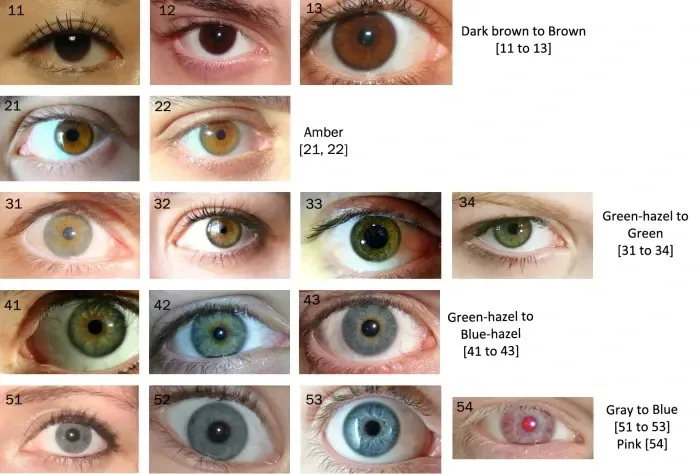
Eye Color Chart: From Dark Brown to Light Grey
When you look at an eye color chart, you will usually see a smooth spectrum rather than
a few rigid categories. The darkest eyes contain the highest amount of melanin in the
iris, while the lightest eyes have much less pigment. Most people fall somewhere between
these extremes. A practical way to group natural eye colors is:
Very dark brown – almost black in indoor light.
Medium and light brown – common worldwide, with warm golden tones.
Hazel – a mix of brown with green or amber, often with a ring pattern.
Green – intermediate pigment level with a combination of yellow and blue light scattering.
Blue – low melanin in the front iris layers, light scatters and appears blue.
Grey – very low pigment, light scattering and collagen structure create a cool grey tone.
Amber and other rare colors – golden or copper tones due to specific pigment combinations.
Many eyes are not a single uniform color. It is common to see a darker outer ring
(the limbal ring), a slightly different tone around the pupil, or tiny brown or golden
spots within green or blue irises. These variations are normal and are usually explained
by local differences in pigment density.
How Genetics Determines Eye Color
Eye color is a polygenic trait, which means it is influenced by many
genes working together rather than a single “brown” or “blue” gene. The best-studied
region lies on chromosome 15 and involves two neighboring genes,
OCA2 and HERC2. Variants in these genes regulate how
much melanin is produced and stored in the iris stroma. :contentReference[oaicite:0]{index=0}In simple terms:
Certain variants in the HERC2 gene reduce the activity of
OCA2. This leads to less melanin and a higher chance of blue or
light-colored eyes.
Other variants allow stronger OCA2 activity, which increases melanin and makes
brown eyes more likely.
Additional genes (such as SLC24A4, TYR,
IRF4 and others) fine-tune the final shade, helping to create
intermediate colors like hazel and green.
Because many genes are involved, it is more accurate to think of eye color as a
spectrum controlled by multiple switches rather than as a simple “brown is dominant,
blue is recessive” scheme. Modern genetic studies show that there are dozens of
variants contributing to eye color, and together they can explain a large part of
the differences between individuals and populations. :contentReference[oaicite:1]{index=1}For a more technical explanation, you can read the overview on MedlinePlus Genetics:
Is eye color determined by genetics?
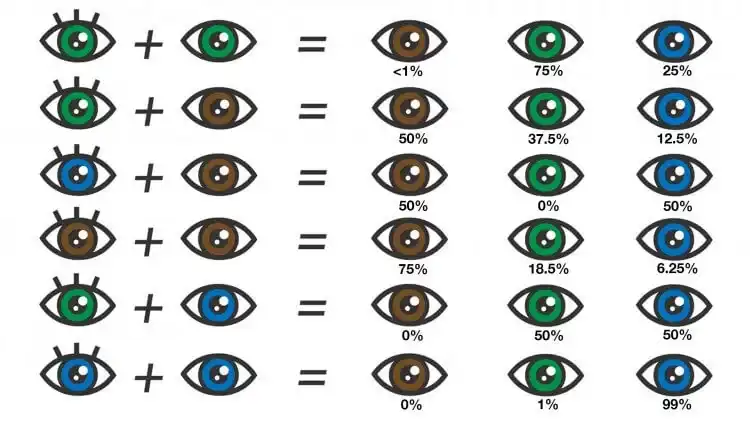
eye color genetics chart -gene baby hazel blue eye color chart
Baby Eye Color Prediction
One of the most frequent questions parents ask is whether they can predict their
baby’s future eye color. Traditionally, simple eye color charts tried to estimate the
probability based on the parents’ eye colors alone. While these charts are useful for
education, they are only rough approximations, because they do not include the full
genetic background.In general, the following tendencies are often observed:
Two brown-eyed parents are more likely to have a child with brown or hazel eyes,
but green or even blue eyes are still possible.
If one parent has brown eyes and the other has blue or green eyes, the baby’s eye
color can be brown, hazel, green or blue, depending on which variants are inherited.
Two blue-eyed parents usually have children with blue eyes, but rare gene
combinations can still produce green or hazel.
Newborn eye color is also affected by age. Many babies of European descent are born
with gray-blue or dark blue eyes. Over the first two to three years of life, melanin
accumulates in the iris and the eyes may gradually become green, hazel or brown.
In babies with darker genetic background, the eyes are often brown from the beginning
and change less over time.
Why Do Eye Colors Change Over Time?
Small changes in eye color can occur naturally as part of growth and aging. During
childhood, melanin production can increase and make the eyes look darker. In some
people the opposite happens: tiny variations in the collagen structure and the
distribution of pigment can make the iris appear slightly lighter or more grey with age.Certain medical conditions and medications can also alter eye color by affecting
melanin metabolism or the iris tissue. Any sudden, asymmetrical or rapid change in
eye color—especially if accompanied by visual symptoms, pain or redness—should be
evaluated by an ophthalmologist.
Common Eye Colors Explained
Brown Eyes
Brown is the most prevalent eye color worldwide. Brown eyes contain a high
concentration of melanin in the iris, which absorbs more light and gives a dark,
warm appearance. The shade can range from light honey brown to very dark near-black.
Hazel Eyes
Hazel eyes combine elements of brown, green and sometimes amber. Under some lighting
conditions they may look more green; in other situations they appear more brown.
This effect is caused by uneven melanin distribution and light scattering, not by
separate “layers” of color.
Green Eyes
Green eyes are relatively rare in the global population. They usually occur when
moderate amounts of melanin are combined with yellowish pigments and light scattering
within the stroma of the iris. Several genetic variants must work together to create
this intermediate color, which is why it is less common than pure brown or blue. :contentReference[oaicite:2]{index=2}
Blue and Grey Eyes
Blue and grey eyes contain less melanin in the front layers of the iris. Instead of
pigment, it is the way light scatters in the collagen fibers that produces the final
color, a phenomenon similar to the blue appearance of the sky. Blue eyes tend to have
warmer inner tones, while grey eyes often look cooler and more neutral, especially in
low light.
Amber and Other Rare Colors
Amber eyes show a uniform golden, copper or honey tone caused by different ratios of
melanin and other pigments. Red or very light violet eyes are typically associated
with conditions such as albinism, where there is a significant reduction in pigment in
the iris and retina.
Eye Color Percentages by Region
The distribution of eye colors varies widely between populations. Northern and Central
European countries have higher proportions of blue, green and grey eyes, while darker
brown eyes are more common in many parts of Asia, Africa and the Middle East. Some
regions show a large mix of different colors because of historical migration and
genetic diversity.
Region (example)
Brown
Hazel / Green
Blue / Grey
Northern Europe
20–30%
20–25%
50–60%
Southern Europe
60–80%
10–20%
10–20%
Middle East
80–90%
5–10%
5–10%
Global average
~75%
~10–15%
~8–10%
These values are approximate and can vary between studies, but they highlight an
important point: truly light eyes are still a minority on a global scale, and rare
colors such as pure green, amber or silver-grey are even less frequent.
Frequently Asked Questions About Eye Color & Genetics
Yes. Even if both parents have brown eyes, they may carry genetic variants associated with lighter eye colors. If a child inherits the right combination of recessive variants from both parents, the result can be blue, grey or green eyes. This does not mean that anything is wrong; it simply reflects the complexity of polygenic inheritance.
Many babies are born with gray-blue or dark blue eyes because their irises have not yet produced their final amount of melanin. During the first months and years of life, melanocytes in the iris become more active. As pigment builds up, the eyes may shift toward green, hazel or brown. In most children the eye color is relatively stable by the age of three.
In general, lighter eyes contain less melanin and therefore allow more light to enter the eye. Many people with blue, green or grey eyes report more light sensitivity, especially in strong sunlight or glare. Wearing good quality sunglasses with UV protection is important for everyone, but may feel especially helpful for those with lighter eye colors.
No food, drink, supplement or exercise routine can safely change the natural pigment of a healthy iris. Small day-to-day variations in eye appearance are usually due to lighting, pupil size, clothing and makeup, not to changes in melanin. Any sudden or one-sided change in eye color should be assessed by an eye doctor to rule out disease.
Rare combinations such as pure green, amber or very light grey result from specific constellations of multiple gene variants. These variants tend to be less common in the global population. Some are more frequent in particular regions because of historical migration patterns, natural selection or genetic drift.
This page focuses on natural genetics and eye color charts. If you are interested in medical laser procedures that aim to lighten naturally dark eyes, you can read our dedicated page about laser eye color change. There you will find detailed information about indications, limitations and safety considerations.